Cool and Late
Winemaking
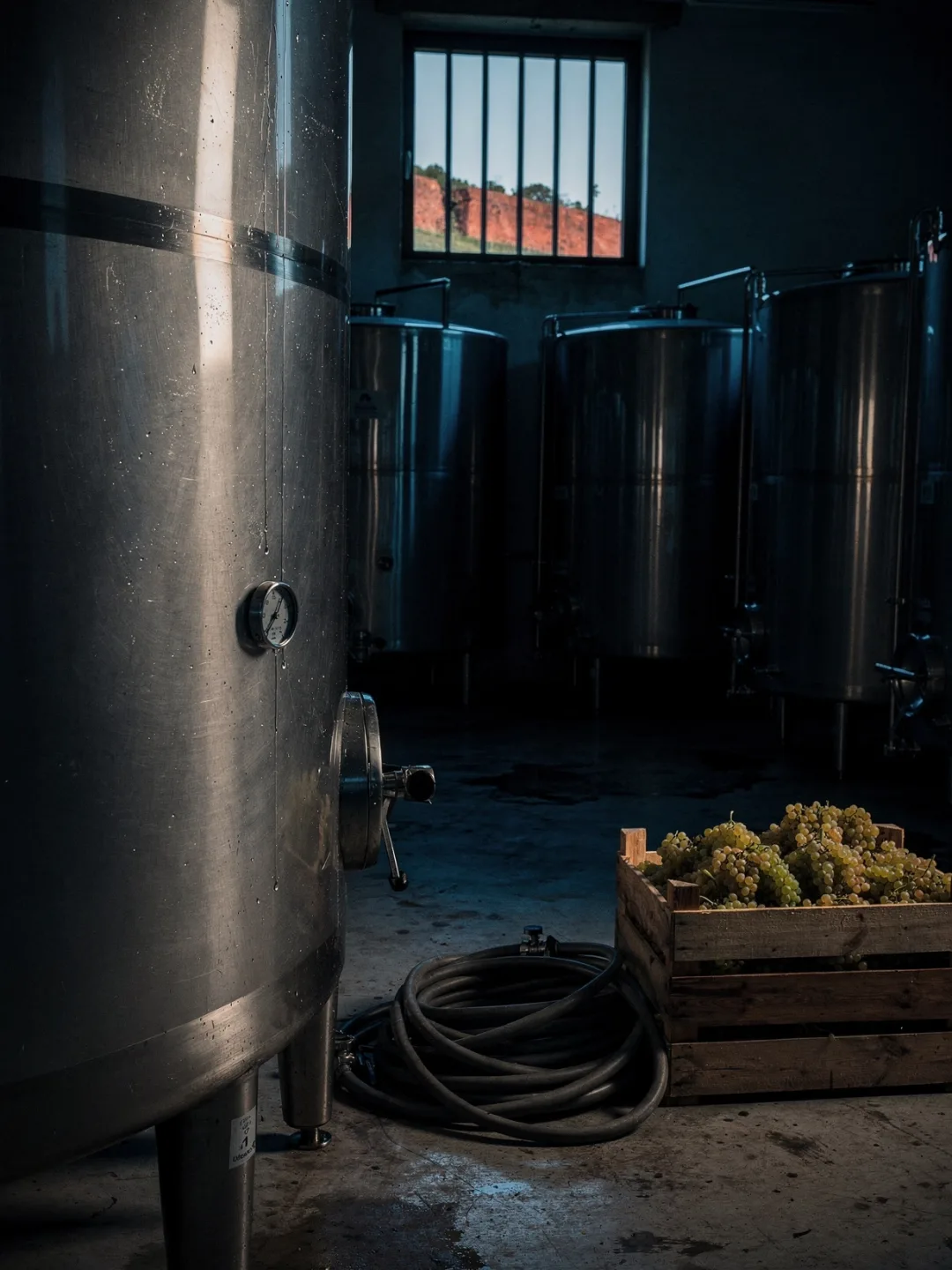
Riesling from the Bergstraße is today fermented almost exclusively cool and slow in stainless steel tanks, often at twelve to fourteen degrees Celsius, over several weeks. The oak that elsewhere contributes toasty and vanilla notes is almost always left out here. Riesling lives on citrus, peach, and a fine acidity. Barrique aromas would simply drown out what actually defines a Bergstraße wine.
Stricter rules apply to the top sites. The Heppenheimer Steinkopf carries the designation VDP.Erste Lage, a classification by the Verband Deutscher Prädikatsweingüter (VDP) for Germany's finest vineyards. Winegrowers entitled to use this designation harvest by hand and limit their yields. They also let the grapes hang on the vine longer than the law requires. For the fruit not to tip over the edge during that time, it takes exactly the interplay of daytime warmth and cool nights that the Bergstraße provides.
This extended ripening time also gives rise to the higher Prädikat levels: Spätlese and Auslese, both picked later and richer in natural sweetness. In particularly cold winters, Eiswein joins the ranks, where the grapes are picked and pressed while frozen, so the water remains as ice inside the berry and only the concentrated, sweet juice runs off. The Domäne Bergstraße in Heppenheim, which grew out of the Grand Ducal court estate of 1904, is considered a pioneer of this style in the region.
Large estates are rare along the Bergstraße. Most grapes come from many small winegrowing families. Back in 1904, twenty-one of them joined together to form the Starkenburger Winzerverein. That grew into today's cooperative, the Bergsträßer Winzer, still the backbone of the region. A single hectare of vineyard alone could hardly support its own winery.
With Roter Riesling, cellar masters pay particular attention to one specific interval: how long the juice remains in contact with the red berry skins after pressing before being racked off clear. Too short, and the wine loses its characteristic fullness; too long, and it becomes heavy rather than rich. Finding the right balance with this rare variety is almost a matter of experience, since the Bergstraße has comparatively few vintages to learn from.