Fire Wine & Tolls
Region & History
Wine has grown along the Mittelrhein since the Romans made the river a frontier. Near Boppard, they built the Baudobriga fort in the fourth century, a watchtower on the Rhine limes, and the first vines arrived on the slopes with the soldiers. In 588, the poet Venantius Fortunatus described vineyards near Andernach — the oldest written record of wine along the Mittelrhein.
Centuries later, the evidence grows denser. Boppard is first mentioned in documents in 643, Oberwesel appears in 966, followed by Bacharach in 1019. None of these places were chosen by chance: here the slate falls away steeply toward the river, and the sun reaches the vines all day long. In the thirteenth century, Bacharach grew into the most important wine-trading hub between Mainz and Cologne, as ships transferred their cargo there onto larger Cologne vessels to bypass the treacherous Binger Loch.
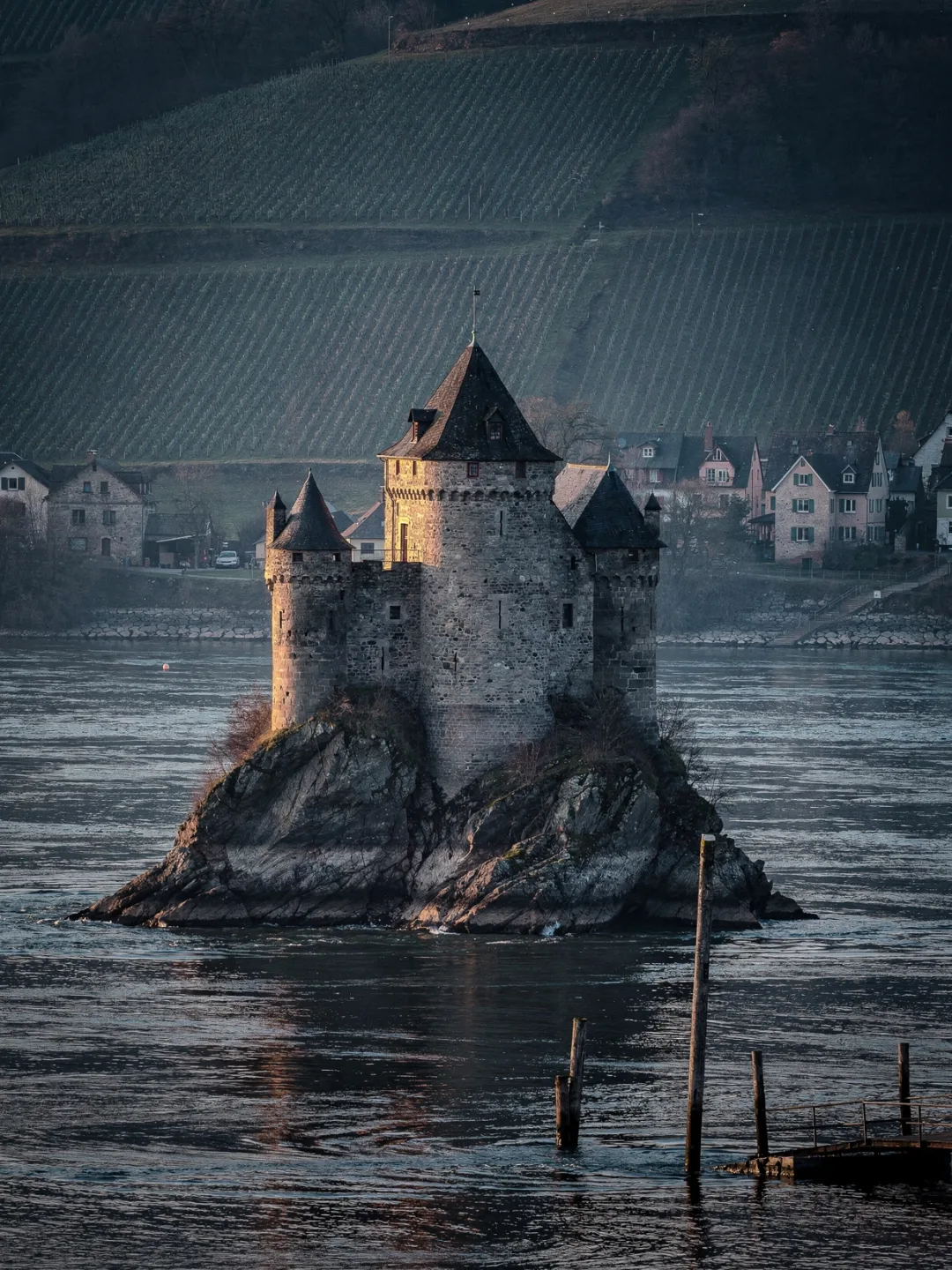
Trade brought fame to a local specialty: fire wine. Selected grapes, dried on straw, fermented in sealed chambers over wood embers until the must bubbled like boiling water. The result was sweet, strong, and ready to drink within days, sought after as far as Rome. Trading meant paying tolls, and near Kaub the Palatine counts built Pfalzgrafenstein castle right in the middle of the river, where it still stands on a Rhine island today.
Everything changed when English and French poets discovered the Rhine for themselves. Lord Byron wrote verses in praise of the river in 1816, and Victor Hugo followed in 1842 with an entire travel book. Clemens Brentano invented the legendary figure of the Loreley in 1801, a siren who lures sailors to their deaths with her singing, and Heinrich Heine made her world-famous with a single poem in 1824. From 1827 onward, steamships ran between Cologne and Mainz, and soon tens of thousands of travelers came to see it all: castles, slate, vines.
The price of this popularity came later. Steep vineyards can't be worked with machinery. As the last century saw workers migrate to the cities, many winegrowers abandoned their terraces, and whole hillsides ran wild. In 2002, UNESCO recognized the Upper Middle Rhine Valley between Bingen and Koblenz as a World Heritage Site, honoring the entire cultural landscape, wine included. Today, more estates are once again fighting to preserve the steepest sites.