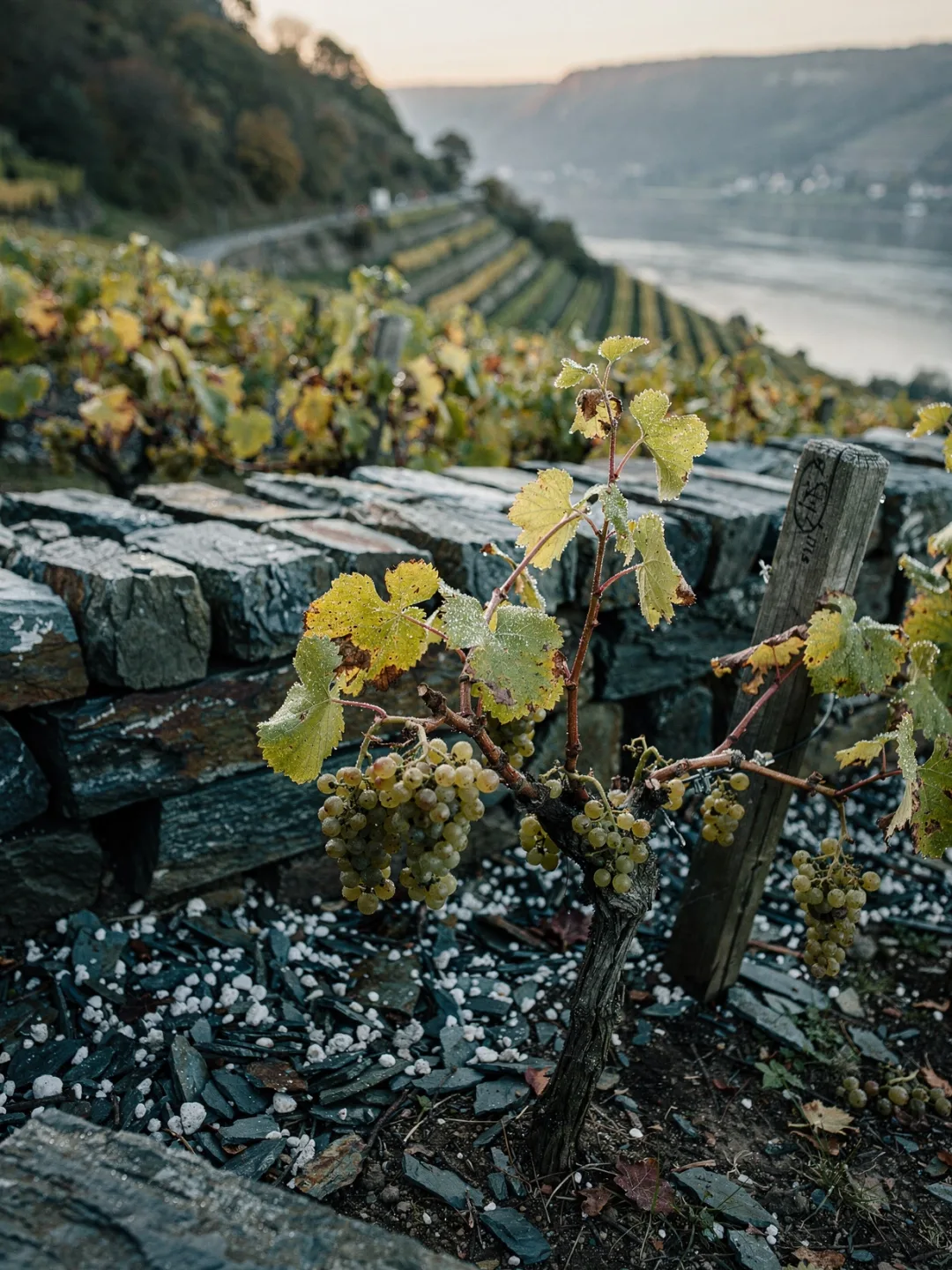
Riesling on Slate
Grape Varieties
One grape variety dominates the Mittelrhein like almost nowhere else in Germany. Riesling covers roughly sixty percent of the vineyard area, mostly where the slope is steepest and the sun lingers longest. This wasn't always the case. Other varieties came and went, but Riesling demands exactly what the Mittelrhein offers in abundance: a long, cool ripening period and soil that makes growth genuinely difficult.
You notice it immediately in the glass. Mittelrhein Riesling smells of lemon, green apple, and sometimes grapefruit, with a cool, almost stony note that connoisseurs trace back to the slate. Acidity runs high, often razor-sharp, and this is exactly what gives these wines their remarkable aging potential. A good Bopparder Riesling only develops its famous petrol note after ten or fifteen years — the hallmark of mature Rieslings worldwide.
Red wine remains the exception here, though a growing one. Spätburgunder covers a good ten percent of the vineyard area, mainly in sheltered sites where enough warmth builds up for the thin-skinned Pinot Noir grape. For a long time there was hardly any, since the climate seemed too cool. Warmer vintages over recent decades have changed that, and today some winegrowers in the Loreley district count their Spätburgunder among the finest reds in the Rhine Valley.
Behind these come two white varieties with much smaller shares. Weißer Burgunder (Pinot Blanc) produces round, pear-scented wines without Riesling's cutting acidity — a welcome change of pace for anyone who prefers something milder. Müller-Thurgau, often called Rivaner here, ripens earlier and needs less sun, so it grows on the less steep, cooler plots that would be too risky for Riesling.
In the north, in the volcanic Siebengebirge, Riesling also dominates, but on entirely different rock: trachyte and tuff instead of slate. These wines taste rounder, with less of the austere minerality found in the steep southern sites. A winegrower tasting both side by side will immediately sense just how much the soil, beyond the grape variety itself, shapes what ends up in the glass.