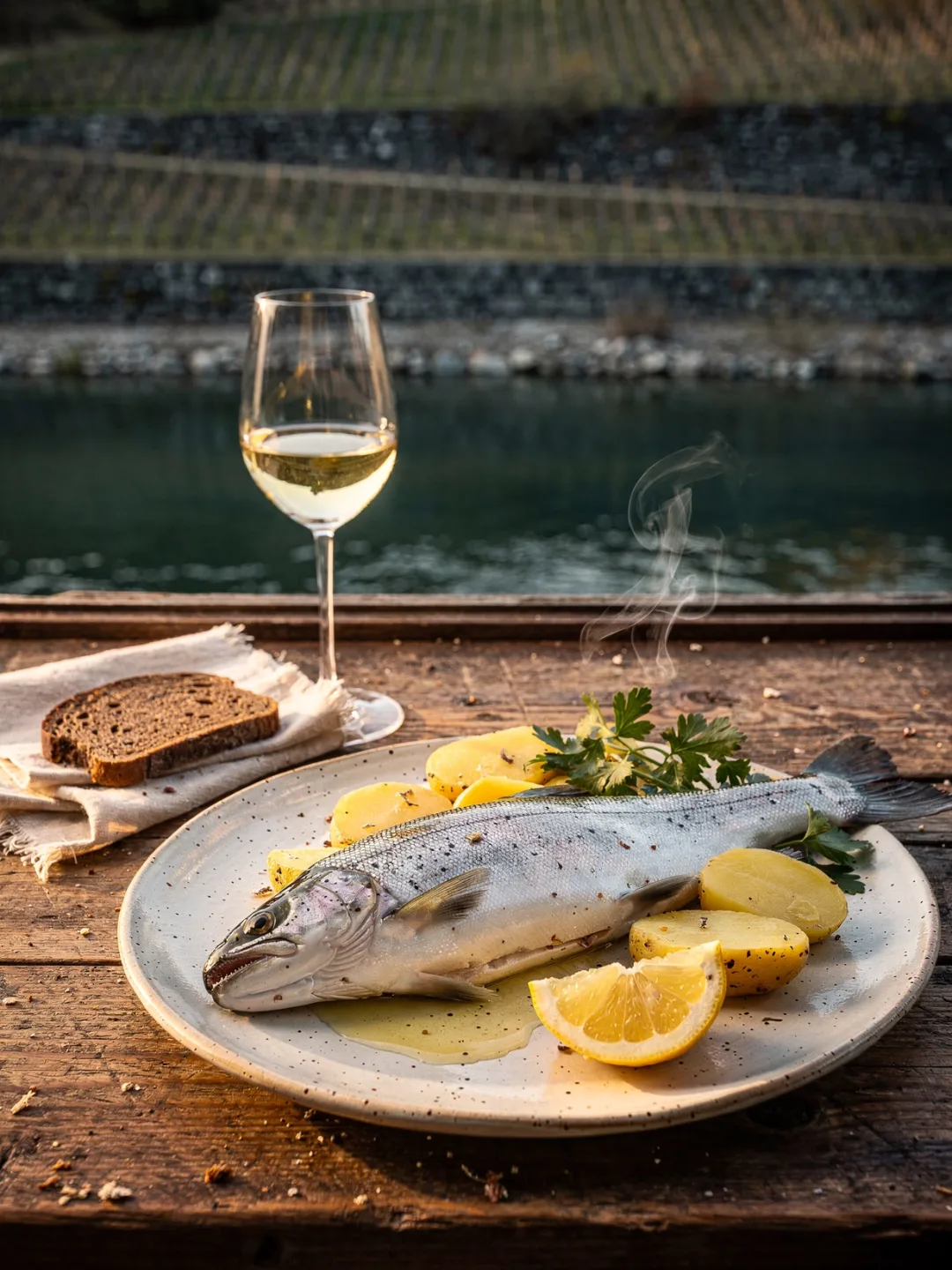
Trout and Döppekoochen
Wine & Food
The cuisine of the Mosel grew out of humble, rustic roots, shaped by what the river and the steep slopes provided: fish, potatoes, and little meat. The wine that accompanies it is naturally high in acidity and often slightly sweet, a combination that suits this cuisine perfectly, since acidity cuts through fat and sweetness tames sharpness. This is no coincidence.
River trout, poached blue or pan-fried, is the classic dish along the Mosel itself, often sourced from a nearby farm. A dry Riesling from a steep vineyard pairs beautifully with it. Its acidity lifts the delicate fish flesh without overwhelming it, while the wine's stony note acts almost like a second seasoning alongside the fish.
Döppekoochen, a hearty bake of grated potatoes, bacon, and onions, calls for more of a counterweight. Here, a wine with noticeable but not overpowering residual sweetness works well, a Kabinett feinherb, for example. It stands up to the richness of the bacon without feeling heavy itself. A bone-dry, very lean wine would taste thin next to this dish.
In autumn, while the new wine is still fermenting, people across the Mosel and the wider Rhineland drink Federweißer with onion tart, sweet, yeasty grape must alongside a warm, savory pastry. This isn't quite Riesling in the true sense, but a stage on the way there. It's as much a part of the Mosel wine year as the harvest itself.
With dessert, the rule flips entirely. A dry wine tastes sour and thin next to something sweet, so a dessert needs a wine that is at least as sweet as the dish itself. An Eiswein, with its concentrated acidity and immense sweetness, can even outshine most desserts on its own. Often, it's enough as its own small finale, with no plate required alongside it.