Tasting a Riesling
Tasting
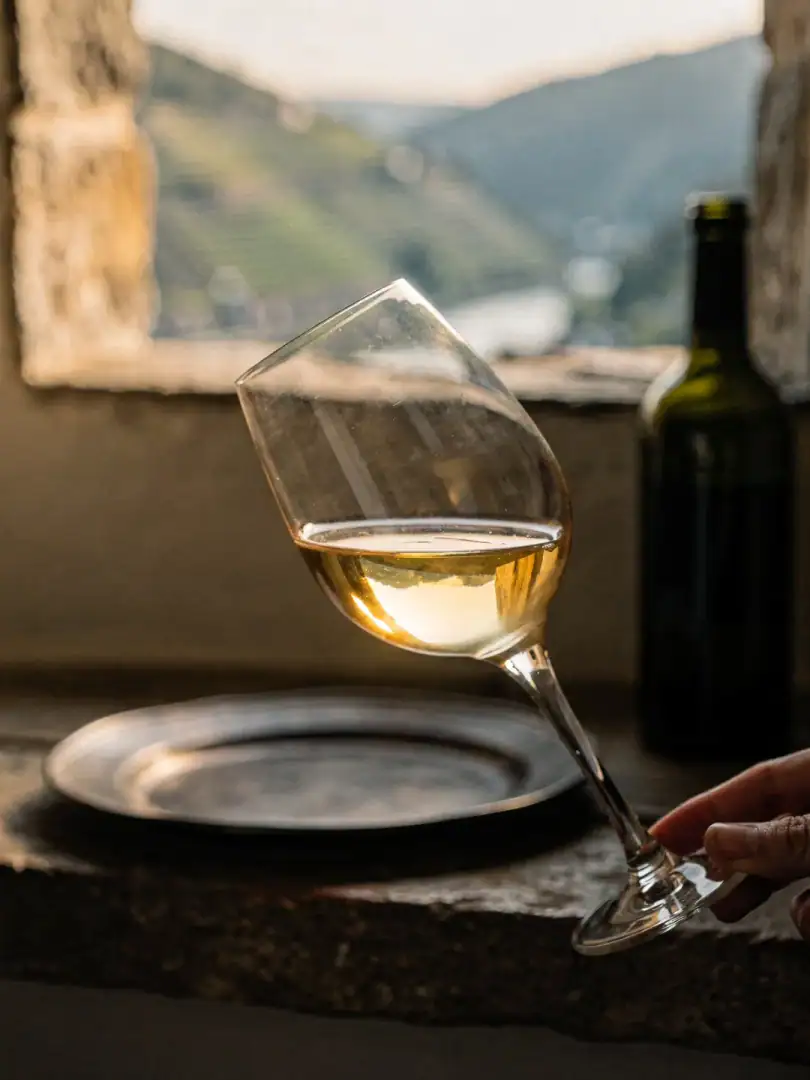
Take a young Mosel Riesling and hold the glass up against a bright surface. The color is pale, often with a greenish shimmer that deepens into richer gold over the years. This paleness has nothing to do with lacking quality — quite the opposite. It's the natural result of a cool, long ripening period that lets little pigment develop in the skin.
Smell first, without swirling. Green apple and lime usually come first, sometimes white peach, and beneath them a stony, almost salty note that many call mineral. After swirling, more emerges: blossoms, sometimes something herbal, and in older vintages that distinctive petrol note experts call TDN, considered a sign of maturity on the Mosel rather than a flaw.
On the palate, acidity is the defining sensation, felt along the sides of the tongue, making the saliva flow immediately. Unlike red wine, there's no tannin to carry the structure. In Riesling, that job falls entirely to acidity, working in tandem with the grape's sugar. The result can taste completely different depending on style: a dry wine comes across leaner and sharper than an off-dry one with a touch of residual sweetness.
This very interplay rewards a second sip. Taste deliberately for whether the sweetness cushions the acidity or whether it stays raw and sharp. A well-made Mosel Riesling, say from the Ürziger Würzgarten, balances both so well that you barely notice the sweetness as such, only as fullness. Without that balance, the wine ends up either thin and sour, or heavy and cloying.
Finally, count how long the taste lingers after you swallow. With a simple Kabinett, it's a few seconds. With a mature Grosses Gewächs, often a full minute. This long finish reveals whether the slate in the soil has truly made it into the glass — not as a mineral note, but as that taut, cool tension that makes no other Riesling in the world taste quite the same.