Saumagen & Dampfnudel
Wine & Food
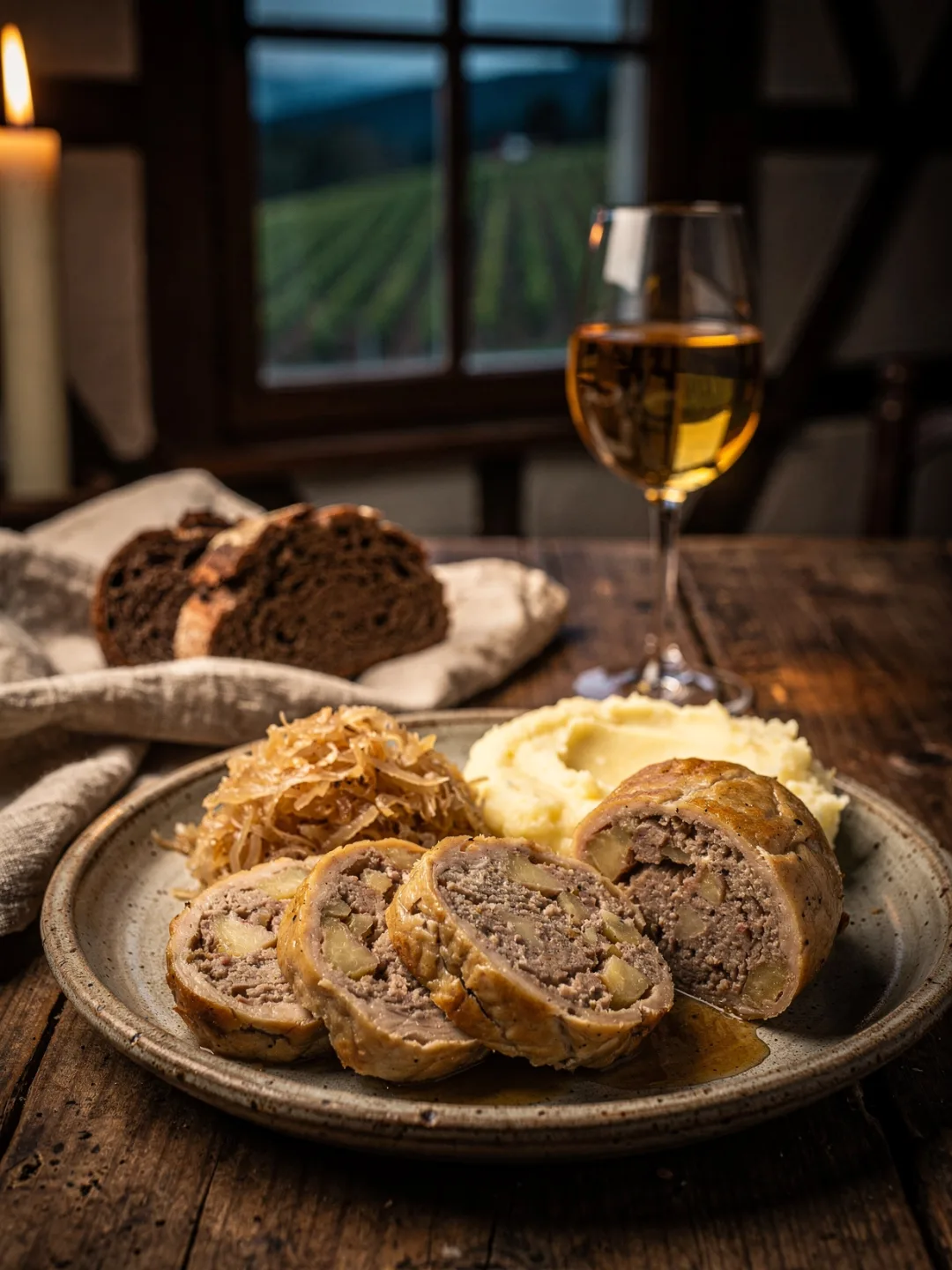
A true Palatinate Saumagen arrives at the table hearty and generously stuffed. Inside is pork, potatoes and spices. The filling goes into a cleaned pig's stomach and simmers for hours until it can be sliced. When Chancellor Helmut Kohl hosted international state guests at the Deidesheimer Hof, this dish often appeared on the menu. The press eventually dubbed it 'chancellor's fare.'
Curiously, one of the area's finest vineyard sites happens to be named Kallstadter Saumagen, a vineyard whose name coincides with the dish purely by chance.
Richness and heaviness demand a counterpart in the glass. A dry Grosses Gewächs from Deidesheim or Forst, with plenty of acidity and ripe fruit, cuts right through the richness of the Saumagen. A lighter wine would simply disappear beside it. A robust Pinot Noir from the Mittelhaardt works too, as long as its tannin isn't too coarse.
The Dampfnudel shows just how distinctive Palatinate cuisine is when it comes to sweet dough. Elsewhere, this yeast dumpling is served sweet, with vanilla sauce. Here, though, the very same dumpling gets pan-fried with a salty crust and paired with a hearty soup or a goulash, and a simple, dry Riesling from the valley cuts through that crust and keeps the plate light, rather than weighing it down further.
In autumn, a warm Zwiebelkuchen (onion tart) goes with fresh Federweißer like a lid on a pot—sweet, half-fermented must against salty, creamy pastry. At the Dürkheimer Wurstmarkt, the world's largest wine festival with roots stretching back to 1417, more than six hundred thousand visitors drink exactly this pairing by the liter. And it all happens right beneath the Riesenfass, the largest wine barrel in the world.
Leberknödel (liver dumplings), grilled bratwurst, and Saumagen together make up what locals call the Palatinate Trinity. The same rule applies to all three: salt and fat call for acidity and power, not a shy, understated glass.