Ripe, Not Stony
Tasting
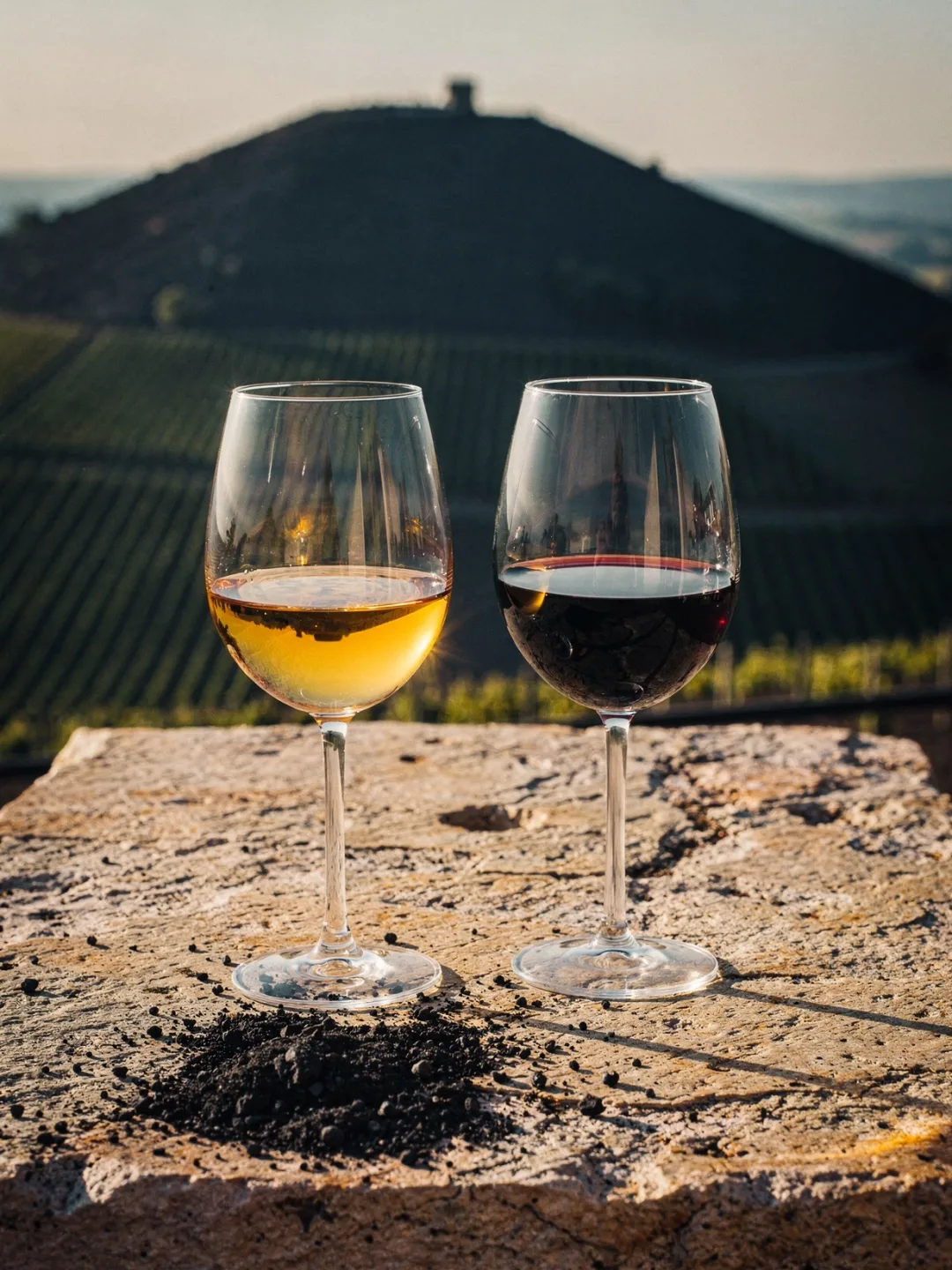
Hold a Palatinate Riesling up to the light, and the origin often shows itself in the color alone. It displays a rich, almost straw-golden yellow, deeper than the pale green-yellow of a young Mosel Riesling. That's down to the climate. Where the grape gets more sun, it builds up more pigment in the skin, long before anyone even thinks about pouring a glass.
Smell first, without swirling. A young Palatinate Riesling opens with ripe peach, sometimes apricot. Or even mango. A Mosel Riesling, by contrast, tends to smell more of green apple and citrus peel: the same grape juice, but with considerably more hours of sunshine behind it. If the wine comes from the Pechstein near Forst, a smoky note reminiscent of flint often mingles in, one that connoisseurs immediately attribute to the basalt soil.
On the palate, acidity strikes first, along the sides of the tongue, followed, often surprisingly, by alcohol: Palatinate Rieslings often sit between twelve and a half and thirteen and a half percent alcohol by volume, while many Mosel wines stay at nine or ten. Even so, a good Palatinate Riesling never feels heavy-handed, because acidity keeps ripeness in balance. Without that balance, the wine tastes broad and flat instead of vibrant.
A Dornfelder calls for a different kind of attention. The color runs almost to black, the tannin stays soft, noticeable but never harsh on the gums, and the aroma is dominated by sour cherry, blackberry and a hint of elderberry. Taste both wines, Riesling and Dornfelder, from the same vineyard side by side, and you immediately see how differently a grape variety can process the very same sun.
One tasting experience that exists only in autumn is Federweißer. It's young, still-fermenting grape must, cloudy and lightly sparkling from the carbon dioxide of fermentation. It tastes sweet and tart at once, because sugar and already-formed alcohol coexist side by side. It keeps for only a few days and must be transported with holes in the cap, or the fermentation pressure will burst the bottle.