Spundekäs to Game
Wine & Food
Every autumn, Straußwirtschaften pop up all over the Rheingau: for a few weeks, winegrowers pour their own wine and serve a handful of simple dishes, nothing more. It's even required by law. The classic dish there is Spundekäs, a creamy fresh cheese with onions and paprika, eaten with pretzels and a young, dry Riesling.
The pairing works because acidity cuts through fat. A dry Riesling washes the creaminess of the Spundekäs off the tongue instead of blending with it, leaving you hungry for the next bite. The same rule applies to onion tart with young Federweißer in October, just sweeter and heavier in the glass.
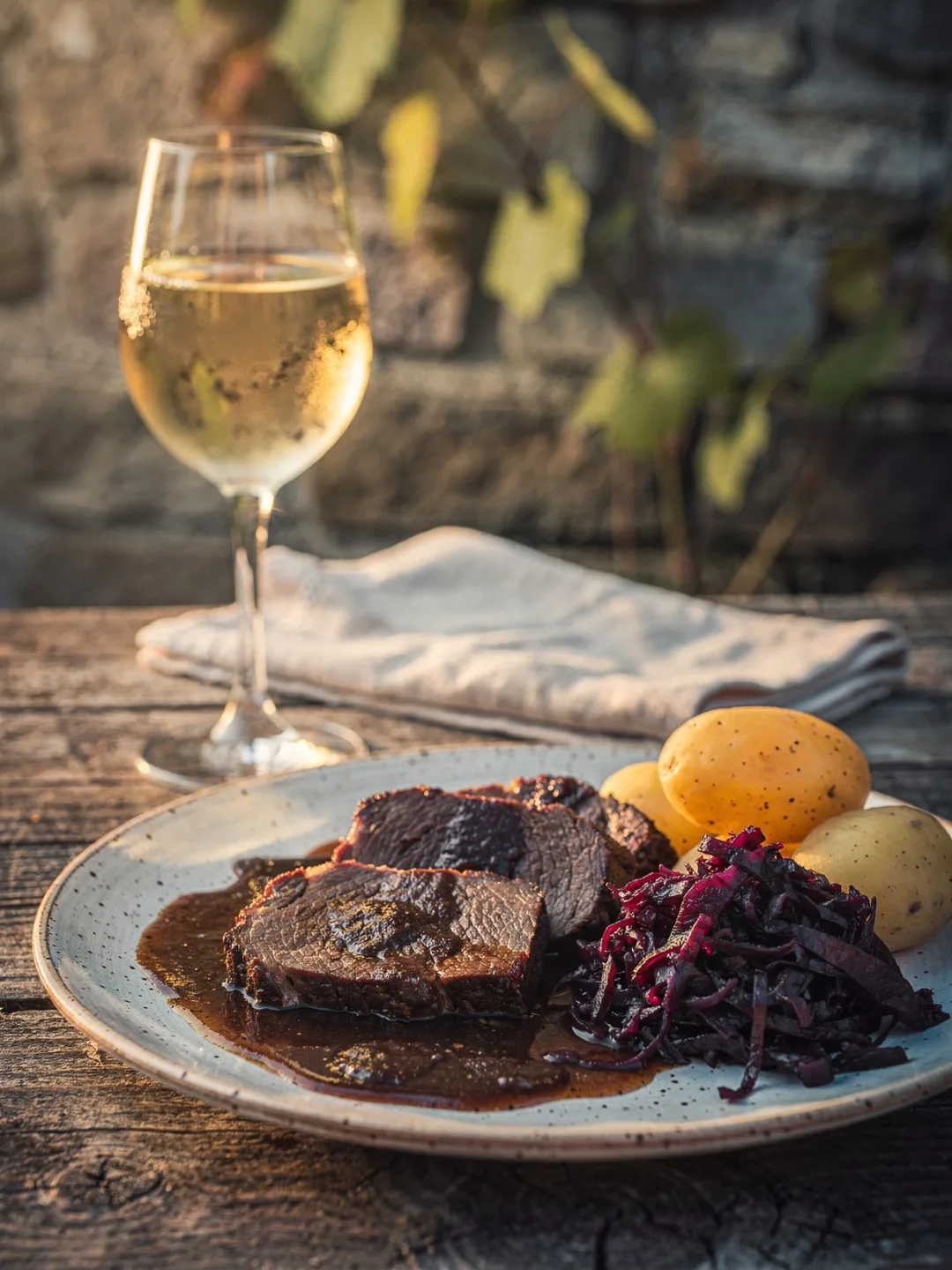
Sauerbraten, the vinegar-marinated, slow-braised beef roast, calls for a Riesling with a bit more weight and sweetness—a Kabinett or an off-dry (feinherb) wine. The gentle sweetness balances the tang of the marinade, while the acidity keeps the dark sauce from feeling heavy. A bone-dry Erstes Gewächs, by contrast, often comes across as too austere.
Game is a different story. Venison or wild boar from the Taunus forests calls for Assmannshausen Spätburgunder on the table, not Riesling. Its fine tannins and the subtle whisper of sour cherry carry the earthy, slightly bitter notes of the game without overpowering them. No other Rheingau red brings this pairing together as reliably.
For fish from the Rhine—once salmon and eel, today mostly trout and pikeperch—a simple, chilled Kabinett is all you need. And for dessert, none of the wines mentioned so far will do; instead, reach for an Auslese or Beerenauslese. This is the legacy of that tardy messenger of 1775, without whom the Rheingau would still have no sweet wine to this day.