On a Riesling
Tasting
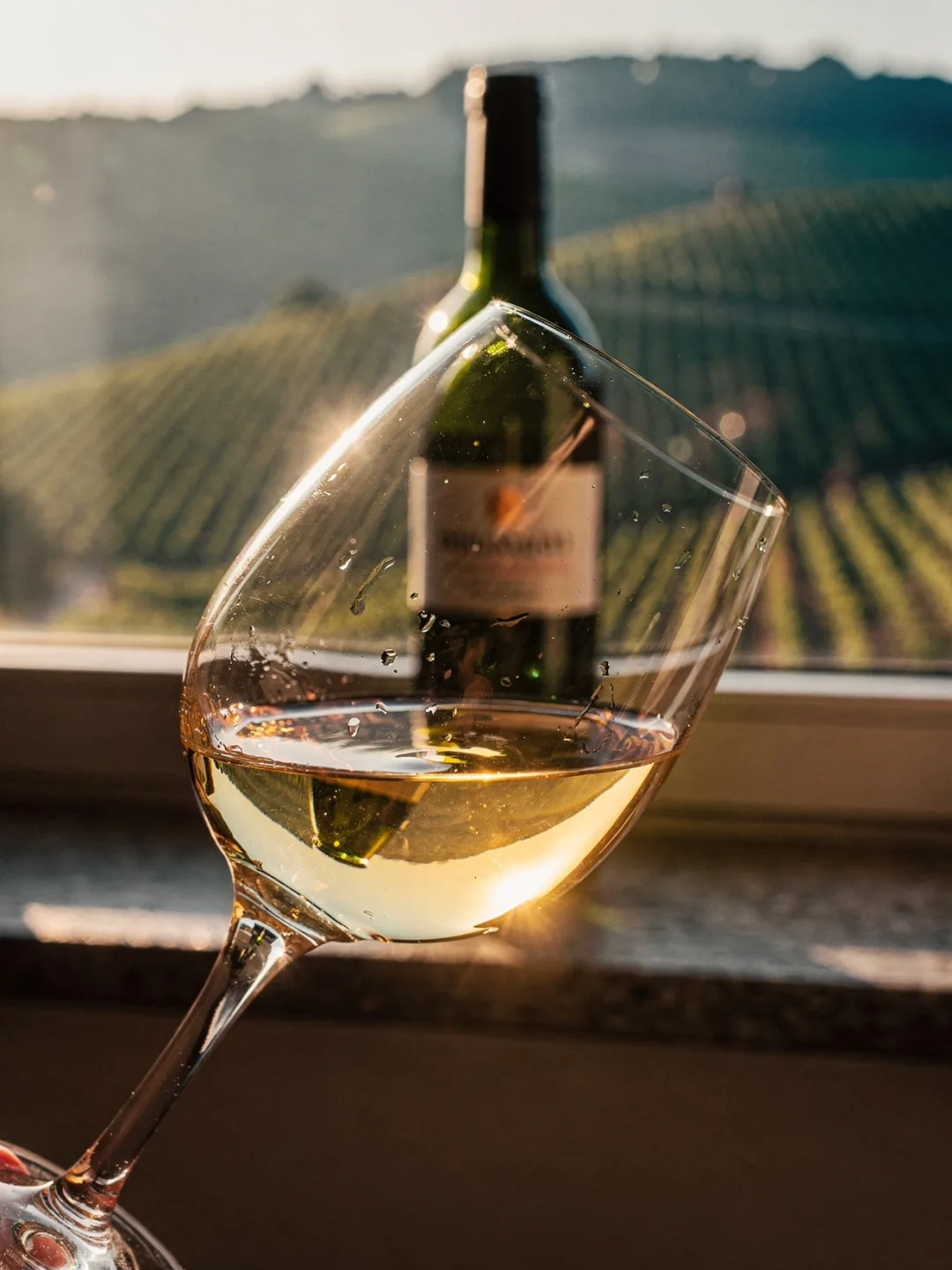
Hold a glass of Rheingau Riesling up to the light at an angle. Young, its color is pale yellow with a hint of green, almost like unripe gooseberry; after ten, fifteen years, it shifts through gold toward amber. This change in color isn't a flaw but a result of the high acidity, which keeps the wine young long enough to develop color at all.
On the nose, a young Riesling shows peach, green apple, and citrus, sometimes white blossom. After ten or more years in the cellar, an entirely different note often joins in, one many mistake at first for a fault: a hint of petrol. The compound responsible is called TDN, which forms slowly during aging and becomes noticeable above a threshold of around two micrograms per liter — a threshold a research team at the Leibniz Institute first demonstrated at the human olfactory receptor level in 2024. In a mature Erstes Gewächs from Rüdesheim, this note belongs to its character, not its defects.
In the mouth, pay attention first to the acidity. It sits along the sides of the tongue, sets the saliva flowing, and is almost always present in a Rheingau Riesling. In a dry Erstes Gewächs it feels cutting; in a Kabinett, it's cushioned by a touch of residual sweetness. Without this acidity, the region's wines would turn tired and flat within just a few years.
For comparison, try a glass of Assmannshausen Spätburgunder from the Höllenberg. Its color stays pale, almost translucent, its aroma recalling sour cherry and wild strawberry rather than peach. The tannin, that rough coating on the gums, is restrained rather than firm. Anyone tasting both wines on the same evening immediately understands why the Rheingau is considered a region split in two.
In the end, what matters is the finish: how long the flavor lingers after swallowing. For a good Erstes Gewächs, that's twenty seconds and more, and this length simply cannot be blended in afterward in the cellar. It comes only from ripe grapes grown on one of the Rheingau's steep slopes, or not at all.