Monks, phylloxera, reunification
Region & History
Emperor Otto III signed a deed of donation in 998, and buried within it is a casual sentence about vineyards along the Saale and Unstrut — the first written mention of wine in this region. This is documented fact, not myth. Ever since, it has been considered Germany's northernmost quality wine region. That date makes it over a thousand years old. Wine was already everyday life here when most German wine regions didn't even exist yet.
Monks did the real groundwork. In 1137, Cistercians founded Kloster Pforta near Naumburg, and just ten years later, in 1147, the region's first named vineyard appears in the records: the Köppelberg, named after the monks' habit. No coincidence — this was strategy. Before the Reformation, the monastery owned 167 vineyards totaling 260 hectares across 62 villages — a wine empire in the middle of central Germany, run by men who were supposedly meant to be praying.
By the 16th century, vines covered roughly ten thousand hectares. Then, in 1887, phylloxera arrived, and Saale-Unstrut became the first officially recognized phylloxera-infested area in Germany. The louse ate through the roots until, by 1919, only about a hundred of the original ten thousand hectares remained. A collapse without parallel. Only when grafting onto phylloxera-resistant rootstock was permitted nationwide in 1923 could winegrowing even begin again.
The GDR didn't make things easier either. Private individuals were forbidden from selling wine they'd pressed themselves, and the state-run wine estates struggled with climatic extremes: the brutal winter of 1986/87 destroyed four out of every ten vines, shrinking the area from 480 to roughly 240 hectares. Nearly half, in a single winter. That the region survived at all was thanks to winegrowers who kept going anyway.
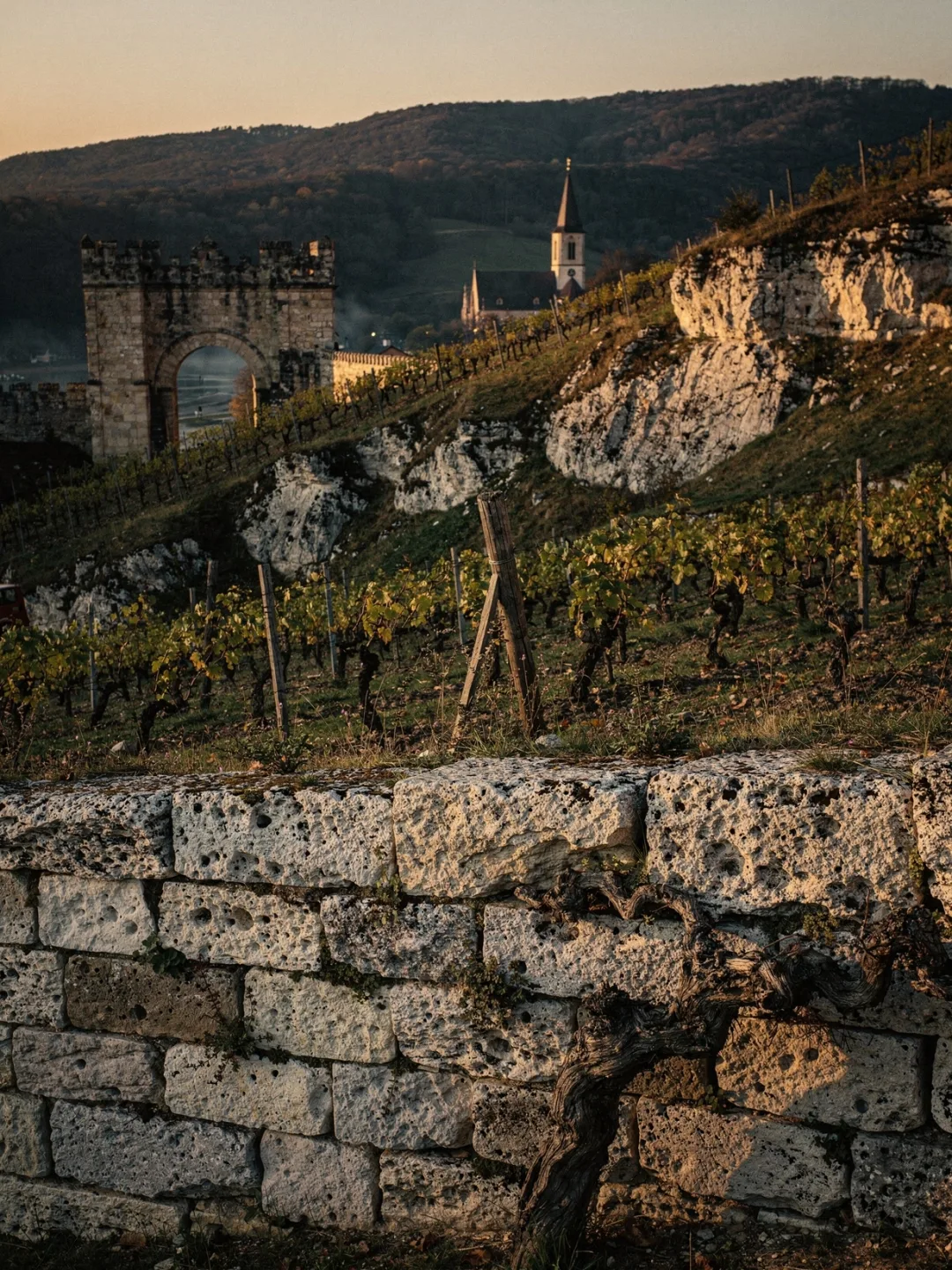
After 1989, growth returned — slowly, but steadily. Today, 868 hectares of vines once again cover the slopes of the Saale and Unstrut, more than at any point since reunification, and the region wears its title with pride: the northernmost of Germany's thirteen quality wine regions, at the 51st parallel, right where wine shouldn't really grow at all.