Tasting a Pinot Blanc
Tasting
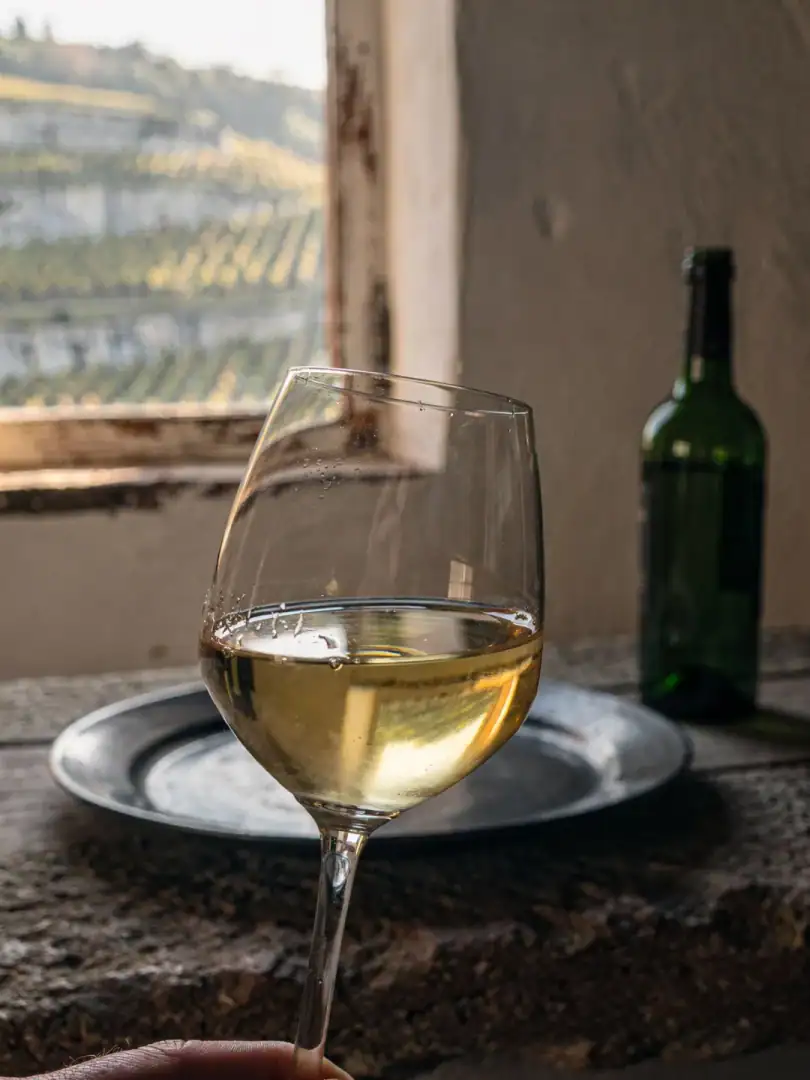
Pour a Pinot Blanc from the Saale into a glass and hold it up to the light. It won't deceive you. The color is pale, almost like diluted straw, sometimes with a greenish tinge at the rim — a sign of the short, cool ripening period, not of poor quality.
Smell first, without swirling. Then swirl and smell again, because the difference between the two tells you more than either sniff alone ever could. First comes green apple, sometimes lemon. After that often follows a hint of almond or fresh hay, which only rises up once the wine has been moved around in the glass.
On the palate, acidity dominates immediately. This is no accident. It hits the sides of the tongue right away, instantly setting the saliva flowing, and that's precisely the fingerprint of a wine from the 51st parallel: where the south delivers richness, Saale-Unstrut delivers tension. A wine without this acidity here almost always tastes like a weak vintage, not like the region's style.
Sometimes tiny, glass-clear crystals appear at the bottom of the bottle or on the cork — tartrate crystals, precipitated acid that forms during cold storage. A good sign. In wines from cool sites like these, you'll see this more often than in wines from the south, and it's not a flaw at all — just further proof of the high acidity these wines carry.
In the end, it's the finish that counts. With a simple Müller-Thurgau, it fades after just a few seconds; with a carefully crafted Pinot Blanc from one of the steep shell-limestone sites, it lingers noticeably longer, carrying a mineral note that recalls wet stone more than fruit. Taste both back to back, and you immediately understand why the vineyard site here decides almost everything.