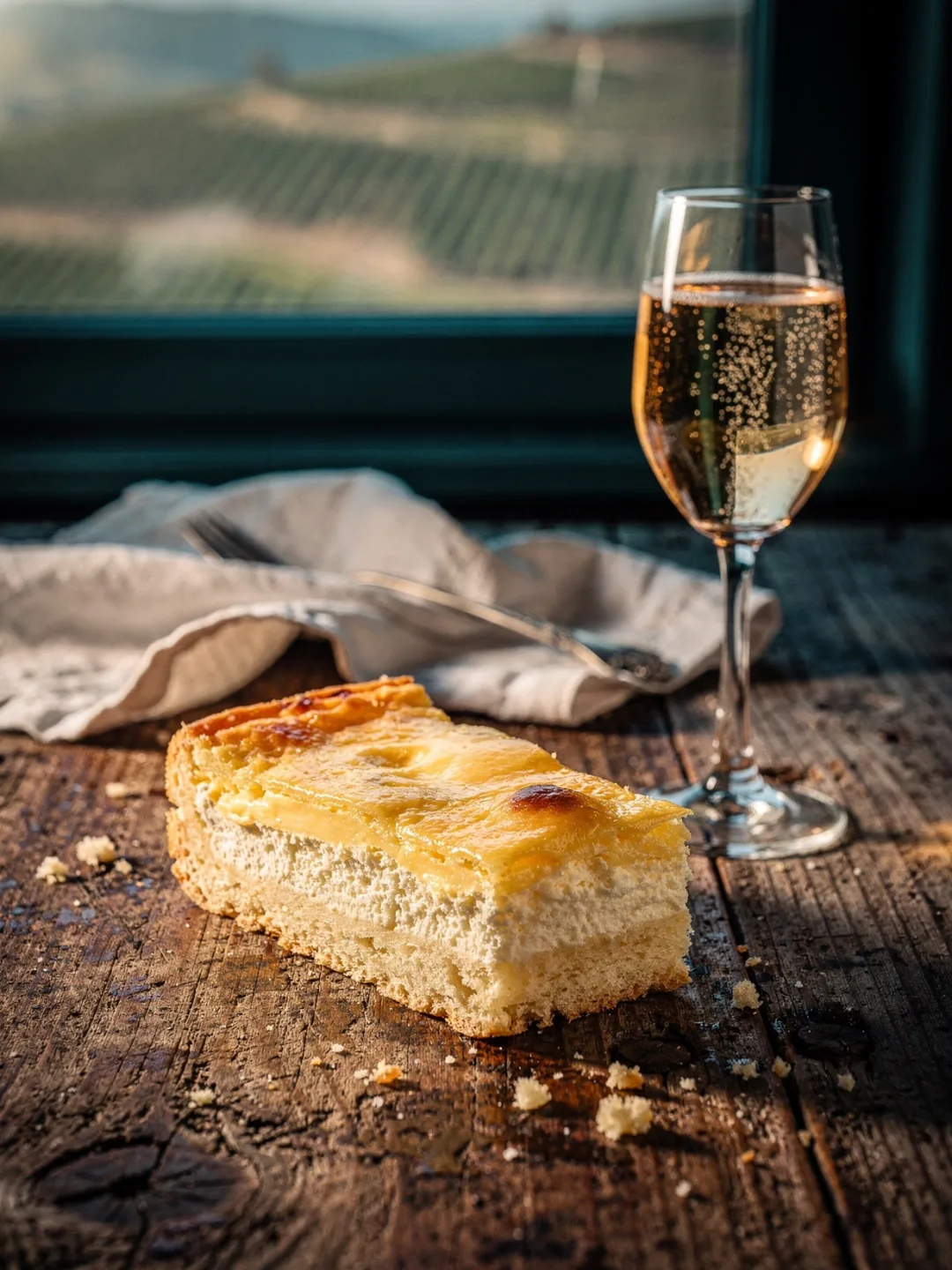
Eierschecke and Trout
Wine & Food
Saxon cuisine is rarely spicy, but often sweet, creamy, or both at once. That's exactly where pairing wine gets tricky. Most Saxon wines are lean, dry, and acid-driven — the complete opposite.
Dresdner Eierschecke, for instance, a three-layered cake made of yeast dough, quark, and a light egg custard topping, is naturally sweet and creamy. A dry wine alongside it would taste sour and thin. A half-dry or mild sparkling wine from Schloss Wackerbarth works better — its fine bubbles cut through the creaminess without needing to counter the sweetness.
Quarkkeulchen, small pancakes made from grated potatoes and quark, usually come to the table with applesauce and cinnamon sugar — another sweet, mild combination. A Weissburgunder with little acidic edge accompanies this more gently than a sharp Riesling, which would end up fighting against the sweetness.
Savory food is a different story. Trout from the streams around Radebeul, briefly pan-fried and seasoned simply with butter and lemon, calls for the acidity that a Riesling or Goldriesling already brings to the table. The wine's acidity mirrors the lemon's acidity rather than competing with it, so the delicate fish flesh isn't overwhelmed.
As a rule of thumb here, as elsewhere: sweet food needs a wine at least as sweet, or it will taste bitter and thin. When winegrowers aren't sure, many reach for sparkling wine instead. It's dry enough for fish and, thanks to its bubbles, mild enough for cake — and in a region built around freshness anyway, that's rarely the wrong choice.