Tracing Goldriesling
Tasting
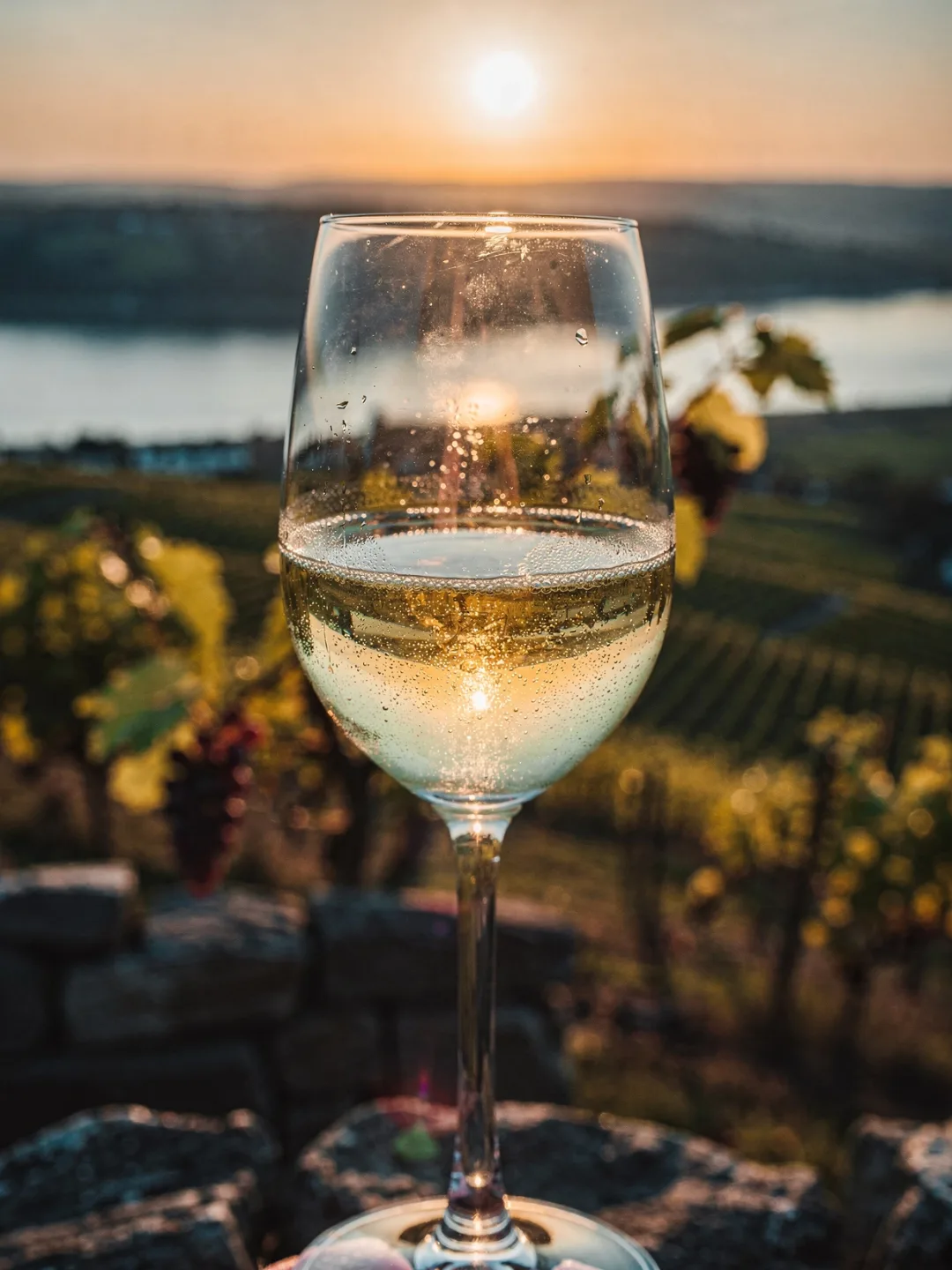
Take a glass of Goldriesling from the Elbe Valley near Meissen and hold it up to the light. The color stays pale, almost straw-yellow with a hint of green — a sign of the thin skin and early harvest, not a lack of ripeness.
The name is misleading. On the nose, you'll pick up more Muscat than Riesling — sweet and floral, almost like overripe grapes, even though the wine itself is usually bone-dry. Swirl the glass once, and a hint of quince or yellow apple often emerges underneath.
The real surprise comes on the palate. That seemingly sweet nose meets an acidity that pulls along the sides of the tongue and gets the saliva flowing instantly. This very contrast between floral aroma and taut flavor is typical of Saxon wine, and one reason the variety has survived almost nowhere else.
Compare it side by side with a Riesling from the same site, and the difference becomes clear. The Riesling leans toward citrus with a mineral, sometimes almost smoky edge. Goldriesling, by contrast, stays more perfumed and reaches drinking maturity faster. Both share that same knife-edge acidity, since both come from the same cool nights.
Finally, count how long the flavor lingers. With a Saxon wine, that's often just a few seconds — not because the wine is lacking, but because the entire region is built for freshness rather than power. Anyone expecting the length of a heavy southern wine is tasting right past the actual character here.