Spätzle & Lemberger
Wine & Food
Swabian cuisine is hearty, starchy, and rarely spicy, and the wines from Württemberg are tailored precisely to that: plenty of acidity, moderate alcohol, little sweetness. This pairing is no accident, but the result of centuries in which wine and food were produced on the same farm, often from the same kitchen for the same field workers.
Maultaschen, the Swabian answer to ravioli, are traditionally served in broth or pan-fried with roasted onions. A Trollinger with a touch of residual sweetness suits them well. Its gentle fruit sweetness softens the roasted onions' char without overwhelming the ground meat and spinach filling. A weightier, tannin-heavy wine would simply feel out of place next to these soft dumplings.
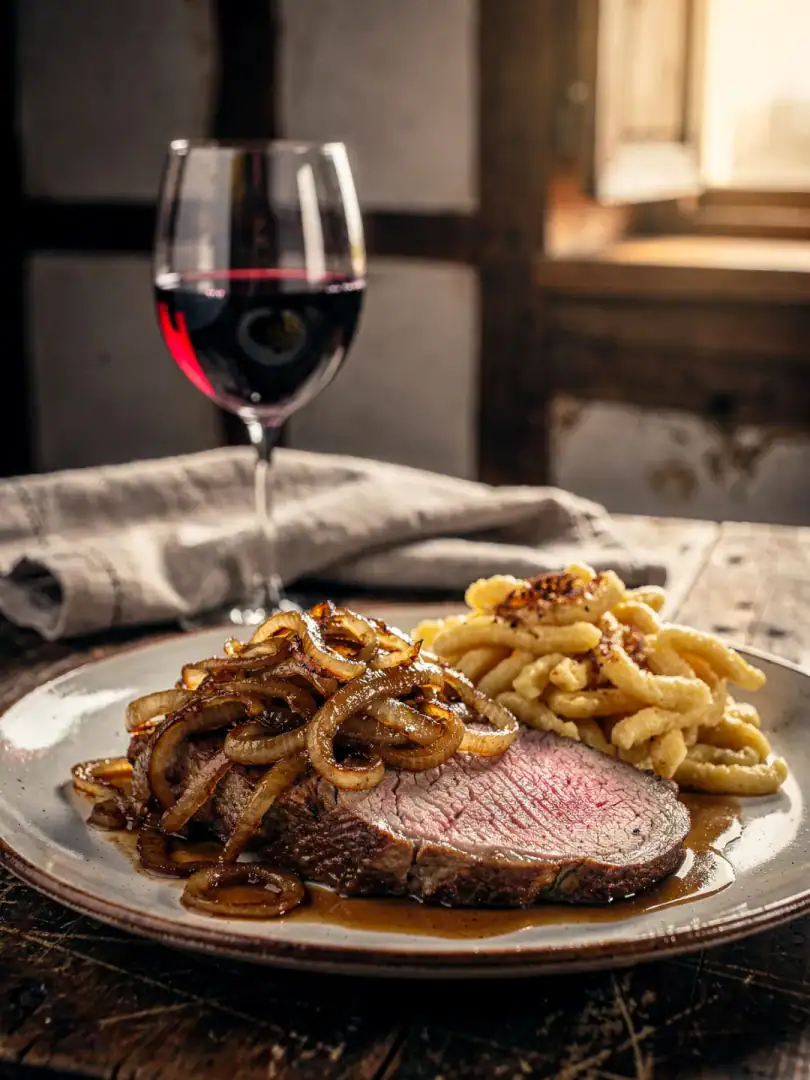
Zwiebelrostbraten, a thick slice of braised beef topped with a mountain of caramelized onions, calls for more counterweight. This is where Lemberger comes in, ideally one with some barrel age. Its tannin stands up to the fat of the meat, while its notes of pepper and dark fruit meet the sweetness of the onions on equal terms. The Spätzle alongside soak up the pan juices, tying wine and meat together.
Lentils with Spätzle and Saitenwürstle are, for many, the true national dish of the Swabians: lentils braised with bacon and vinegar, served with hand-scraped Spätzle and small boiled sausages. The vinegar in the dish calls for acidity in the glass, or the wine will taste flat beside it. A simple, chilled Trollinger or a Schillerwein beats any heavy red here, since both bring the acidity that the vinegar demands.
Not every Württemberg wine suits every dish. Looking at the wine's origin helps more than any general rule. A Riesling from the Neckar terraces near Hessigheim is taut and mineral-driven. It pairs better with fish from the nearby Neckar or with Flädlesuppe than with roast beef. And Kässpätzle, the Swabian counterpart to baked cheesy pasta, is best matched with a simple, unpolished Kerner. It doesn't mask the cheese, only accompanies it.