On a Trollinger
Tasting
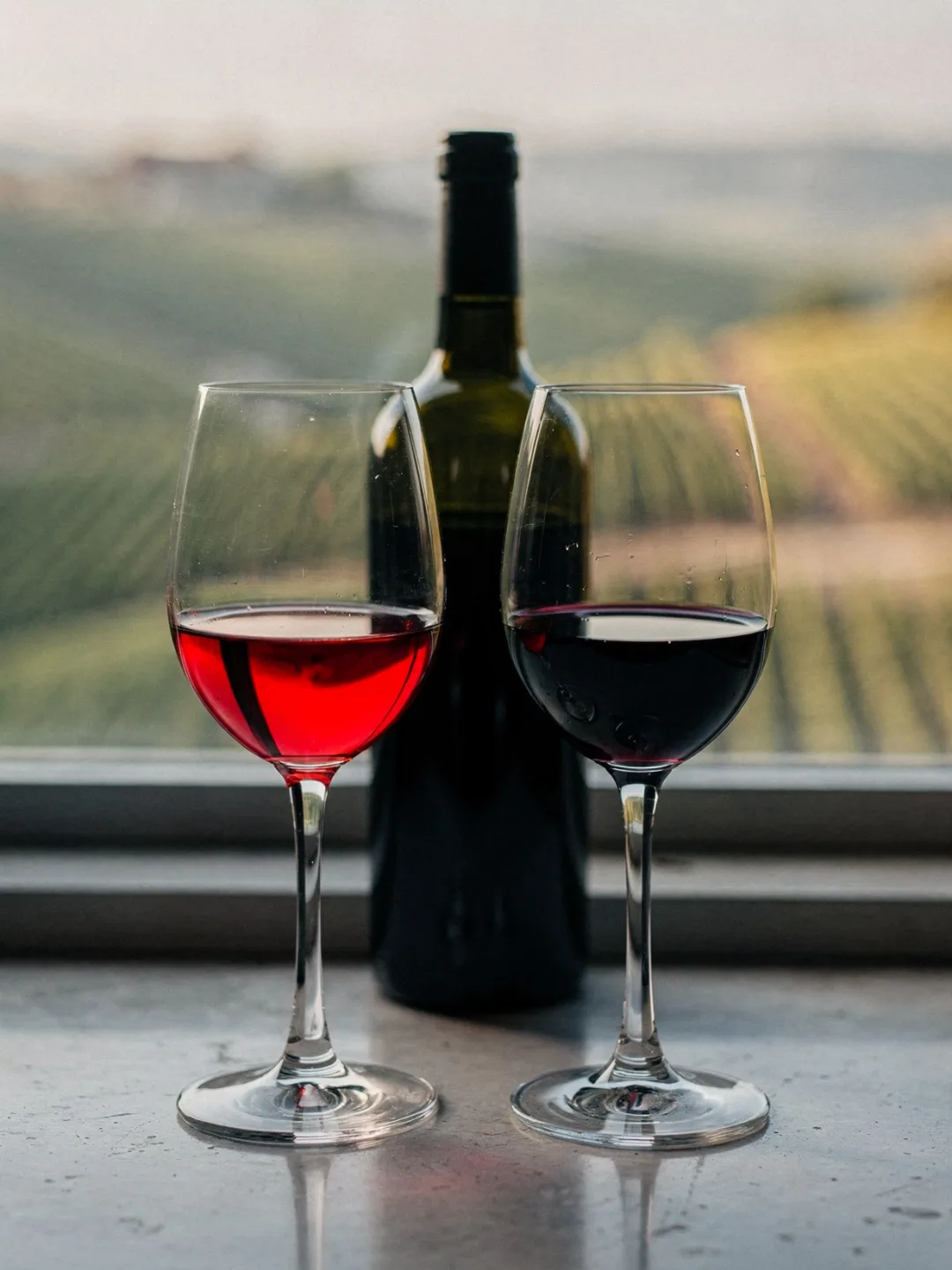
Take a Viertele of Trollinger and hold it up to the light. The color stays pale, almost translucent, with a bluish to violet shimmer at the rim, even in wines already a year in the bottle. This isn't a weakness of the variety but its very nature: Trollinger has thin skins and little pigment. Anyone expecting a dark wine here is mistaking it for something else.
Lemberger beside it looks almost black-violet, opaque halfway into the glass. The two great reds of Württemberg already part ways by appearance, before you've even tasted anything. Smell the Trollinger first without swirling: sour cherry, raspberry, sometimes a hint of almond from the pit. Swirl it, and a slightly earthy, almost dusty note often joins in, one many Wengerter fondly call typically Swabian.
With Lemberger, you need the swirl from the start. Beneath the dark fruit, blackberry and sour cherry, there's almost always a spicy layer: black pepper, sometimes licorice, and with barrique aging, a touch of vanilla and roasted coffee too. In the mouth, pay attention to two distinct impressions: acidity sits along the sides of the tongue and gets the saliva flowing; tannin lies as a rough coating on the gums and palate, noticeably firmer in Lemberger than in Trollinger.
Schillerwein is best judged alongside a rosé from another region. Its color is more restless, sometimes leaning more toward salmon pink, sometimes toward copper, because red and white grapes simply don't release their color evenly. In taste, it sits between two worlds: more structure than a pure white wine, more freshness than a Rotling blended from finished wines.
Finally, count the finish. For a simple Trollinger, two or three seconds is already plenty. That's not a flaw but the whole point of the variety: quick, fresh, made for the next sip. An aged Lemberger from top sites, by contrast, holds on for twenty seconds or more, with tannin that only softens after years. The entire red spectrum of Württemberg moves between these two poles.