Chalk, Clay, Flint
Soils
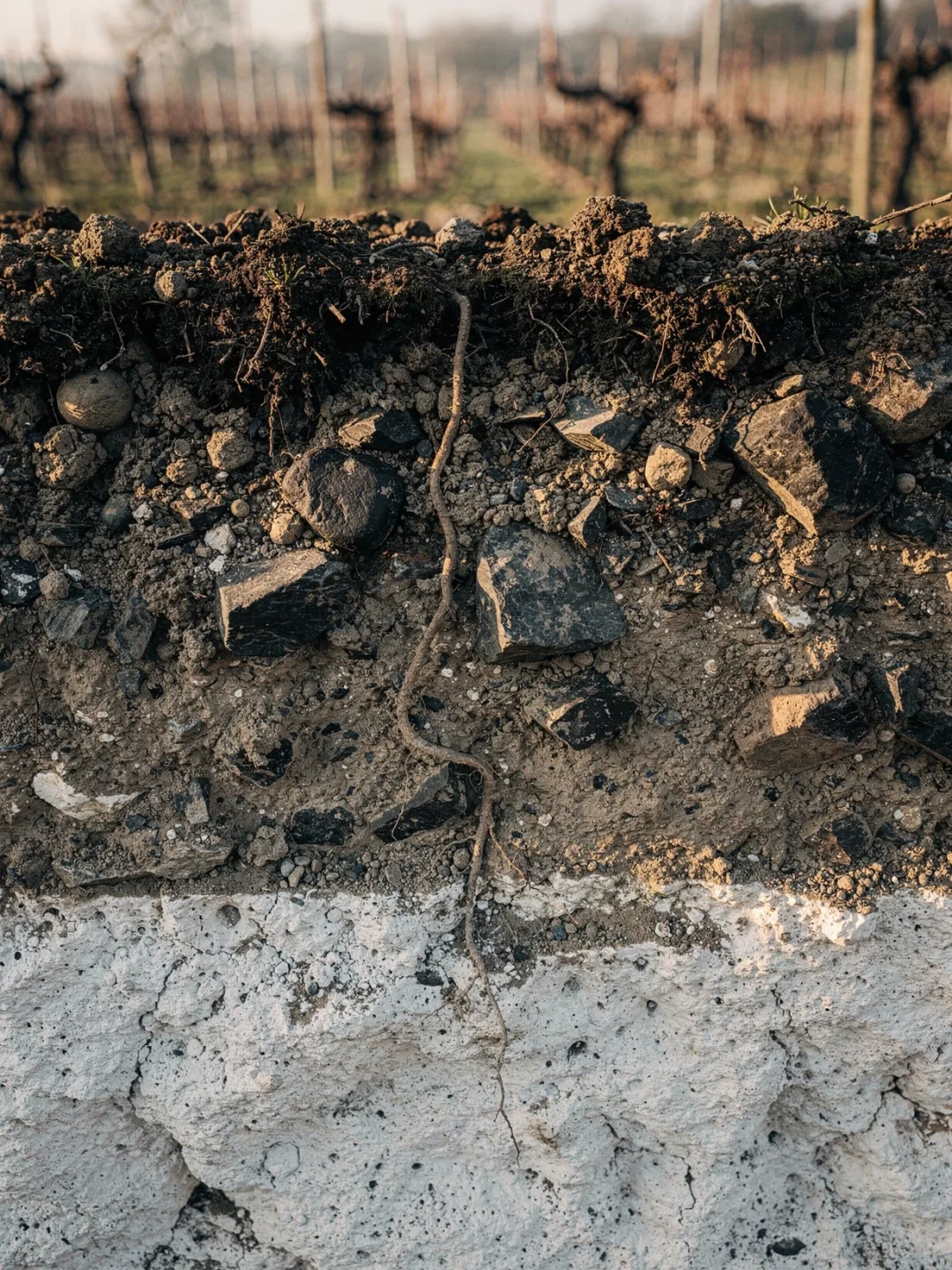
Dig a hole in a South Downs vineyard, and after a handspan of dark topsoil you'll hit dense, sandy clay studded with dark stones. These are flint nodules, weathered out of the rock below. This clay-with-flint cap is the first surprise, because the true chalk only begins beneath it.
This chalk formed roughly a hundred to seventy million years ago on the floor of a warm sea, from the microscopic calcite plates of dead algae. It's the same formation that runs beneath the English Channel and resurfaces in Champagne. It's porous like a sponge: water runs through it while also staying stored in its fine pores.
For the vine root this means two things. It first has to force its way through the firm clay with its flints, which costs energy and slows growth. After that it hits a reservoir from which it can still draw water even in the driest August. Roots that make it down into the chalk survive dry spells that would long since have wilted a shallow-rooted vine.
Not every Hampshire vineyard sits on chalk. The New Forest in the southwest of the county lies on quite different rock: sand, gravel and heavy clay from the Eocene epoch, without a trace of the limestone that the chalk of the South Downs offers the vine roots. Wine from there tastes rounder and softer, with less of the steely acidity that marks chalk wines. Which soil is better depends entirely on what you're after.
One misconception persists stubbornly: that the vine somehow tastes the stone and passes it on to the glass as "minerality." But only dissolved salts reach the vine through the root, in the tiniest traces — far too little to taste anything at all. What the chalk really delivers is water in the right measure, and stored warmth that's released again at night. It's this detour through water balance and temperature that shapes what's in the glass in the end, not the rock itself.
A thin, dark layer of topsoil over a sandy-clay subsoil, rarely more than a hand's breadth deep.
The root: This is where the fine roots sit. They're the first to respond to rain — and the first to dry out again.