Tulip, not flute
Glassware
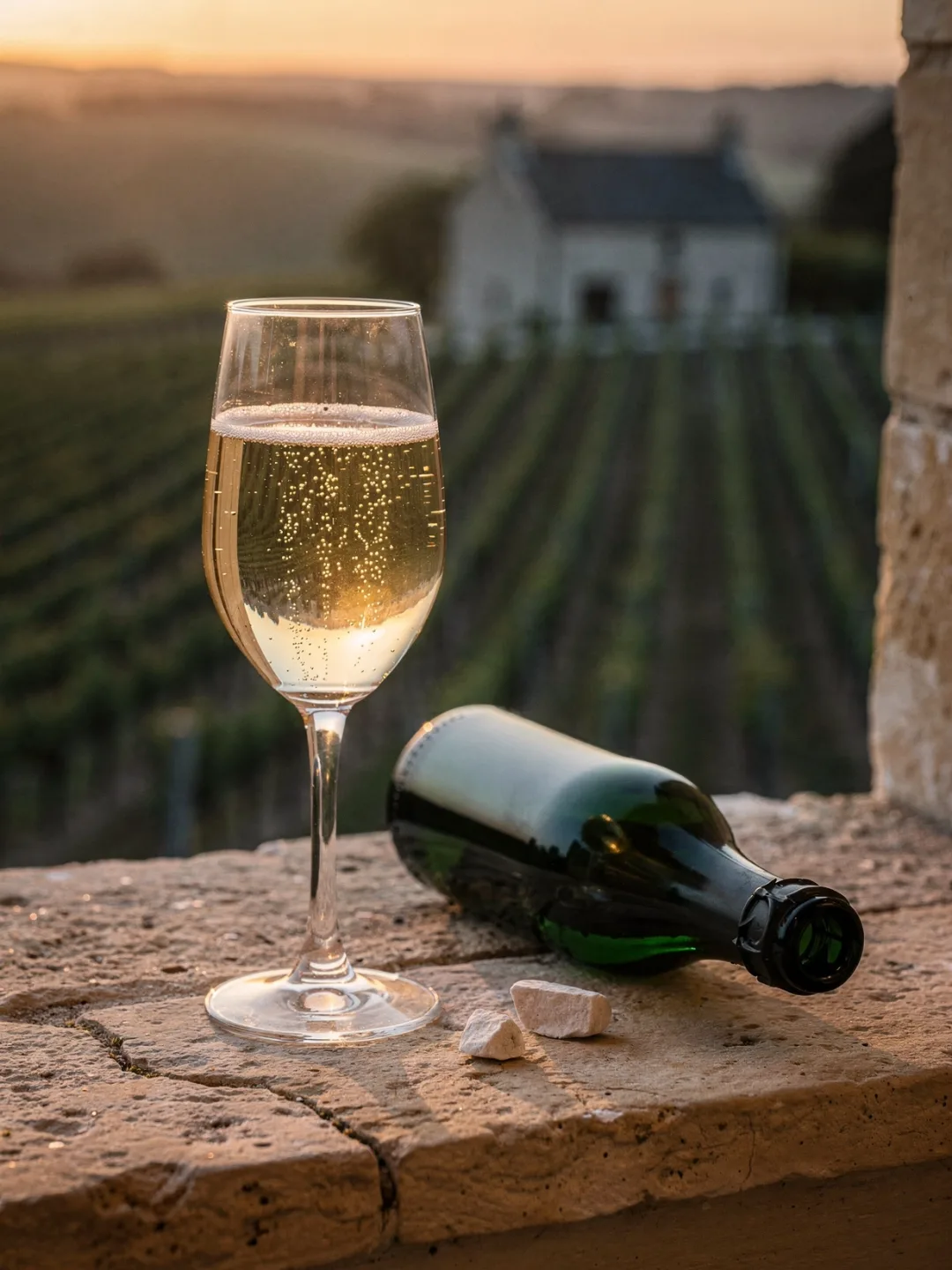
A glass changes how much of the mousse you actually see. It also determines how much of the aroma reaches you at all, and with a wine carrying as much acidity as those from Hampshire, that makes a real difference. The old, narrow flute does keep the bubbles together for longer. But it also traps almost all the aroma inside.
Houses like Coates & Seely or Hattingley Valley now mostly bottle their wines to be served in a tulip glass: a bowl with a round belly and an opening that narrows again. The belly gives the wine room so that aromas like citrus, green apple or the brioche notes from lees ageing can actually unfold. The narrow opening then channels them upward toward the nose.
When it comes to temperature, people often overchill. Six to eight degrees Celsius is right for a simple cuvée. A mature Blanc de Blancs from Hambledon or Black Chalk, on the other hand, deserves more like eight to ten degrees, because served ice-cold any sparkling wine tastes like little more than acidity — the cold numbs all the finer aromas. Ten minutes out of the fridge is usually enough to fix that.
Pour at an angle and in two stages, so the foam doesn't spill over the rim, and never fill to the brim. A glass should be filled to its widest point. Above that, leave room for the rising bubbles and the aroma that collects there. Fill it to the brim and you'll mostly end up drinking carbonation.