Oysters, watercress, pannage
Wine & Food
Whatever comes out of the water or off the fields in Hampshire follows the same chalk as the wine. Only the route runs via the river or the seabed rather than the vine root. It's as simple as that.
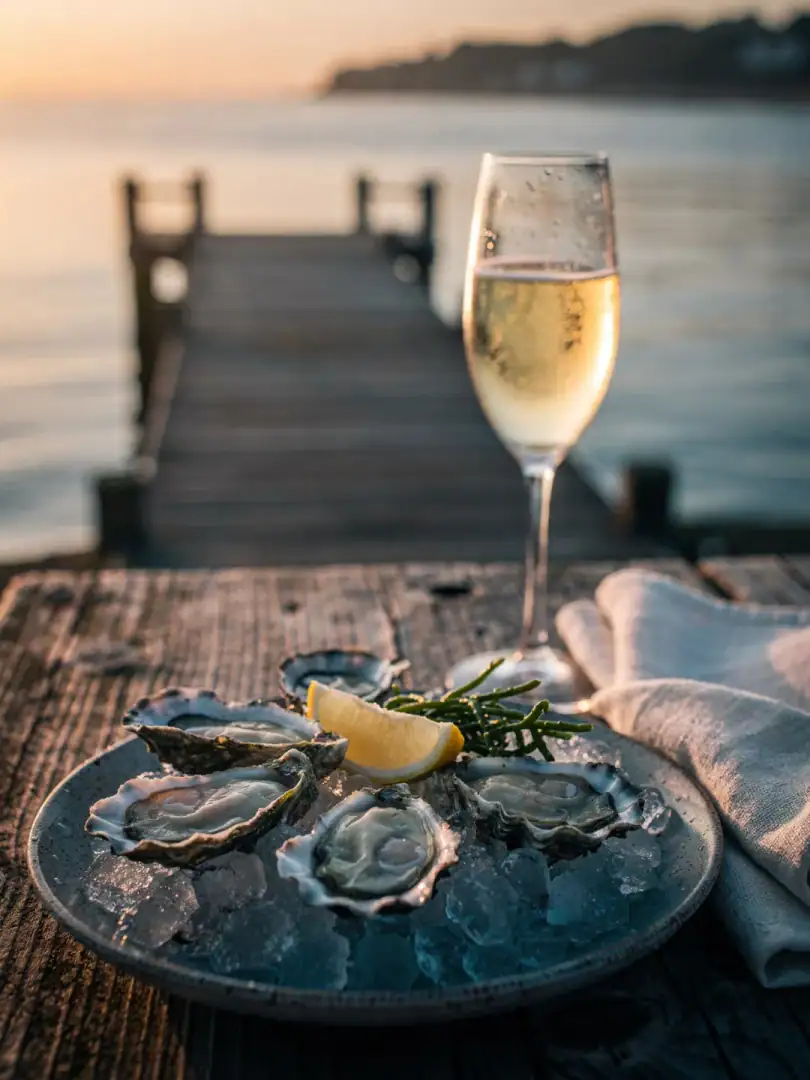
The Solent, the strait off the coast, was once one of Europe's largest oyster beds. Today wild fishing is closed due to collapsed stocks, but farmed oysters from the region are still available. They pair especially well with a bone-dry cuvée with no dosage. The wine's acidity meets the oyster's salty, iodine-like brininess, and neither one dulls the other.
Near Alresford, watercress grows in the chalk-fed water meadows along the River Itchen, which is why the town calls itself the "watercress capital." Its sharp, peppery flavor finds a counterpart in Bacchus. The wine's aroma of elderflower and freshly cut grass takes up the sharpness of the cress instead of fighting against it. The same chalk that keeps the wine acidic also keeps the cress's water cool and mineral.
Further southwest in the New Forest, things get heartier. Every autumn, the commoners—holders of grazing rights—drive their pigs into the forest for about two months so they can feast on fallen acorns. This centuries-old practice is called pannage, and it gives the meat a nutty flavor and fine marbling. This meat pairs better with a robust rosé made mostly from Pinot Noir than with any still white wine, since the rosé's red fruit aromas and firmer structure stand up to the fattiness and nutty character of the acorns.
Two rules stick with you. Acidity cuts through fat and salt, which is why oysters and pannage ham work so well with sparkling wine. A dish with its own heat, like Alresford watercress, needs a wine that absorbs that heat rather than amplifying it. That's exactly what the grassy, floral Bacchus does.