By the mousse
Tasting
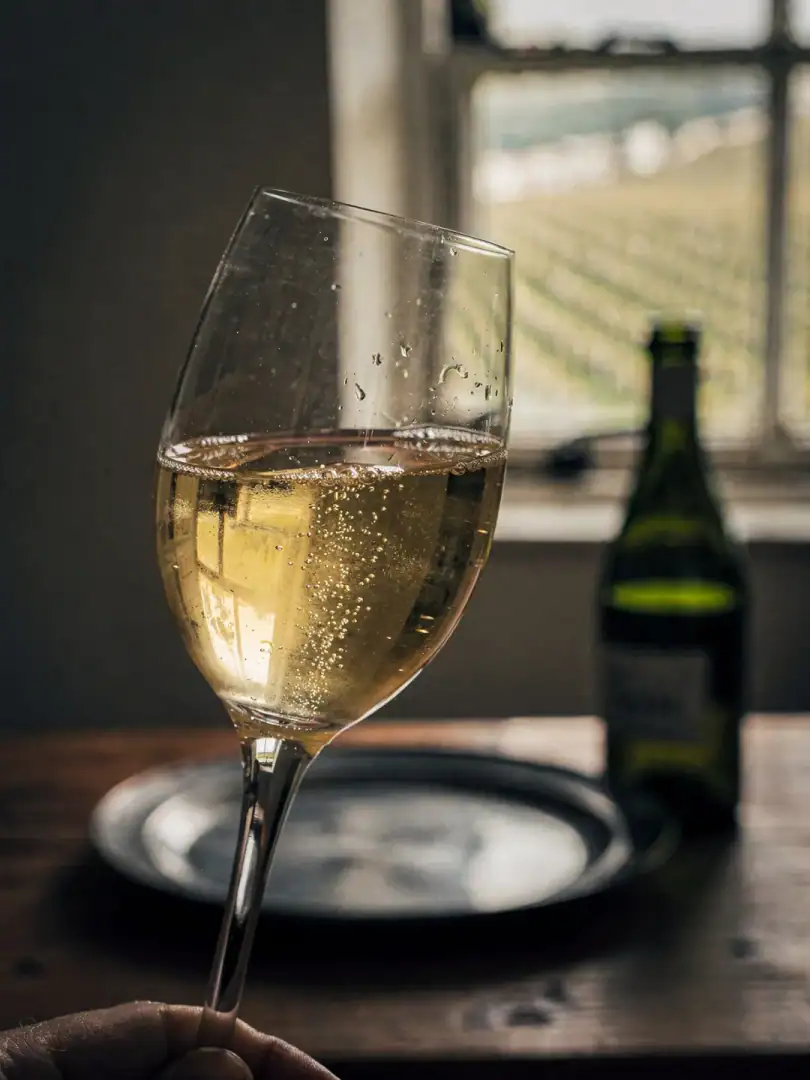
Hold a glass of Black Chalk or Hambledon cuvée at an angle to the light. The color is pale straw-yellow to green-gold. Fine bubbles rise in a straight chain from the bottom of the glass, and the finer and more even this mousse, the more careful the bottle fermentation behind it usually was.
Smell twice: once with the glass still, once after a gentle swirl. In the still glass, fruit comes through first — green apple, lemon, sometimes white currant. Only after swirling do the heavier molecules from lees ageing emerge: brioche, toasted bread, occasionally a hint of hazelnut.
On the palate, acidity is the first thing you notice. In English sparkling wine it's more pronounced than in almost any other. It runs sideways across the tongue, gets the saliva flowing, and can feel almost piercing when the dosage is kept low. But this very sharpness is also why these wines still taste fresh after years on the lees, while warmer growing regions are already bottling tired cuvées.
The mousse itself reveals a lot: fine, small bubbles that persist for a long time point to a careful second fermentation and sufficient time on the lees. Coarse bubbles that vanish quickly, on the other hand, give away a young, hastily made wine. On the tongue the mousse should feel soft, almost creamy, never harshly fizzy.
Finally, count the finish: how many seconds does the flavor linger after swallowing? For a simple cuvée it might be five. For a mature prestige bottling from Hattingley Valley or Exton Park it can be twenty or more. Length can't be manufactured in the cellar, not with sugar and not with yeast — it's the one thing a winemaker can't fake.