Méthode traditionnelle
Production
English sparkling wine is made just like Champagne: with a second fermentation directly in the sealed bottle, the classic method. First, a dry, highly acidic base wine is pressed. Then yeast and a little sugar are added, the bottle is sealed, and this second fermentation produces exactly the carbon dioxide that later rises as fine bubbles.
Harvesting is done by hand almost everywhere, picking whole bunches rather than loose berries. The English autumn is damp, and damaged grapes rot quickly. Whole bunches can also be pressed more gently, without color or bitter compounds from the skins getting into the juice. That matters especially with the dark varieties Pinot Noir and Pinot Meunier, when the end result is meant to be a pale wine.
When natural ripeness isn't enough, chaptalization steps in. Sugar is added to the must before fermentation to produce more alcohol than the grapes alone would yield. The rules only allow this within limits: the finished wine must reach at least nine percent alcohol by volume, and the enrichment itself may not exceed three percentage points.
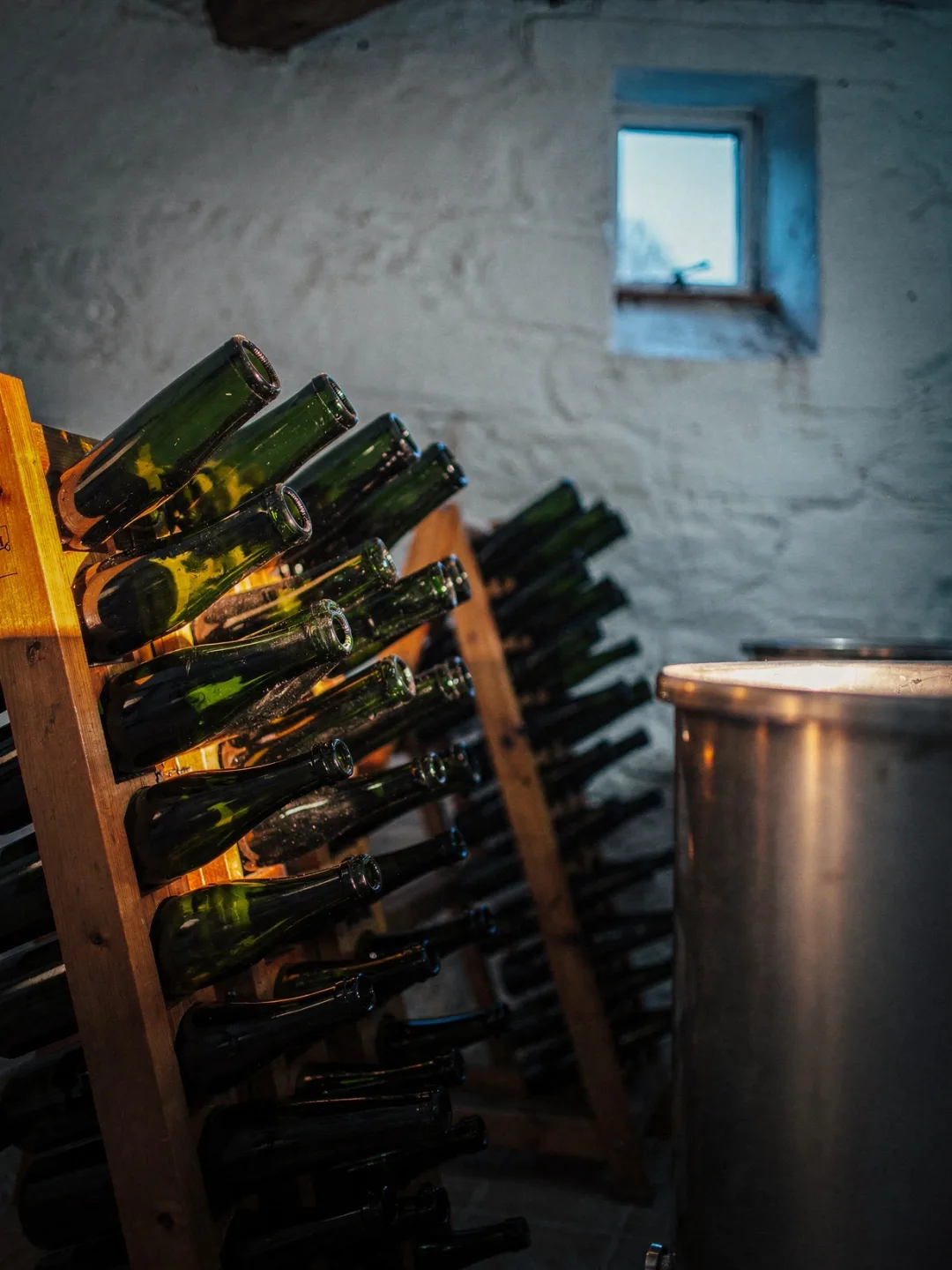
Then the waiting begins. At least nine months on the lees are required before the wine may be disgorged. Houses like Hambledon, Exton Park or Hattingley Valley nonetheless let their best cuvées rest for eighteen months to three years, and top bottlings for four or five. During this time the dead yeast slowly releases aromas of brioche and toasted bread. This process is called autolysis, and no other step in the cellar can replicate it.
At the end comes the dosage: a mixture of wine and sugar added back into the bottle after the lees are removed, rounding off England's high acidity. How much is needed is each house's own decision. It's precisely this last small addition that ultimately separates a lean Brut Nature from a softer, more approachable cuvée.