Bouchon and Cabrion
Wine & Food
Anyone having lunch in Lyon almost automatically gets a glass of Beaujolais alongside it. The two belong together the way the Saône belongs to the city. Lyonnaise cuisine is hearty and salty, often generously worked with butter. A light, acid-driven wine like Gamay cuts right through that richness without overwhelming the dishes the way a heavier red wine would.
The classic bouchon cuisine, named after the city's small traditional taverns, includes dishes that make some diners flinch. Tablier de sapeur, for instance: breaded and fried tripe served with a spicy sauce. A more robust cru such as Morgon or Brouilly stands up to it without dominating. A simple, very young Beaujolais would practically vanish next to such an intense flavor.
With a charcuterie platter, on the other hand, the simplest tier is more than enough. Rosette de Lyon or Cervelas pistaché ask for nothing more than a young, uncomplicated Gamay, served chilled. It absorbs the fattiness while not demanding too much attention itself. Grattons, crispy roasted pork fat bits nibbled here alongside wine, follow the same simple rule.
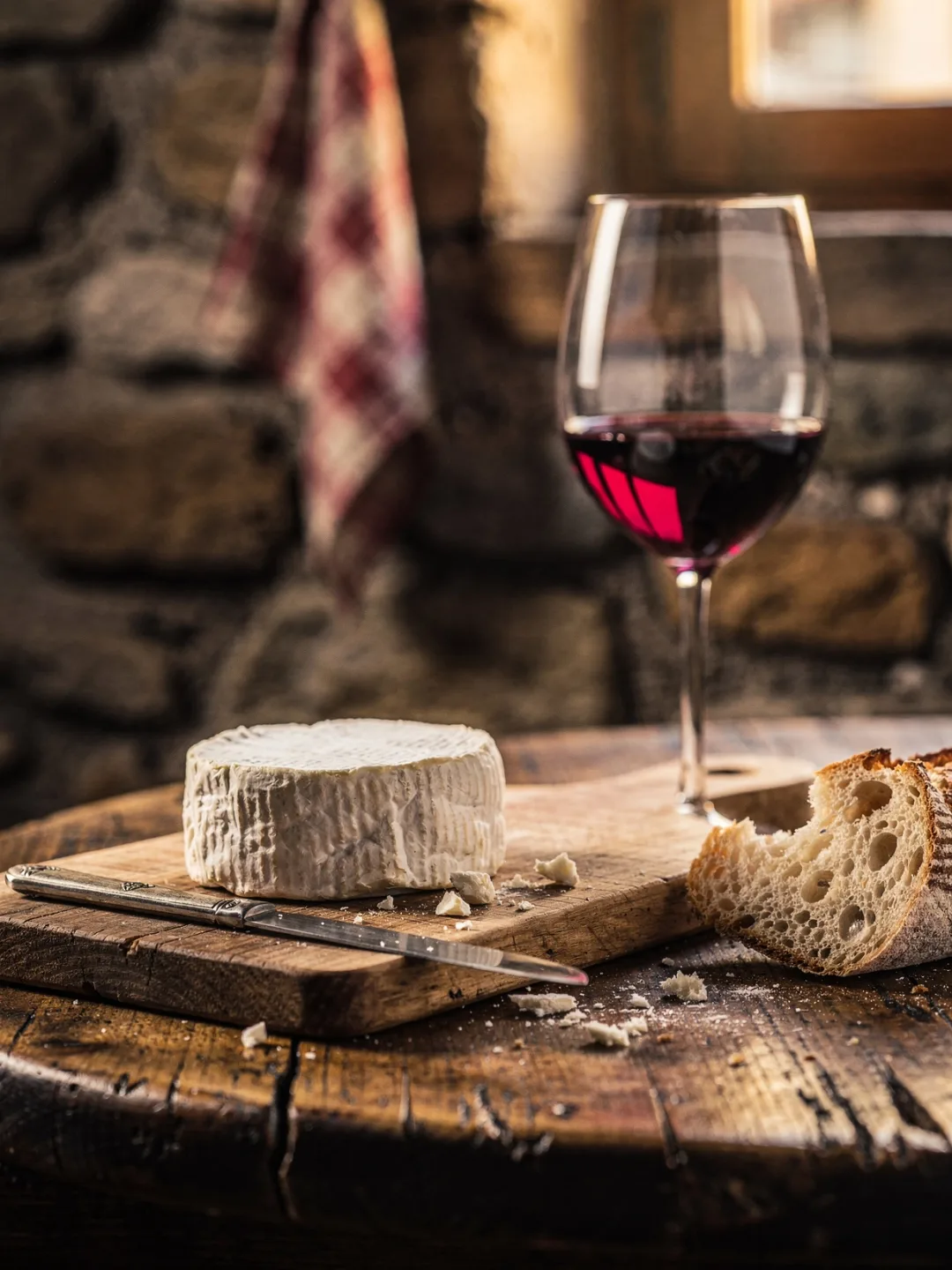
Cheese from the region brings its own logic into play. Cabrion, a small goat cheese from the hills of Beaujolais, is mild while young and grows powerful as it matures — and the riper the cheese, the more structure the wine can carry too. A simple Beaujolais-Villages suits young Cabrion, while an aged, crumbly one calls for something like a Moulin-à-Vent with a few years of bottle age.
One exception proves the rule: Quenelle de brochet in Sauce Nantua, a pike-dumpling specialty with crayfish sauce, doesn't pair particularly well with Gamay, since the creamy sauce calls for a richer white wine from the neighboring Mâconnais instead. If you only want to remember one rule, make it this one: the fattier and saltier the dish, the more readily it welcomes a light, high-acid Gamay.