Banana, Cherry, Violet
Tasting
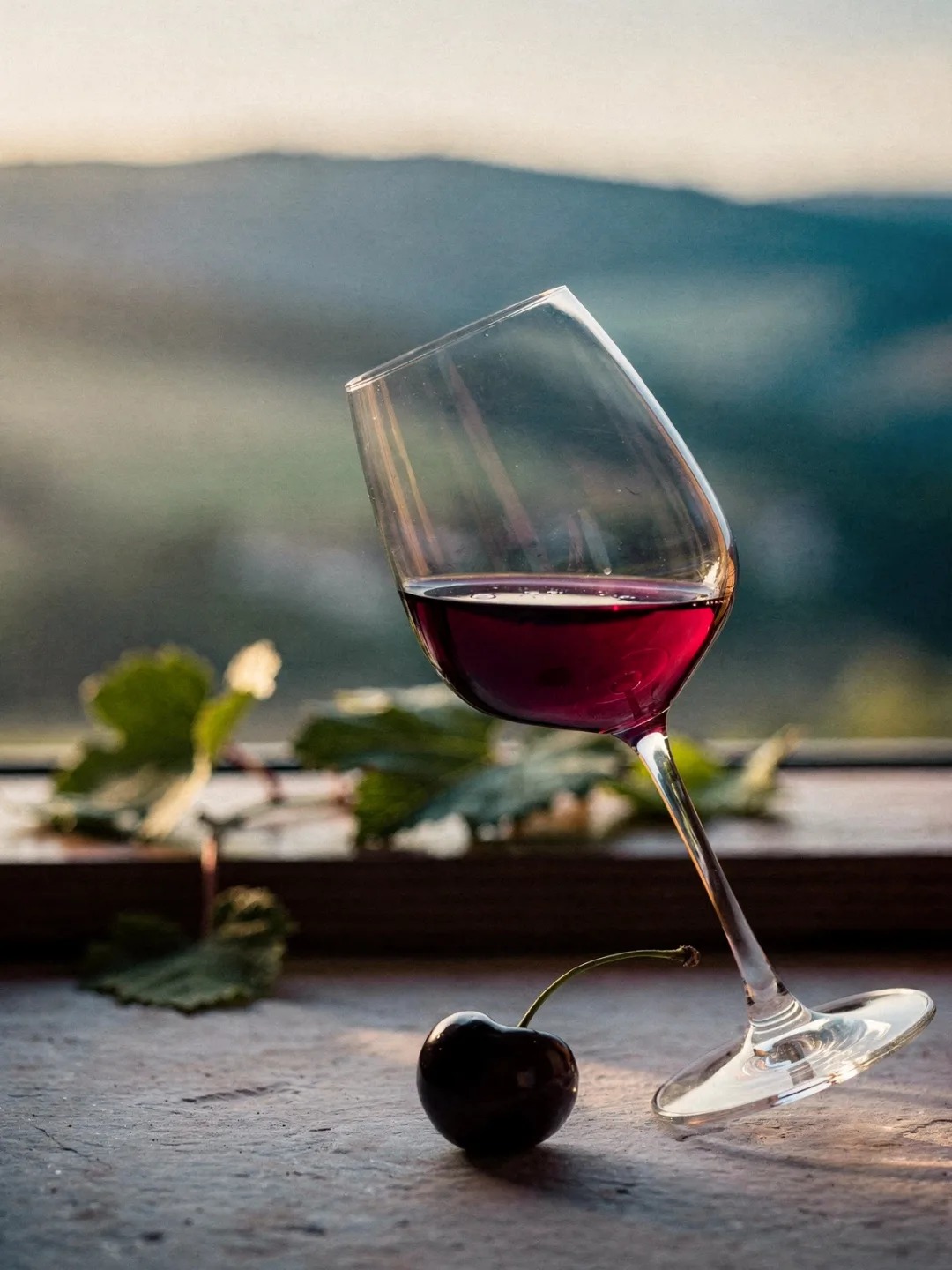
The color reveals the variety before you've even lifted the glass. Beaujolais is paler than almost any other red wine, often with a violet shimmer at the rim. The reason is the thin skin: it never releases much pigment into the wine. That's not a flaw — it's the variety's signature.
Smell it first without swirling. In a young Beaujolais Nouveau, banana almost always rises up, sometimes with a touch of gummy candy or bonbon too — both come from the method, not the grape, a byproduct of the carbonic fermentation described in the previous section. After a few seconds of swirling, cherry emerges. In some wines, a hint of violet joins in as well, especially pronounced in Fleurie, which is why it carries the nickname Reine des Crus.
In the mouth, Gamay is a wine of acidity, not tannin. The rough coating on the gums familiar from bold red wines is usually faint here. The acidity, on the other hand, pulls along the sides of the tongue and gets the saliva flowing. It's exactly this combination — little tannin, plenty of acidity, medium body — that makes the wine so easy to drink. And yet it's just as hard to overlook once you know what to pay attention to.
A few crus break with that lightness if you give them time. A well-aged Morgon changes so dramatically after five or six years that connoisseurs coined their own word for it: it morgonne. The fruit notes retreat, deeper, earthier tones emerge, closer in feel to a mature Pinot Noir from neighboring Burgundy than to the fruity Gamay you know from November.
On the finish, the difference between a simple Beaujolais and a serious cru shows most clearly. A Nouveau is over in three or four seconds, which suits its purpose: drink fast, don't overthink it. A Moulin-à-Vent, by contrast, can hold its flavor for half a minute, with cherry at the start and a slightly mineral, almost smoky note at the end that recalls the granite it came from.