Entrecôte & Oysters
Wine & Food
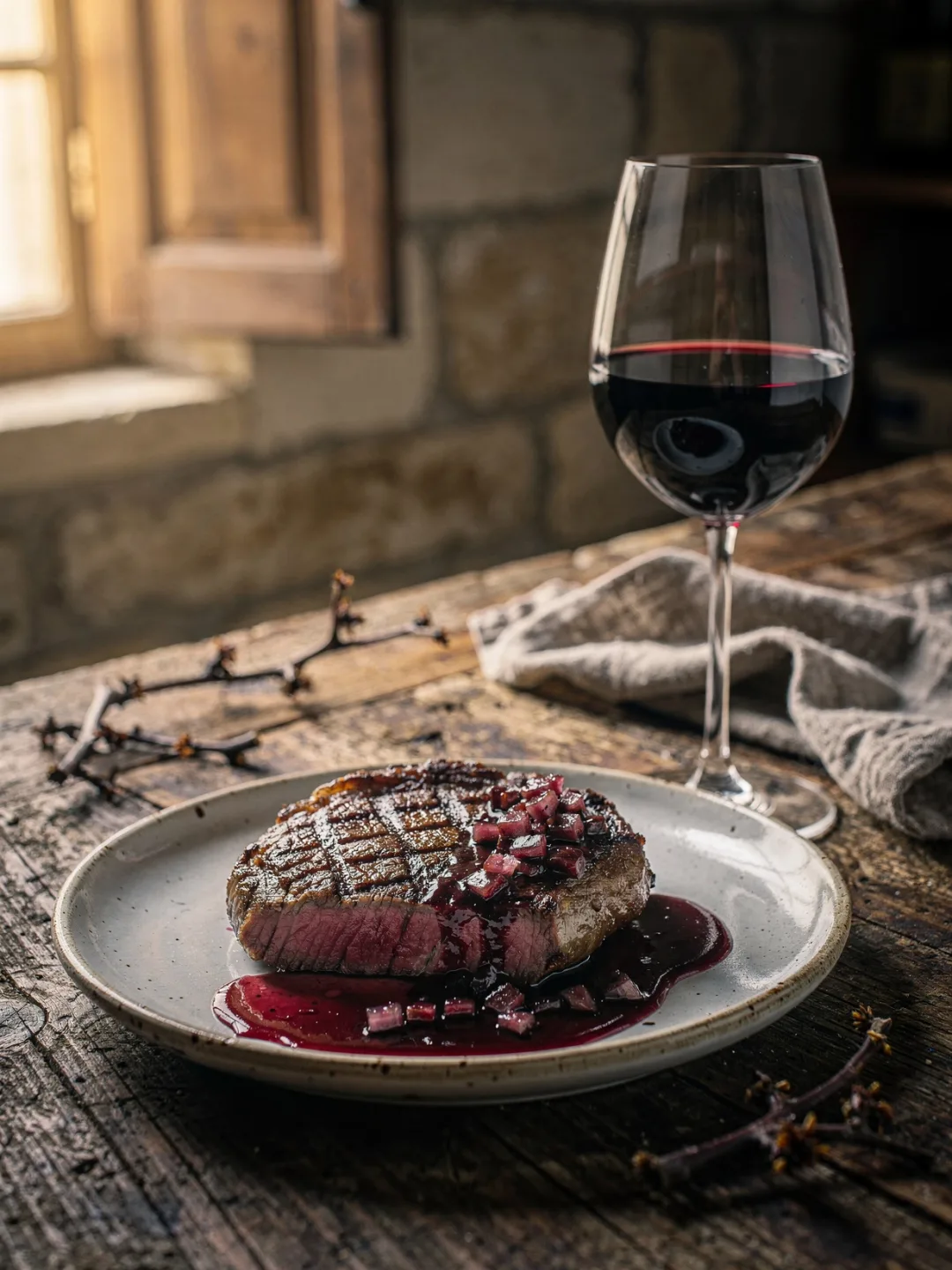
Bordeaux cuisine often begins right at the grill, not in the pot. For entrecôte à la bordelaise, the beef steak is laid over glowing vine cuttings or old barrel staves from the neighboring cooperage. This gives the meat a smoky note no gas grill can replicate. It's finished with a reduced sauce of red wine, shallots, and melted beef marrow.
For this sauce, a top-tier wine is rarely used. A simple, robust red from the Médoc or Bordeaux Supérieur does the job perfectly well, since whatever finesse an expensive barrel might contribute evaporates during cooking anyway. Alongside the dish, people often drink the same wine, just a notch better, with enough tannin to stand up to the beef marrow.
A second, more unusual traditional dish comes from the Garonne itself: Lamproie à la bordelaise. It's lamprey eel in a dark sauce made from red wine, leeks, and the creature's own blood. It was once considered a dish fit for nobility and clergy. Today it appears on only a few menus, heavy and earthy, matched to an equally robust Merlot from the Right Bank.
On the coast, in the Bassin d'Arcachon, everything revolves around oysters rather than meat. They're served raw with just a squeeze of lemon, alongside a cool, dry white wine from Entre-deux-Mers, between the Garonne and Dordogne rivers. Its acidity cuts through the oyster's iodine-tinged salinity without overpowering it. A red wine here would taste of nothing but metal.
For dessert, everything shifts direction once again. Sauternes from Château d'Yquem and its neighboring estates, sweet from the noble rot Botrytis cinerea, is a classic pairing with seared foie gras or pungent Roquefort. Its sweetness holds its own against salt and fat. A final bite is usually enjoyed without wine: the Canelé, dark and caramelized on the outside, soft as custard within, said to have been invented by nuns in a Bordeaux convent.