Cassis & Cedar
Tasting
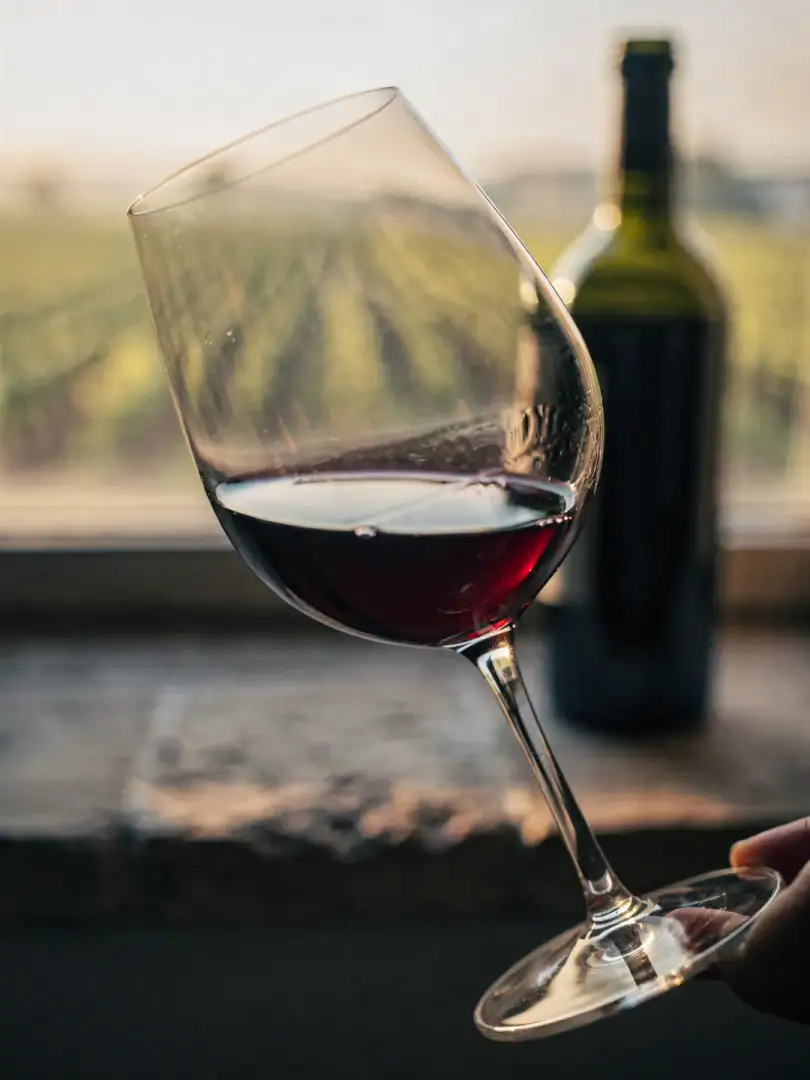
Hold a glass of young Médoc against something white, and the color instantly reveals the grape behind it: deep violet-red, almost opaque at the rim, thanks to the thick skin of Cabernet Sauvignon. A Saint-Émilion with a high proportion of Merlot looks a shade brighter and warmer beside it, more ruby than violet. After ten or fifteen years, both shift toward brick red.
On the nose, smell first while the glass is still, then again after swirling. The difference is significant. Cabernet Sauvignon almost always brings blackcurrant, known in English as cassis, along with a mineral note that connoisseurs call pencil shavings. Merlot contributes more plum and cherry, softer and rounder than the tart cassis fruit of its blending partner.
With years in barrel and bottle, a third layer emerges that has nothing to do with the grape itself: cedar, tobacco, sometimes a hint of leather. These aromas come from the wood and from slow aging, not from the vineyard. A young Bordeaux smells of fruit. A twenty-year-old one tells a different story.
On the palate, tannin is the defining sensation, especially in the more tannic Médoc: a dry, almost dusty roughness on the tongue and gums that can feel harsh in a young wine. Acidity sits along the sides of the tongue and keeps the whole wine fresh. Together, carried by enough fruit, these elements create structure. Without the fruit, only harshness remains.
At the end, count how long the flavor lingers after you swallow. With a simple Bordeaux, that's a few seconds. With a great wine from Pauillac or Pomerol, you can easily count past twenty seconds, sometimes thirty, and this length can't be faked in the cellar, not with sugar and not with oak. That's why it's considered one of the most reliable signs of quality there is.