Bœuf and Époisses
Wine & Food
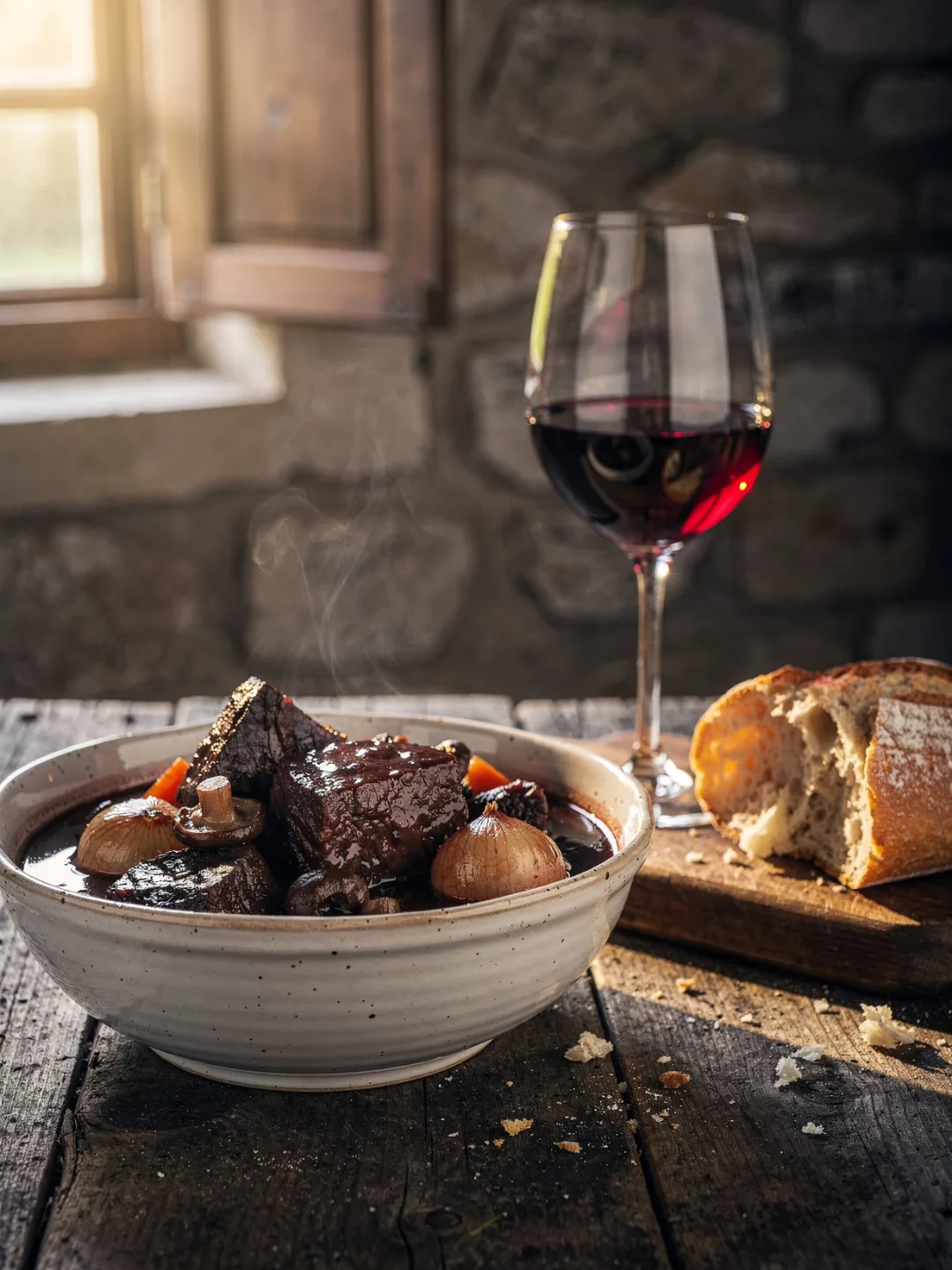
Boeuf bourguignon is the most obvious proof that kitchen and vineyard belong together here. Beef braises for hours in Pinot Noir. In the end, the meat and sauce carry the same earthy depth as the wine served alongside. When you pour exactly the wine that went into the pot, fruit and spice reinforce each other instead of clashing.
Before the main course, Escargots de Bourgogne often appear on the table, snails in herb butter with plenty of garlic and parsley. The dish takes its name directly from the vineyard, since snails used to be gathered among the vines. Gougères are often served alongside, small cheese puffs made from choux pastry. Originally they were a salty bite, intended for the first tasting in the cold cellar vault before the actual wine was opened.
Things get challenging with cheese. Époisses is washed with Marc de Bourgogne until its rind glows orange-red, and it then smells so powerful that many red wines simply capitulate beside it: their tannin suddenly turns bitter, their fruit vanishes completely. Experienced sommeliers therefore quite often recommend a young, chilled Aligoté. Sometimes they even serve the Marc itself, whose alcohol cuts through the aroma rather than fighting against it.
At Easter, many families serve Jambon persillé. Cooked ham is shredded, mixed with plenty of parsley and pressed into a terrine in a jelly flavored with white wine. Dry white Burgundy suits this cool, acidity-driven dish better than any red wine. It's almost always accompanied by a dollop of Dijon mustard, traditionally mixed with Aligoté instead of vinegar, which makes it sharper and yet rounder than ordinary mustard.
One simple rule carries almost the whole table. Fat and salt, as in beef or aged cheese, make a firm red wine more approachable. Acidity in the food, on the other hand, as in Jambon persillé, calls for an equally acidic white wine, otherwise the wine beside it quickly falls flat. Anyone who keeps this rule in mind will find the right wine for the plate in any bistro on the Côte d'Or, even without a wine list.