On a Gevrey-Chambertin
Tasting
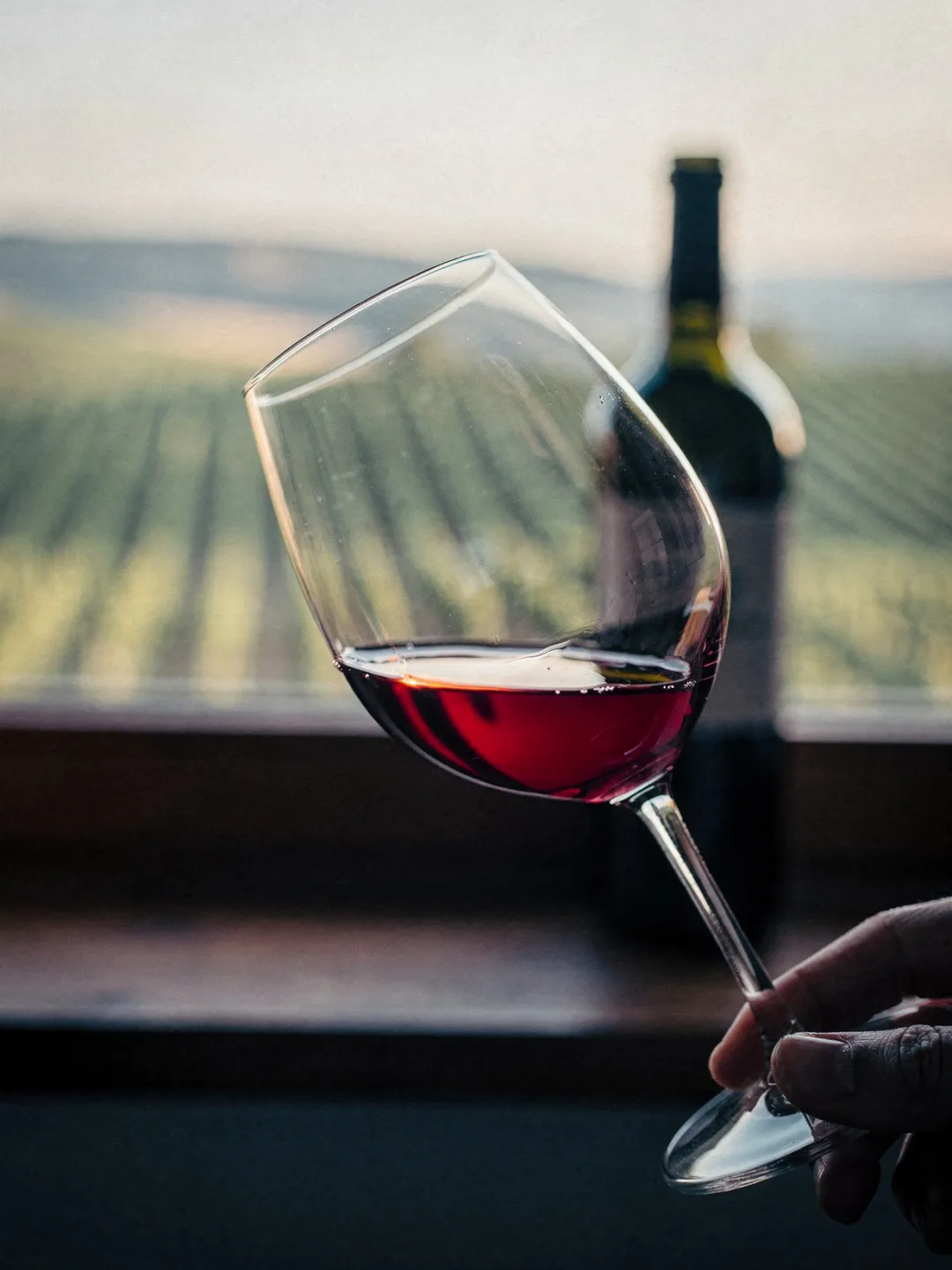
Tilt a glass of Gevrey-Chambertin against a white background, and its thin rim instantly reveals its age. Pinot Noir is never very dark; even a powerful Grand Cru stays pale enough that you can make out the outline of a finger through the glass. Young, the rim shimmers cherry-red. After ten or fifteen years, the color shifts toward brick-red, sometimes almost orange.
First, smell the wine in a still glass, then again after a vigorous swirl. The first sniff usually brings out red fruit, cherry, raspberry, sometimes wild strawberry, since these light aromatic molecules evaporate fastest. After swirling, what rises next is heavier and slower: damp leaves, mushroom, a hint of leather. In older wines, something extra joins in that connoisseurs call "sous-bois", forest floor after rain.
In the mouth, good Pinot Noir surprises above all with one thing: how light it feels and yet how long it lingers. The tannin is usually velvety rather than angular, while the acidity is clearly noticeable and keeps the wine upright, even when there's little alcohol or body behind it. Anyone who only knows powerful, tannic red wines often mistakes a good Burgundy for being too thin on the first sip. Yet the finish lingers for minutes and ultimately proves the opposite.
The real appeal lies in comparison. Set two glasses side by side: a simple village wine and a Premier Cru from the same winemaker and the same vintage, often grown just a few hundred meters apart as the crow flies. Taste the difference. More depth, more tension, a longer finish, even though the grape and cellar work were completely identical. This is exactly what Burgundians mean when they speak of climats rather than mere vineyard sites.
The same comparison is worthwhile with white Burgundy. A Chablis often smells of green apple, citrus peel and a smoky, stony note known as "flint", while a young Meursault tends to feel buttery, nutty and noticeably broader. Both are pure Chardonnay, both from Burgundy. The difference lies solely in soil, climate and the hand in the cellar, not in the grape.