Monks, Dukes, Revolution
Region & History
In 1098, a small group of dissatisfied monks founded the Abbey of Cîteaux, a few kilometers south of Dijon. Their old monastery had grown too comfortable, and the new, stricter poverty quickly turned into hard fieldwork: the Cistercians cleared, dug, and planted their way through the hills west of the Saône. In doing so, they tasted each slope individually. Parcels lying only a few steps apart, yet ripening differently, were meticulously separated from one another. This habit of breaking the land down into tiny units would later become the founding principle of all Burgundy.
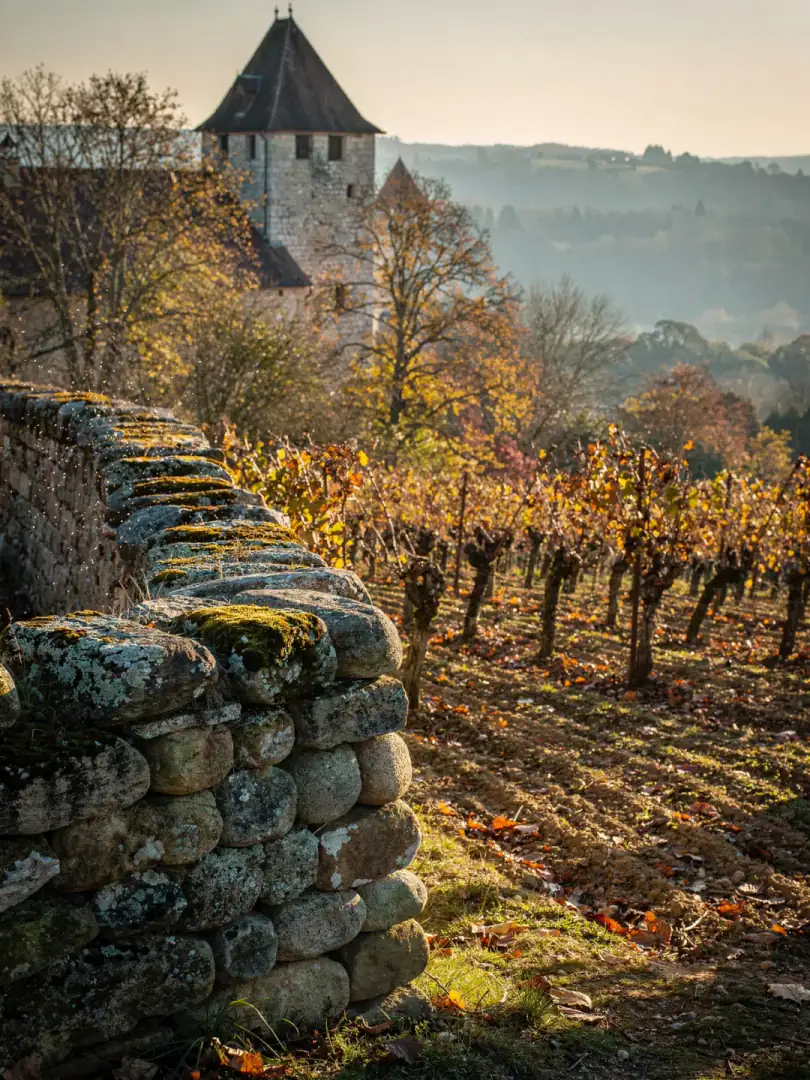
In 1336, the monks built a wall around their most precious plot, fifty hectares at the foot of a gentle slope. They called it Clos de Vougeot. This was no accident. Anyone who knew how differently two neighboring parcels could taste wanted to keep the best for themselves and clearly mark where it ended.
Sixty years later, a duke decided which grape variety was even allowed to grow on his land. In 1395, Philip the Bold issued an edict against Gamay, calling it a "very bad and very disloyal plant." The variety was generous in yield, but the wine it produced tasted thin and bitter. From then on, only one grape was considered worthy of the Côte d'Or's slopes: Pinot Noir. In neighboring Beaujolais, however, Gamay remained permitted. This single ducal decree still divides the two regions today, almost seven hundred years later.
The Revolution of 1789 dismantled what monasteries like Cîteaux had built over centuries. Church property was seized and auctioned off in small lots, often to citizens of Dijon or Beaune, who for the first time could afford a piece of the famous slopes. French inheritance law did the rest. When someone dies, their property must be divided equally among all children, and vineyards can't be split cleanly like cash. Over seven generations, the once-unified Clos de Vougeot became a patchwork of roughly eighty owners today.
This centuries-old fragmentation received both a name and an honorary title in 2015. UNESCO added the Climats of Burgundy to its World Heritage list. This refers to more than 1,200 individually named parcels stretching from Dijon to Mâcon, each with its own name and its own history. No other wine region in the world divides its land so finely while so stubbornly insisting that every single patch of it tastes different.