Choucroute and baeckeoffe
Wine & Food
Alsatian cuisine still carries the border on the plate. Choucroute, baeckeoffe, flammekueche, hearty, often cooked with bacon or lard, the way people eat in Germany, but served with the care of a French menu. The wine served alongside has always had to hold its own against plenty of fat and salt. That's exactly what it's built for.
Sauerkraut braises here for hours with juniper berries and often already a splash of Riesling, alongside smoked bacon, cooking sausage, and pork in several cuts. This is choucroute garnie, the classic dish of the region. The same Riesling goes into the glass with the meal, because its acidity cuts through the fat of the bacon like a knife and cleanses the palate again between bites.
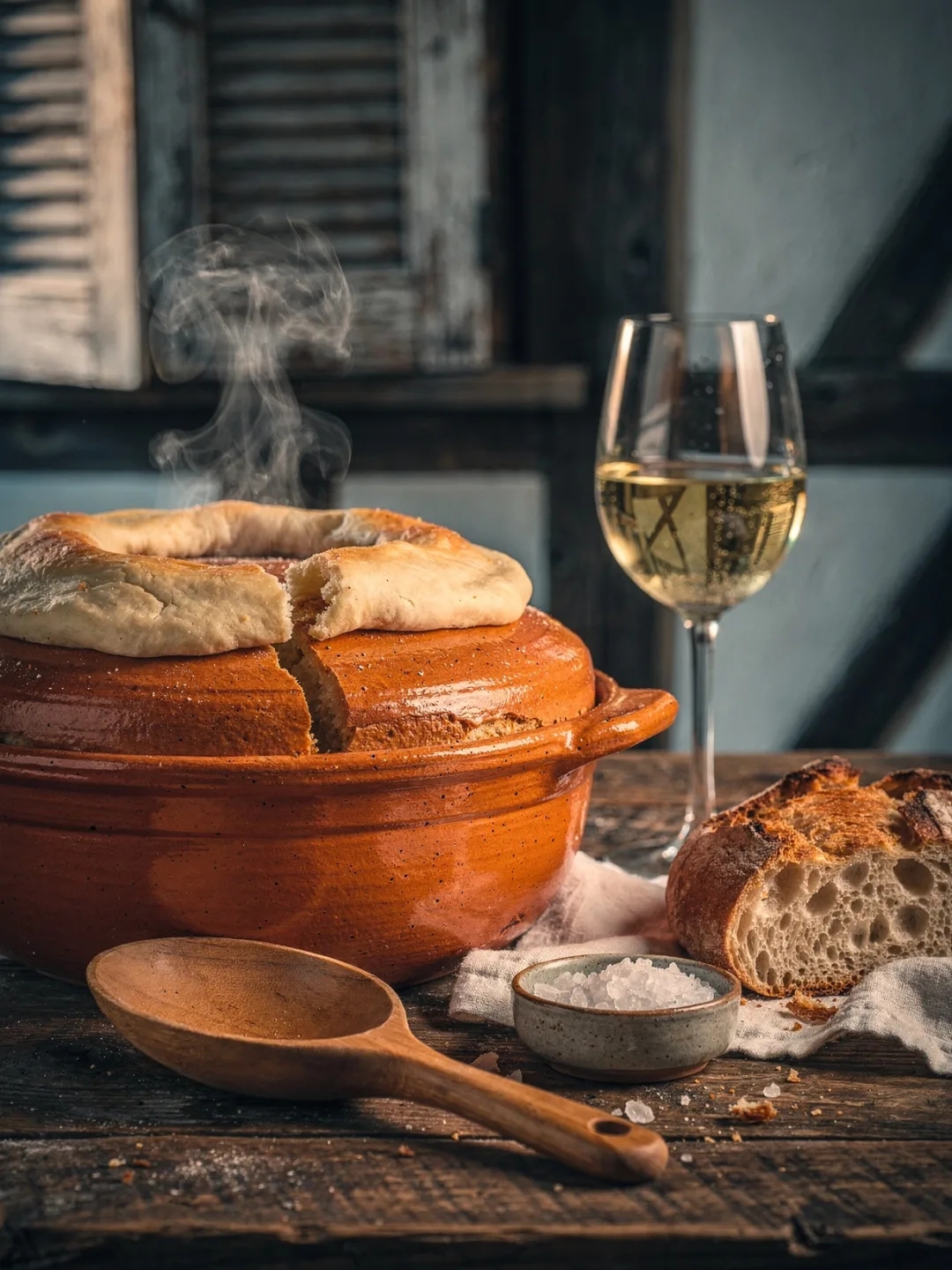
Housewives used to carry the earthenware pot to the baker. His oven was still hot after the bread had been baked, hence the name Baeckeoffe, literally "baker's oven." Three types of meat, potatoes, and onions simmer in it for hours in white wine, usually Sylvaner, until everything is meltingly tender. When it comes to serving, Pinot Gris suits the dish better than the Sylvaner used in the pot itself, its full body carries the roasted aromas of the long braise.
Flammekueche, on the other hand, is quick work. Wafer-thin dough, crème fraîche, onions, and bacon cubes need only a few minutes in a hot wood-fired oven, the fastest dish in Alsatian cuisine. A heavy wine would overwhelm it. That's why a light, chilled Pinot Blanc or Sylvaner is the natural match, sometimes a simple Edelzwicker as well.
Munster cheese has a completely different character. A washed-rind soft cheese with a smell that can startle the uninitiated, traditionally eaten with caraway seeds, and only Gewürztraminer can hold its own against it, its rose and lychee aromas are bold enough not to be overpowered by the cheese. With foie gras, invented in the late eighteenth century at the court of the Marshal de Contades in Strasbourg, one turns to the sweet style. A Gewürztraminer Vendange Tardive balances the richness of the liver with its own sweetness, rather than cutting through it with acidity.