Muscat, the contradiction
Tasting
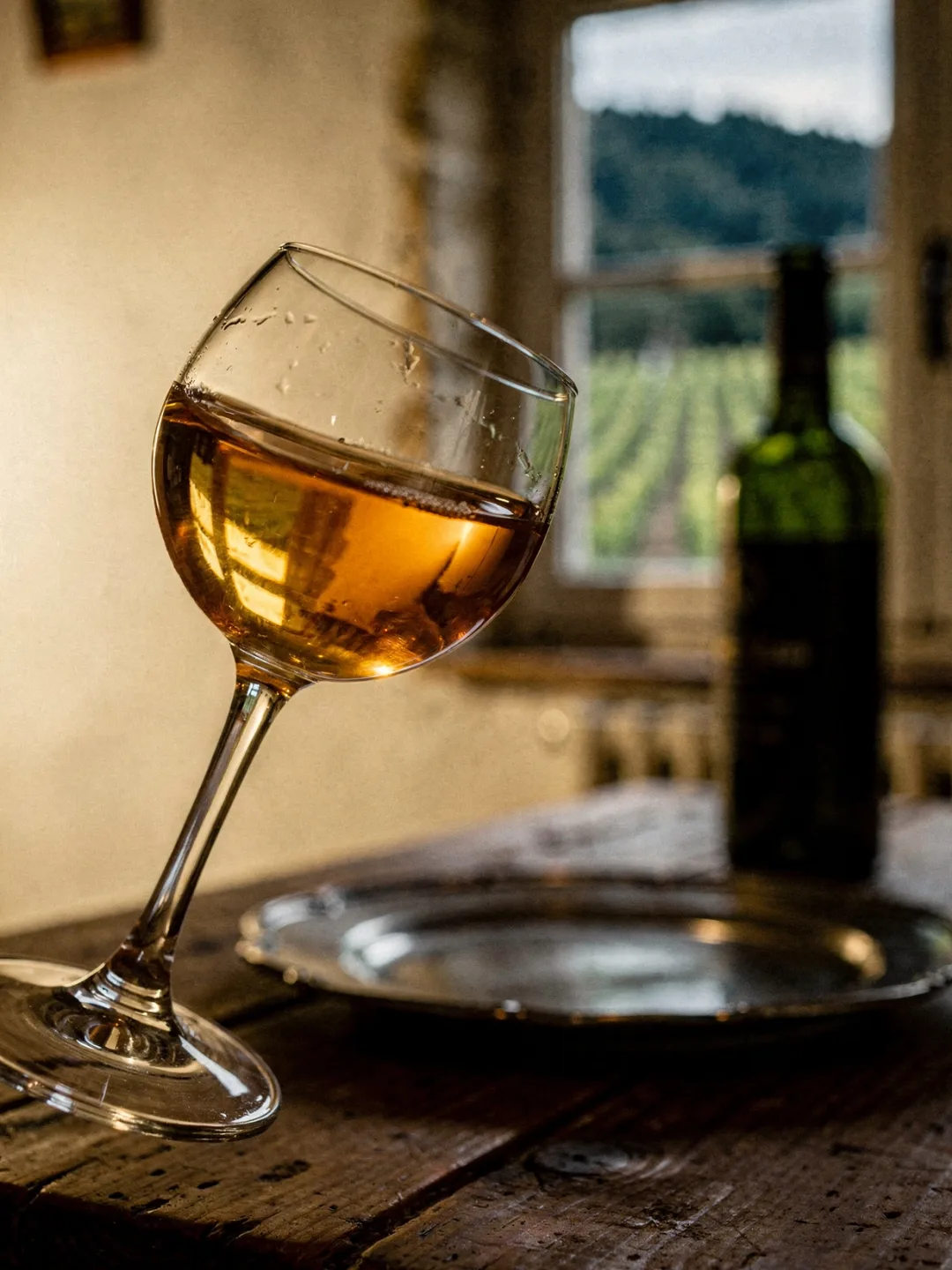
Line up the seven main varieties side by side. Add a glass of Klevener from Heiligenstein for good measure, and you'll spot the first difference before you even take a sniff. A young Sylvaner or Muscat is pale as straw, almost greenish. A mature Gewürztraminer, by contrast, shifts toward deep gold, sometimes so dark that newcomers mistake it for a rosé, even though no red grape is involved.
Smell it twice. Once with the glass still, once after swirling, because half the information lies between the two. With Riesling, citrus comes first, then stone, and with a few years of bottle age, often a note reminiscent of petrol, a mark of quality to connoisseurs, but a shock to everyone else at first.
Muscat delivers the biggest surprise. It smells so unmistakably of fresh grapes that everyone in the room guesses right away, and then almost everyone gets it wrong, because in the mouth it's bone dry. No other variety in Alsace produces this contradiction. Once you've experienced it, you never forget it.
In the mouth, it's about weight rather than tannin. Tannin plays practically no role in these white wines, but Riesling shows a lean, almost cutting acidity, while Pinot Gris has an oily fullness that fills the entire palate. Gewürztraminer often sits at thirteen or fourteen percent alcohol, sometimes even higher in a Kaefferkopf. Noticeably warm, almost lush for a dry white wine.
Finally, count the finish. With a simple Sylvaner, it lasts just a few seconds; with a Riesling Grand Cru, often a full minute. With a Vendange Tardive or Sélection de Grains Nobles, the flavor even keeps changing as it fades in the mouth, from fruit to honey to a fine, bitter note that invites another sip.