Cold, but Fickle
Climate
The Jura lies on the edge of a mountain range. This shapes its climate significantly. Meteorologists call it temperate semi-continental with mountain influence: harsh winters, cool, rainy springs with the risk of late frost, hot, dry summers, and sunny autumns. In Arbois, the average annual temperature is around 11.7 degrees Celsius, measured over the years 1991 to 2020, and rainfall is fairly abundant at just over 1,200 millimeters a year. Yet Lons-le-Saunier still logs almost 1,900 hours of sunshine a year, more than you'd expect from such a changeable climate.
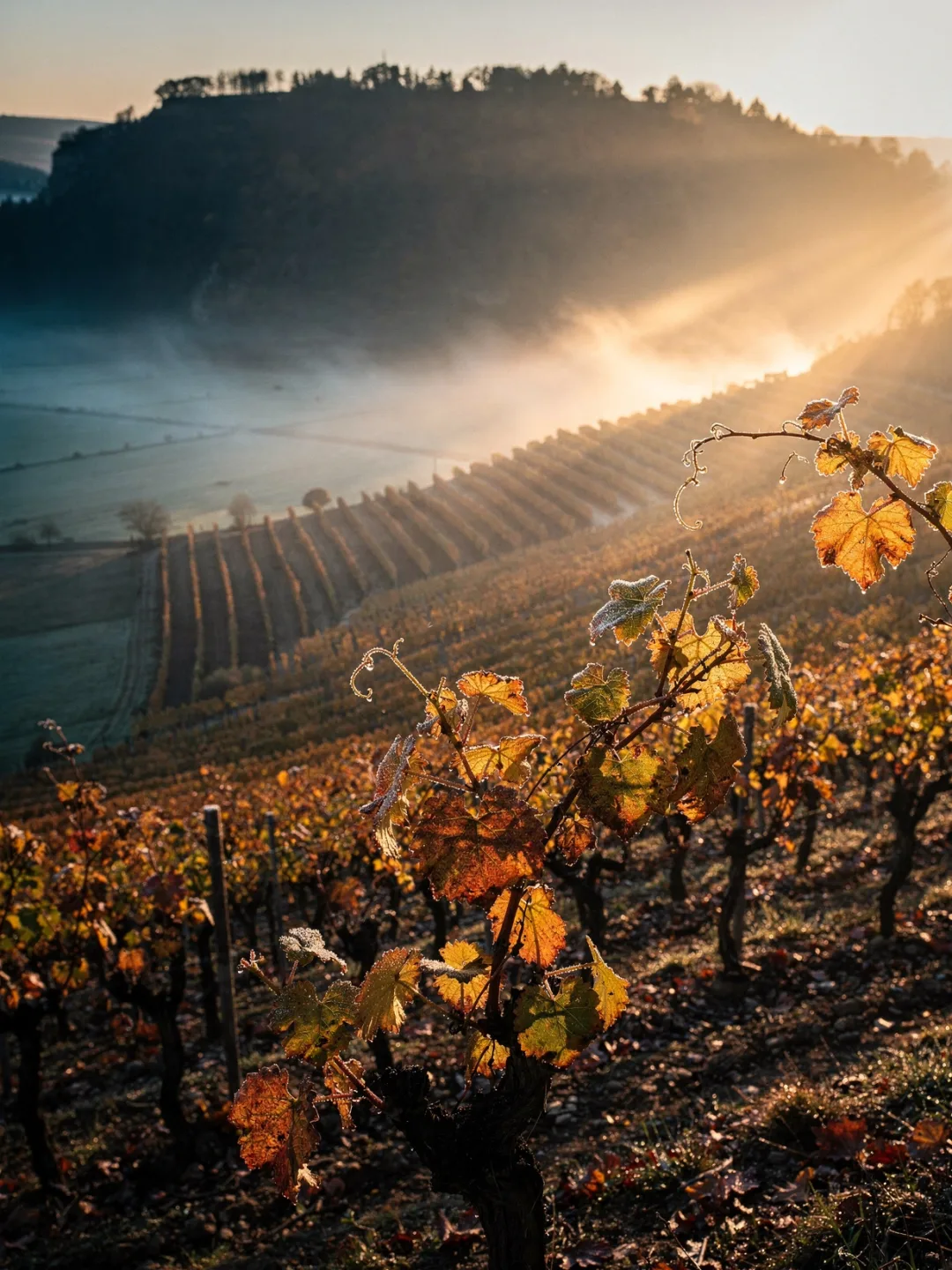
The vines themselves don't grow in the valley. They stand on the Revermont, the western edge of the Jura massif between the Bresse plain and the first plateau, at elevations between two hundred and four hundred fifty meters. On south- or southwest-facing slopes, the grapes soak up whatever sunshine is available.
Autumn is the trickiest season of all. Moisture rising from the soil at that time can spoil the grapes just before harvest, which is why sunny, dry autumn days are worth their weight in gold here. It's precisely in such years that Vin de Paille succeeds. For this wine, selected grapes are not pressed after harvest but dried on straw or racks.
This drying process, passerillage, takes at least six weeks, though often several months, until the sugar in the berry has concentrated heavily. In the end, one hundred kilos of grapes yield only about twenty liters of wine, dense and honey-sweet. Without the Jura's dry autumn air, this rare wine simply wouldn't work. A damp, rainy September can make it impossible in some years.