Figatellu and Brocciu
Wine & Food
Corsican cuisine comes from two worlds that rarely sit at the same altitude. One lies down by the sea, the other up in the chestnut forests of the mountains. Wine moves between the two.
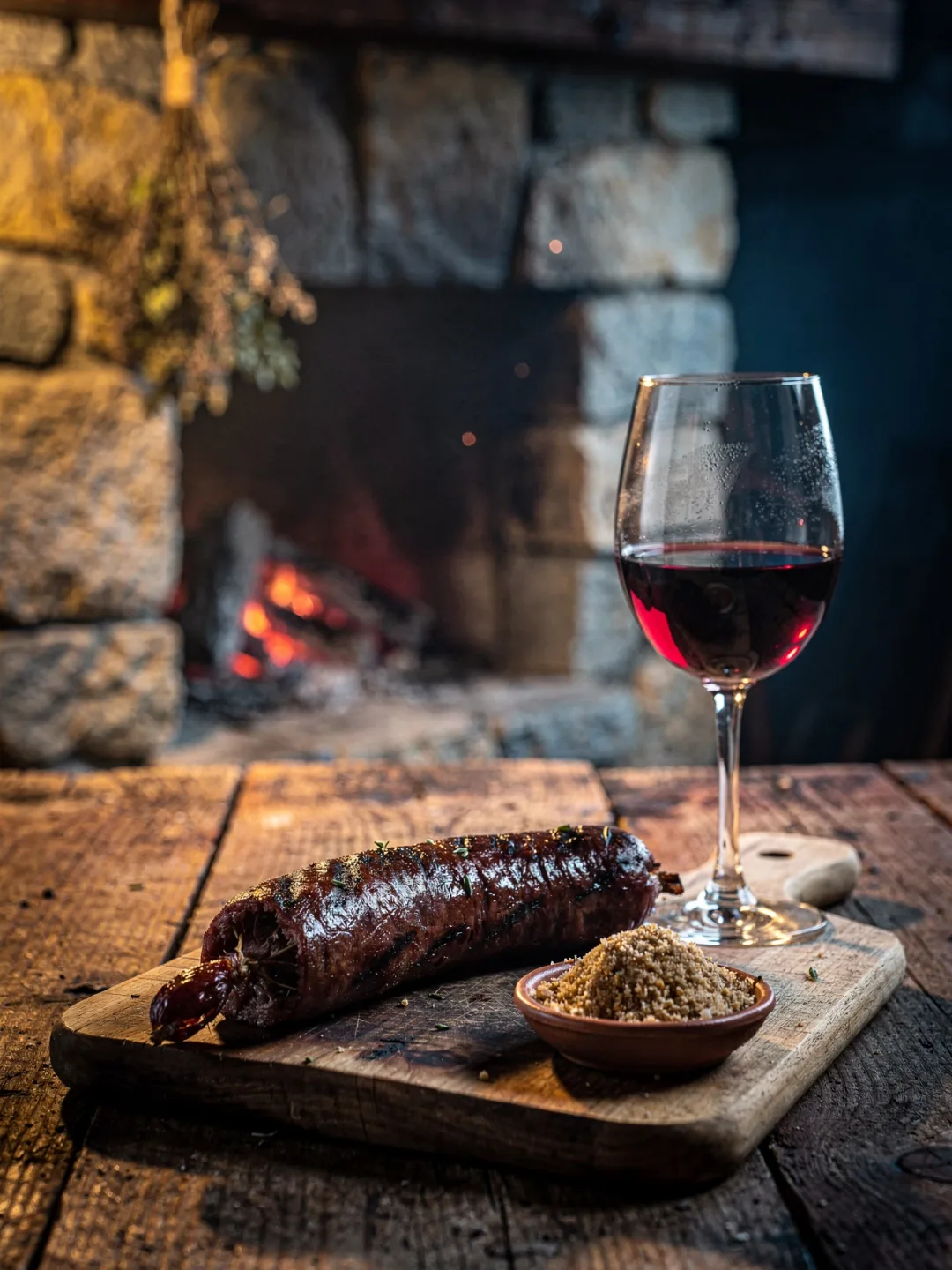
On the coast, in Bonifacio or around the Gulf of Ajaccio, fresh fish comes to the table — sometimes sea bass, sometimes spiny lobster. Vermentinu, with its freshness and lightly saline, mineral edge, suits this better than any heavy red. Charcuterie is the other constant: Coppa, Lonzu, and above all Figatellu, a coarse sausage made from pork liver. It often arrives grilled over an open flame, still warm on the plate. What it needs is tannin and acidity to cut through the fat — exactly what a young Niellucciu or a robust Sciaccarellu delivers.
All over the island you'll also come across a cheese made not from curdled milk but from reheated whey of sheep's or goat's milk. It's called Brocciu, the only cheese in Corsica protected by its own designation of origin, and it turns up in mint omelets, stuffed cannelloni, and above all in fiadone, the Corsican lemon cheesecake. A dry wine simply doesn't work with fiadone. What it needs is the sweetness of Muscat du Cap Corse. Otherwise, next to the cake, the wine ends up tasting thin and sour.
Up in the mountains, in the chestnut-growing region of Castagniccia, chestnut flour replaced grain for centuries, since grain barely grew in the rocky soil. From it comes pulenda, a firm porridge traditionally served with braised wild boar, and for this dish a young, spicy Niellucciu from Patrimonio seems tailor-made. And with canistrelli, the dry cookies served with coffee, a small glass of Muscat makes a fittingly sweet finish.