On a Patrimonio
Tasting
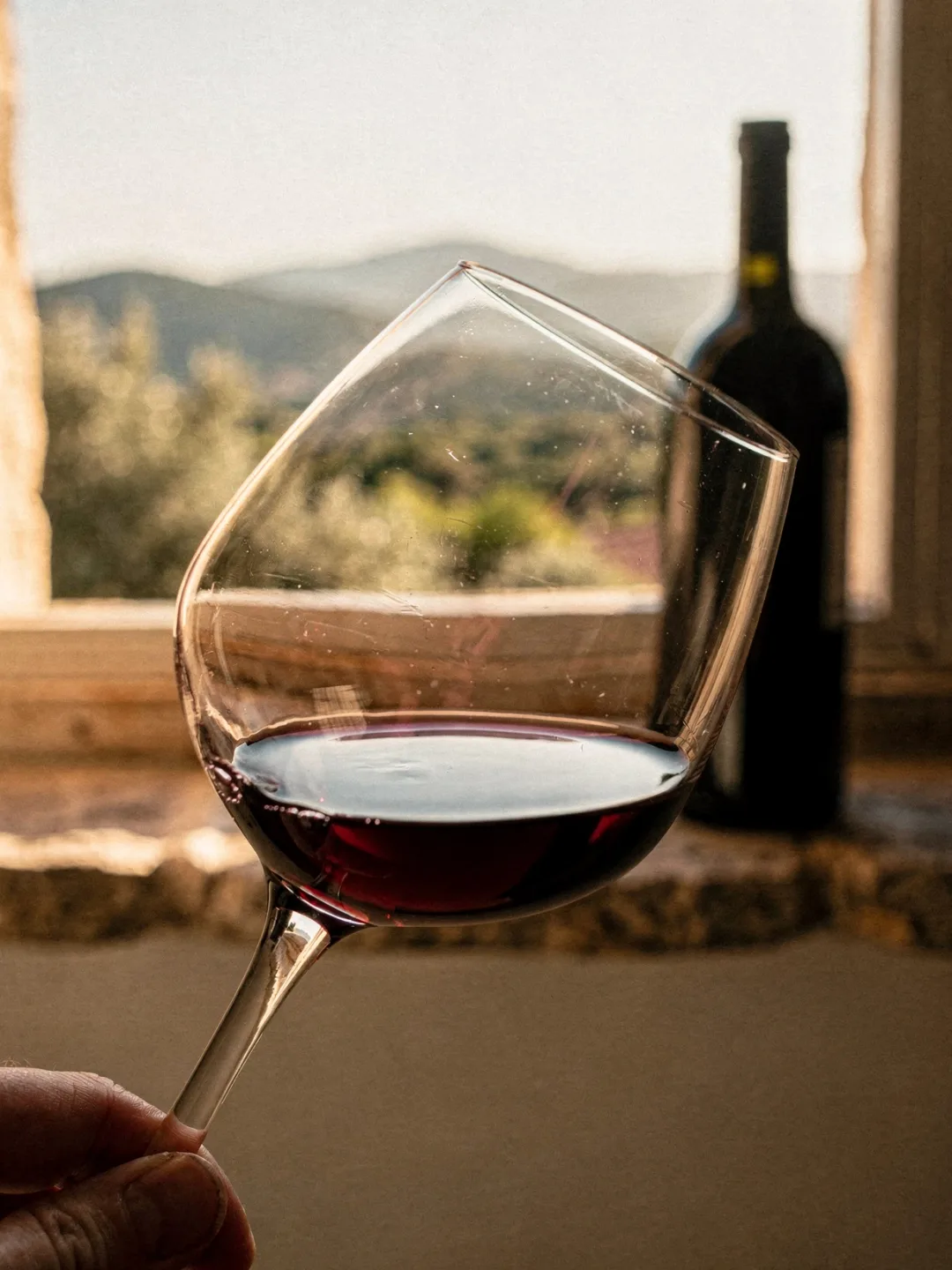
Tilt a glass of Niellucciu slightly to the side, with something white behind it. At the rim you'll immediately see its age. Young, it glows ruby-red with a violet sheen; after ten years the rim tips into brick-red, and the color stays remarkably pale for a red wine with so much tannin, simply because the berry skin is so thin.
The aroma arrives in two waves. In a still glass, fruit rises first — dark cherry and sometimes a touch of cassis. After swirling, everything heavier follows: dried herbs, a hint of leather, and in older vintages toasty notes and something balsamic too. What surprises many is the scent of the maquis itself, that dense, aromatic scrubland of myrtle, rockrose, and strawberry tree that blankets much of the island in summer. Napoleon is said to have claimed he could recognize his home island by this scent alone, with his eyes closed.
Sciaccarellu smells different: brighter, peppery, with almond and blackcurrant. In the mouth the acidity pulls sideways across the tongue, and the tannin appears almost incidentally despite the wine's robust body. With Vermentinu, look for hawthorn and broom on the nose. Alongside that comes a faintly saline, mineral note on the finish. Many winegrowers attribute this to the proximity of their vineyards to the sea.
All wines from the island's nine appellations are made dry, as each appellation's rules require; no residual sugar hides behind acidity or alcohol. Count the seconds after swallowing at the end: for a young rosé it's two or three, for an aged Patrimonio red often more than fifteen. This length can't be faked in the cellar. It comes from lean soils and vines that had to fight for every drop of water.