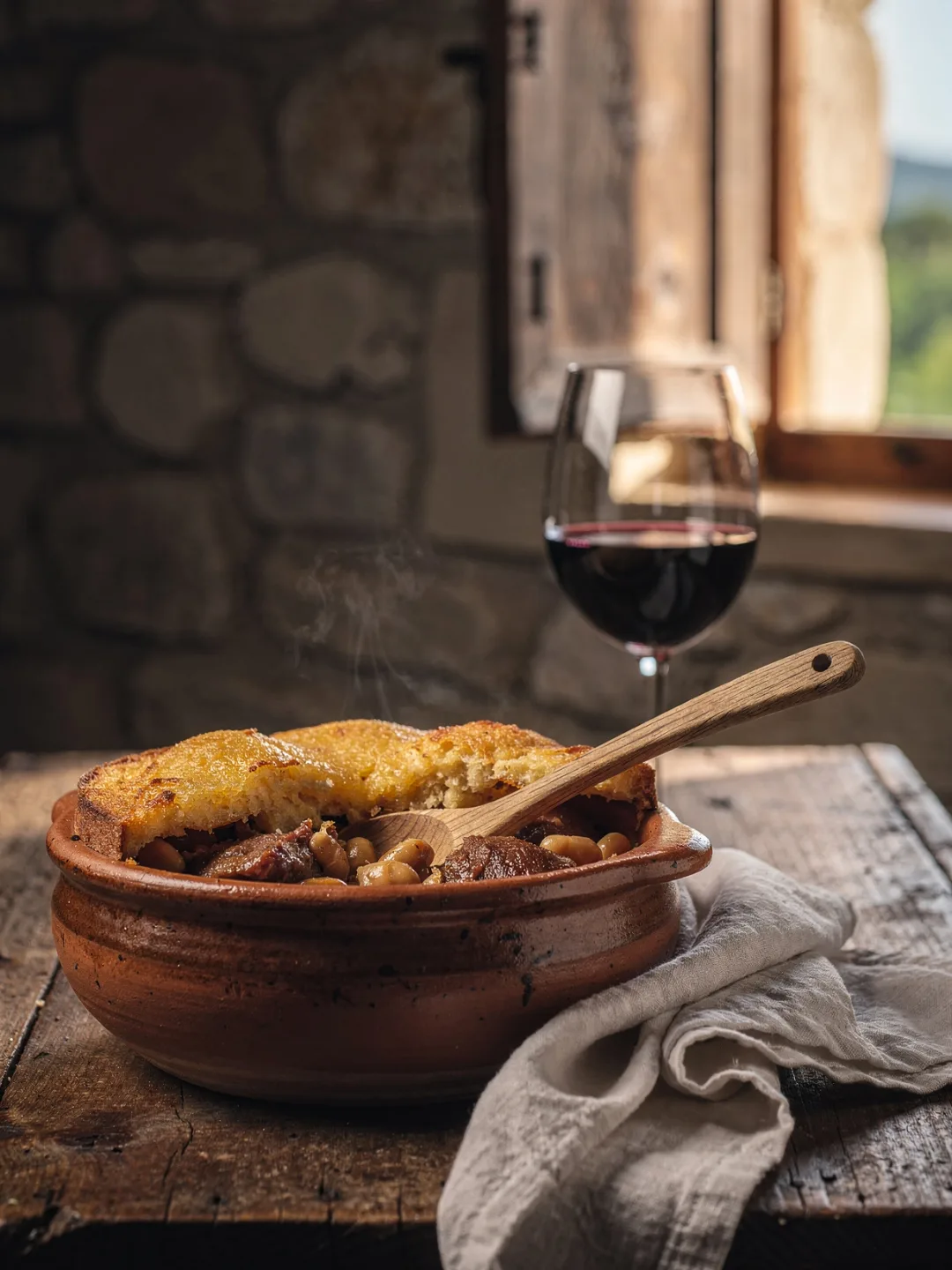
Cassoulet and Oyster
Wine & Food
The Languedoc table knows two worlds, and you can taste it in the wine that accompanies each. Inland, hearty braised dishes reign; on the coast, raw shellfish straight from the sea. Two cuisines that could hardly be more different, and yet both belong here.
The signature dish of the region's cuisine is cassoulet from Castelnaudary, named after the earthenware pot it's cooked in — the cassole made of clay from Issel. White lingot beans simmer in it for hours with duck confit, pork, and a coarse sausage until a crust forms, which is deliberately broken open when serving. All that fat and salt calls for a wine with real bite. A Corbières or Minervois is robust enough to hold its own against the meat rather than getting lost beneath it.
On the other coast of the region, at the Étang de Thau, the oysters of Bouzigues grow in a shallow saltwater lagoon that makes them especially mild and faintly nutty. The classic pairing is Picpoul de Pinet, the crisp, saline white wine from right next door. It simply works. The combination is considered so obvious that you'll rarely find it served any other way in the oyster bars along the harbor.
Between these two worlds lie the Cévennes, home to Pélardon, a small goat cheese barely seven centimeters across. Fresh, after the mandatory eleven days of ripening, it tastes creamy with a light tang, best matched with a young, cool white wine. As it ages further, it firms up and grows more pungent. At that point it calls for more resistance in the glass — a young, fruity red made from Carignan that can stand up to the cheese's sharpness rather than being overwhelmed by it.
One rule of thumb is easy to remember. Fat and salt call for a wine with power, while saltwater dishes call for one with sharpness and coolness — swap the two, and you'll notice immediately.