A Faugères
Tasting
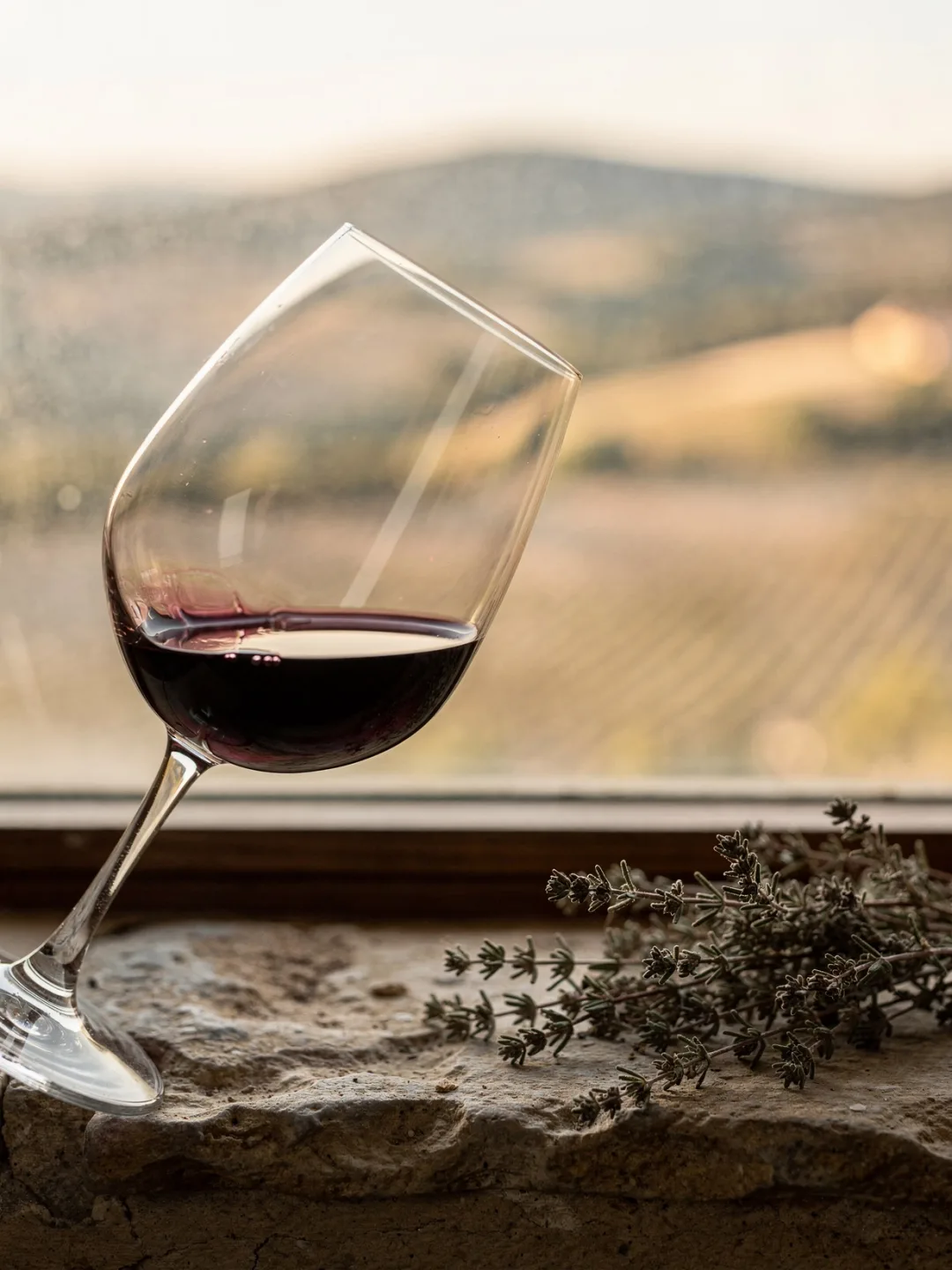
A Faugères reveals its origin in its color before you've even smelled it. It's dark, almost opaque at the core, with a violet rim in a young vintage—a result of Syrah and Mourvèdre, both of which carry plenty of pigment in their skins. That immediately sets it apart from a pale, translucent Pinot Noir.
Then comes the nose, and with it an aroma found almost nowhere else: garrigue, the dry herbal scrubland surrounding the vineyards, with wild thyme, rosemary, and bay laurel. This isn't just about the weather. Grape skins hang right next to this scrub, bees and wind carry the aromatic compounds back and forth, and some winemakers claim you can smell the landscape before you've even tasted the wine.
In the mouth, tannin speaks first. It's angular and gripping, shaped by Mourvèdre and by the tough skins of small, schist-nurtured berries. Behind it lies the acidity, contributed mainly by Carignan, which carries the wine rather than weighing it down. Together, they make a young Faugères quite firm and chewy.
People often attribute a mineral note to this wine because of the schist in the soil. What the vine actually absorbs, though, are dissolved salts in tiny amounts that no one can actually taste. The soil works indirectly—through heat, through water balance, through root depth. That's enough on its own.
In the end, length is what counts. How long does the flavor linger after swallowing, before it fades? With a simple Languedoc wine, that's a matter of a few seconds. With a well-made Faugères from an old vineyard, the finish can carry for half a minute, with herbs and dark fruit slowly dissolving rather than cutting off abruptly.