Greeks to Revolt
Region & History
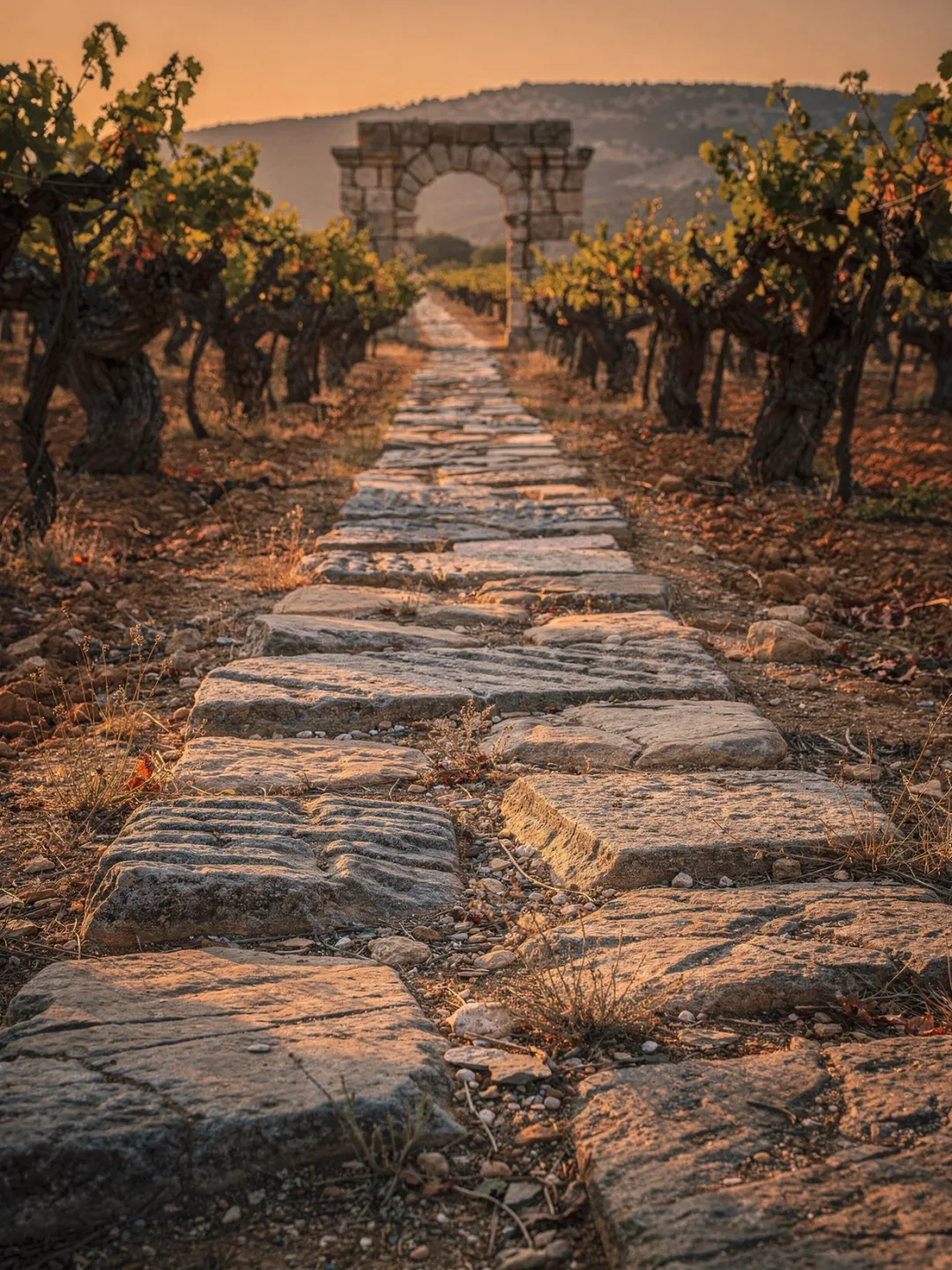
Greek sailors from Phocaea founded the trading post of Agde in the sixth century BC and brought the first vines with them. That was long before Rome. By the time the Romans founded Narbonne in 118 BC as their first colony north of the Alps, winegrowing in the area was already well established. Wine flowed from there along the Via Domitia to Béziers and onward across half of Europe.
Then came phylloxera, and with it a response that still shapes the landscape today. Replanting relied heavily on Carignan, a variety that produced enormous yields on flat ground and needed almost no care. By 1988, France counted around 167,000 hectares of it nationwide, more than any other red variety. Wine became a mass commodity. Thin, propped up with added sugar, and Europe soon dubbed the result the wine lake.
In 1907, the anger boiled over. Cheap Algerian wine arrived through the port of Sète, prices collapsed within a few years, and growers who depended on their single harvest suddenly faced total ruin. Marcelin Albert, a winegrower from the small village of Argeliers, marched to Narbonne in March with eighty-seven neighbors to appear before an investigative commission. On June 9, around five hundred thousand people gathered in Montpellier, the largest rally France had ever seen. The revolt led to a law against wine fraud.
The answer to overproduction came only eighty years later, and it was called grubbing up. Between 1980 and 2000, nearly a third of the vineyard area in the Hérault alone disappeared, from around 210,000 to 75,000 hectares. What remained grew on the slopes. Quantity slowly gave way to quality, and in 1985 the area was given its own name: Coteaux du Languedoc, shortened to Languedoc since 2007.
The region's oldest tradition isn't found in the vineyard but in the cellars of Limoux. Legend has it that in 1531, monks at the Abbey of Saint-Hilaire noticed their bottled wine had suddenly started foaming in spring. It was a second fermentation in the bottle, long before the first Champagne. Today, the AOC Languedoc as an umbrella designation covers more than 50,000 hectares, of which only around 5,800 are actually planted. Most growers prefer to put Faugères, Minervois, or Corbières on the label instead.