Carignan to Mauzac
Grape Varieties
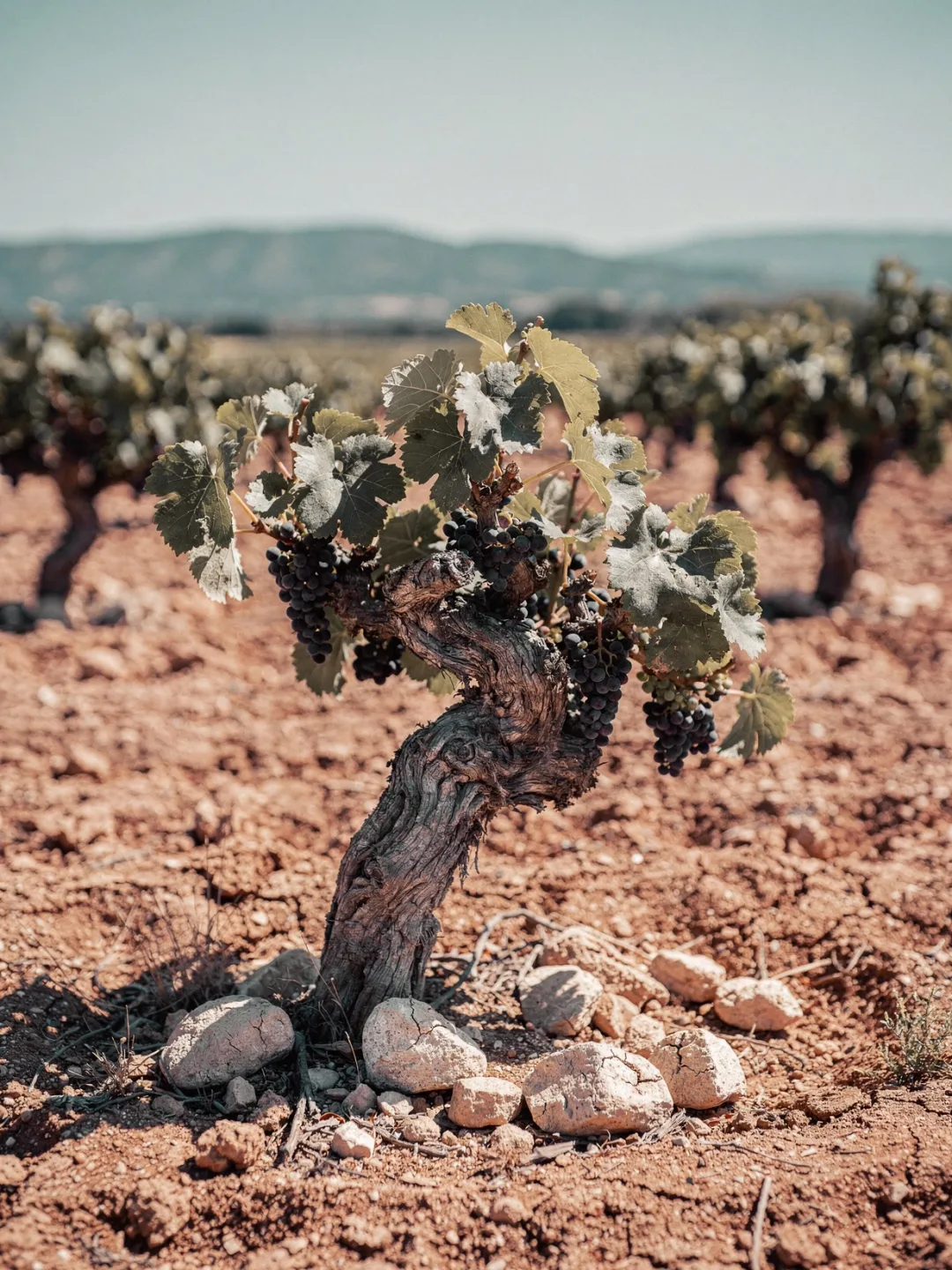
For decades, a single variety shaped the landscape: Carignan. It yields enormous quantities, needs almost no care, and for that reason stood for decades in rows on the flat plain, where only yield mattered and no one asked about flavor. The grape of mass production later became, of all things, the variety many winemakers now use for their finest wine. The reason lies underground. Old, deep-rooted vines need barely any water and produce tiny, concentrated berries.
The law requires a blend. A Languedoc red needs at least two main varieties. Syrah or Mourvèdre together must make up at least twenty percent, while Carignan and Cinsault combined may account for no more than forty percent of the area. Each variety contributes something different. Grenache brings sweetness and alcohol, Syrah adds color and pepper, while Mourvèdre provides structure and a wild, gamey aroma that only softens after many years. Cinsault makes the wine lighter and more drinkable, especially in warm years when everything else would turn out too heavy.
In Faugères, the soil is almost entirely schist. The same basic blend of Grenache, Carignan, Syrah, Mourvèdre, and Cinsault applies here, supplemented for white wines with Roussanne and Rolle. The lean schist naturally limits yield, with no legal cap required.
Among the white wines, one single grape has claimed its own appellation: Piquepoul Blanc, usually just called Picpoul here. The agronomist Olivier de Serres already mentioned it in the early seventeenth century. For Picpoul de Pinet on the coast, it's the only permitted variety. Sharp acidity, citrus aromas, a saline undertone that recalls the nearby sea. In general Languedoc white wine, by contrast, Piquepoul Blanc may make up at most half the blend, alongside Bourboulenc, Clairette, Grenache Blanc, Marsanne, and Roussanne.
One last variety belongs almost exclusively here: Mauzac, with its scent of green apple. For Blanquette de Limoux, the wine must contain at least ninety percent Mauzac, with the remainder allowed to be Chardonnay or Chenin. No other sparkling wine anywhere in France follows such a rule.