Chavignol and Pike-Perch
Wine & Food
The cuisine along the Loire is understated rather than heavy. River fish instead of sea fish, goat cheese instead of aged hard cheese, vegetables from the fertile valley floors. The wines suit this perfectly, being themselves light and defined by acidity. Both grew from the same soil, shaped by the same climate.
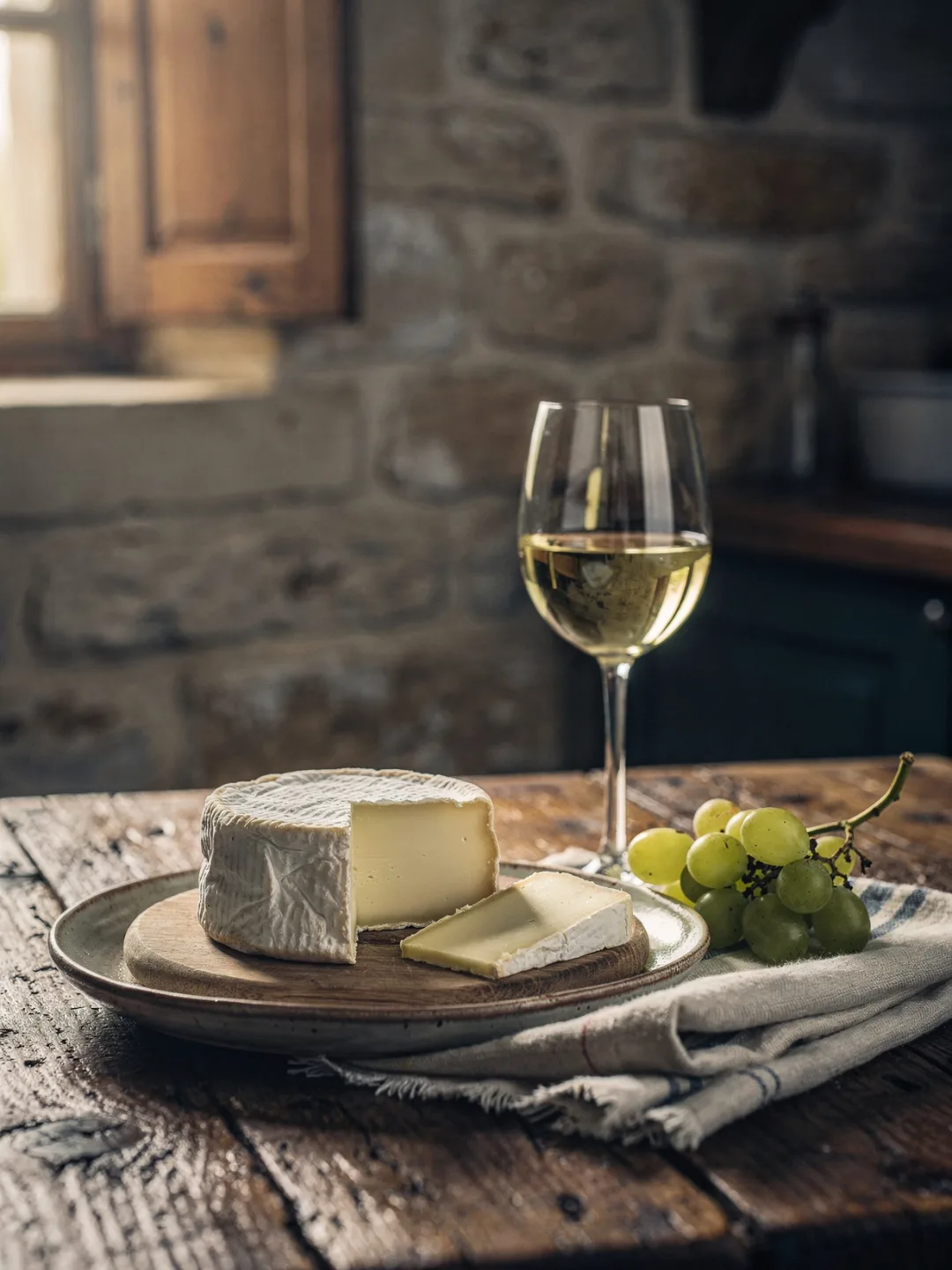
The clearest proof lies in a single village. Chavignol produces, on the very same slopes, both the Sauvignon Blanc for Sancerre and the goat's milk for Crottin de Chavignol — a small, round cheese named after the village. A young, creamy Crottin pairs with a young, citrus-fresh Sancerre; an aged, almost nutty Crottin calls for a more powerful vintage from a steep limestone slope. Nobody invented this pairing — the village simply eats what grows alongside its vineyards.
When it comes to fish, pike-perch (sandre) reigns supreme, caught straight from the river and traditionally served with beurre blanc. The sauce's ingredients are simple: shallots, vinegar, and cold butter. Tradition traces it back to the cook Clémence Lefeuvre, who prepared it for Loire pike near Nantes in the late nineteenth century. The acidity in Sauvignon Blanc or dry Chenin balances the richness of the sauce, almost like a splash of vinegar on the tongue after every sip.
Rillettes de Tours follows the same logic. This is pork slow-cooked in fat and shredded, a specialty of the Touraine. Without acidity, that much fat quickly feels heavy in the mouth. But with a young, dry Chenin or a light Cabernet Franc, it stays appetizing. The goat cheese log Sainte-Maure de Touraine, with its characteristic straw running through the center, calls for exactly this kind of freshness rather than a heavy red wine.
Finally, dessert calls for Tarte Tatin, the caramelized, upside-down baked apple tart invented in the Sologne, paired with a Coteaux du Layon and its honey and apricot notes from noble rot. The sweet wine must be sweeter than the caramel in the tart, or it will suddenly taste sour and thin beside it.