On a Sancerre
Tasting
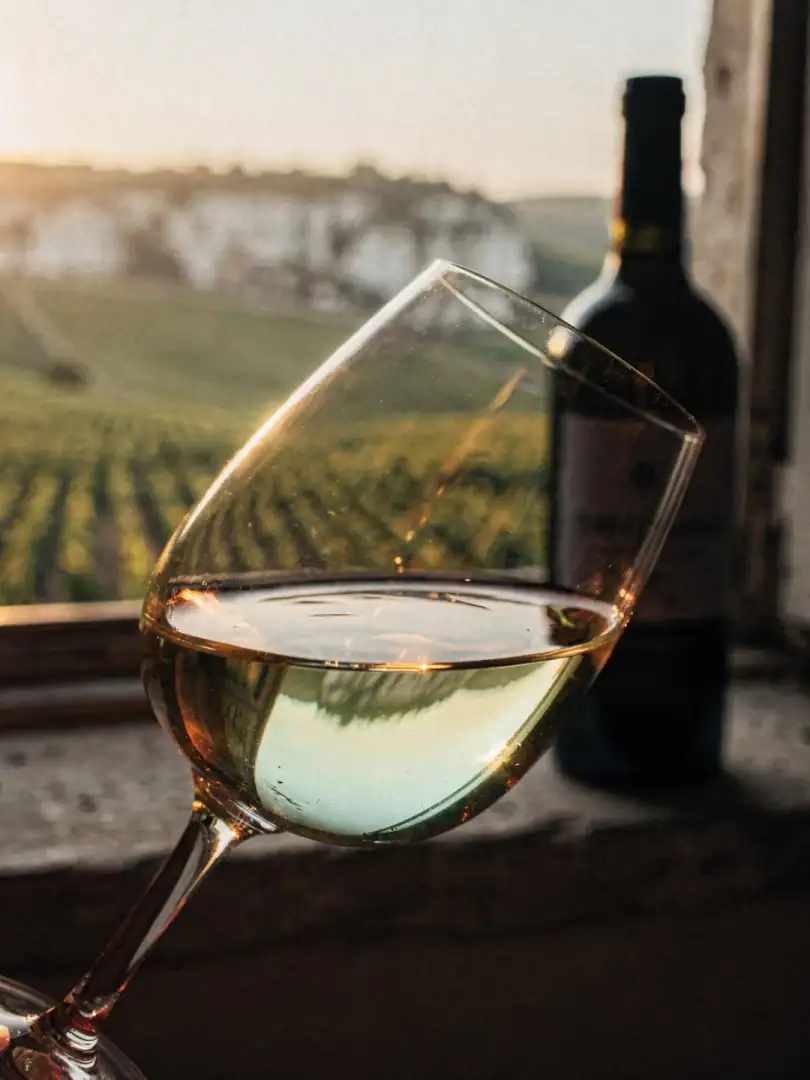
Take a young Sancerre and hold the glass against something white. The color is pale, often with a hint of green — nothing like the deep gold of an oak-aged Chardonnay. For Sauvignon Blanc, this paleness isn't a sign of weakness but of youth and freshness.
Then smell it twice: once while the glass is still, once after swirling. In the still glass, gooseberry and a hint of grapefruit rise first, since the lighter molecules evaporate quickest. After swirling, the heavier notes follow: boxwood, sometimes a green note like freshly cut bell pepper, and on stony sites, a smoky trace known as pierre à fusil, struck flint.
This smoky note is where Pouilly-Fumé gets its name, though the origin is ambiguous. Fumé means smoked, and the word describes both the gray, almost smoky bloom on the ripe grape skin and this flinty scent in the glass. Once you've smelled Sancerre and Pouilly-Fumé side by side and noticed the difference, you'll never confuse the two again.
In the mouth, pay attention to two things separately. You feel the acidity along the sides of the tongue — it gets the saliva flowing and gives the wine its tension. Then comes the fruit, usually citrus rather than stone or pome fruit, and the two should be in balance. Too much acid without fruit tastes thin and aggressive; too much fruit without acid feels flabby.
At the end, count. How long does the flavor linger after you swallow? With a simple Sancerre, it's a few seconds; with an old vine from a steep limestone slope on terres blanches, it can be twenty. This length can't be added afterward in the cellar. It comes from the vineyard alone.