Monks, Kings, Phylloxera
Region & History
The Romans were already planting vines along the banks of the Loire long before anyone had heard of Sancerre or Vouvray. In the first century, the scholar Pliny the Elder noted that vineyards lined the river. A single sentence — and the written history of Loire wine begins. Two thousand years later, wine still grows on the same slopes near Nantes.
The real push came from a monk. Martin of Tours was a Roman soldier who became a bishop. In 372 he founded the Abbey of Marmoutier near Tours, and he's still regarded as the spiritual father of French viticulture, since his monks preserved Roman winemaking knowledge through the turbulent centuries after the empire's fall. Two hundred years later, Bishop Gregory of Tours described the vineyards of Sancerre and Touraine in his writings. By then, the river was already carrying wine over long distances.
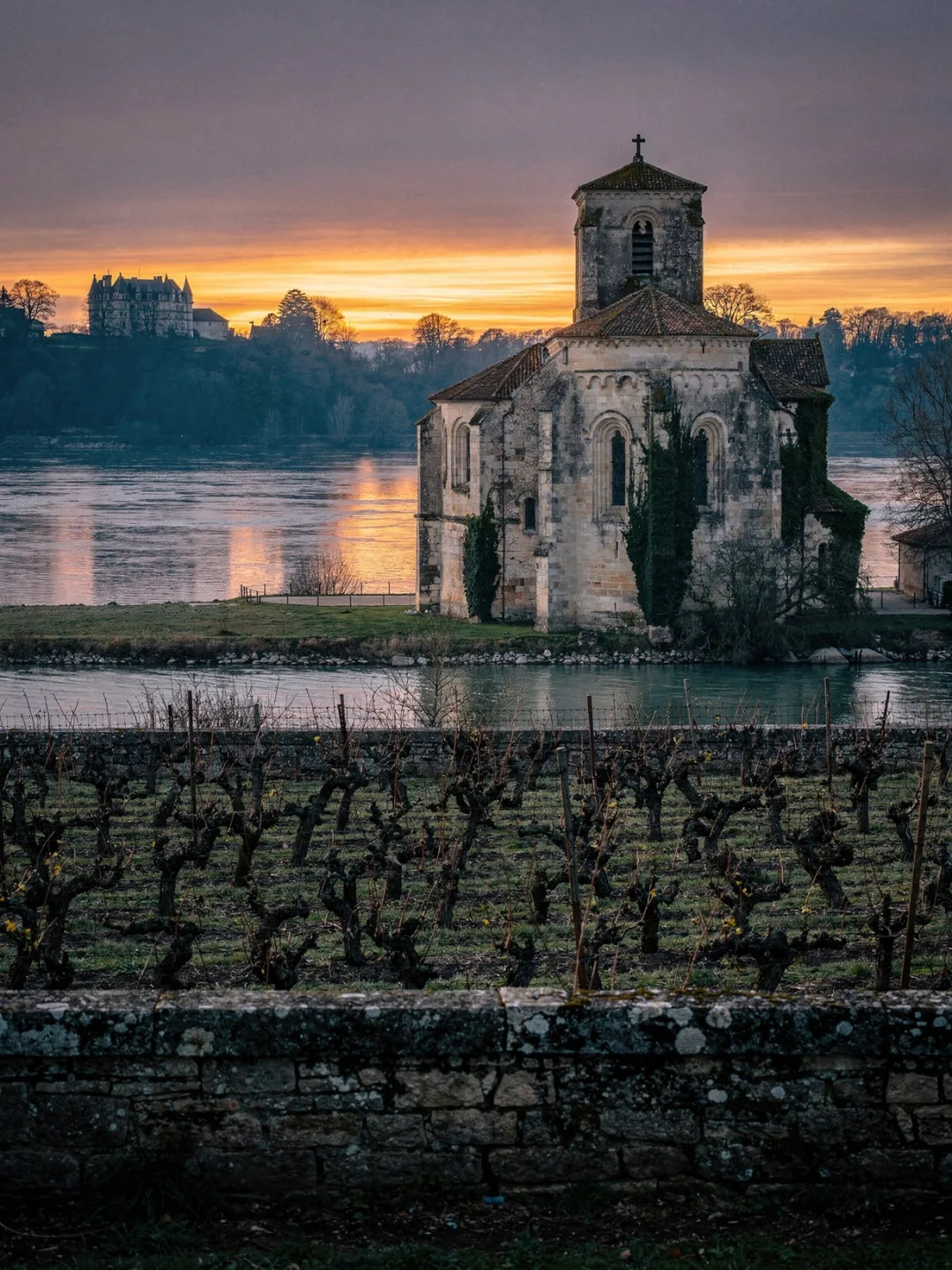
In the Middle Ages, winemaking was firmly in monastic hands. Benedictines and Augustinians tended the vine-covered slopes for centuries. Further upstream, kings and nobles were busy building their châteaux — Amboise, Chambord, and Chenonceau were part of a building boom that still shapes the look of the valley today. The river itself was the road. Barrels from Touraine and Anjou floated downstream to Nantes, then on to Holland and England, where white wine from the Loire was already being bought back in medieval times.
There's a story still told about Muscadet, dating to the bitter winter of 1709, when vines froze across all of France. Supposedly, growers responded by deliberately planting the frost-resistant Melon variety, which now covers almost the entire Vignoble nantais. The tale, however, is only documented in a book from 1937 — so it's more charming legend than verified fact. What's certain is that Melon has called this place home ever since.
At the end of the nineteenth century, phylloxera arrived and destroyed almost all the vineyard land along the Loire. During replanting on American rootstock, something surprising emerged. Sauvignon Blanc grafted more easily than the temperamental Pinot Noir that had previously been favored around Sancerre. What started as a stopgap solution became the variety for which Sancerre is now world-famous.
The system of regulation that still applies today only came together in the twentieth century. In 1936, Sancerre, Vouvray, and Muscadet became appellations; Pouilly-Fumé and Bourgueil followed a year later, and Saumur-Champigny not until 1957. In 2000, UNESCO declared the stretch of valley between Sully-sur-Loire and Chalonnes-sur-Loire a World Heritage Site. Along 280 kilometers of river, châteaux, villages, and vineyards line up in succession — recognized as a living cultural landscape, not a museum piece.