From the Phocaeans to Today
Region & History
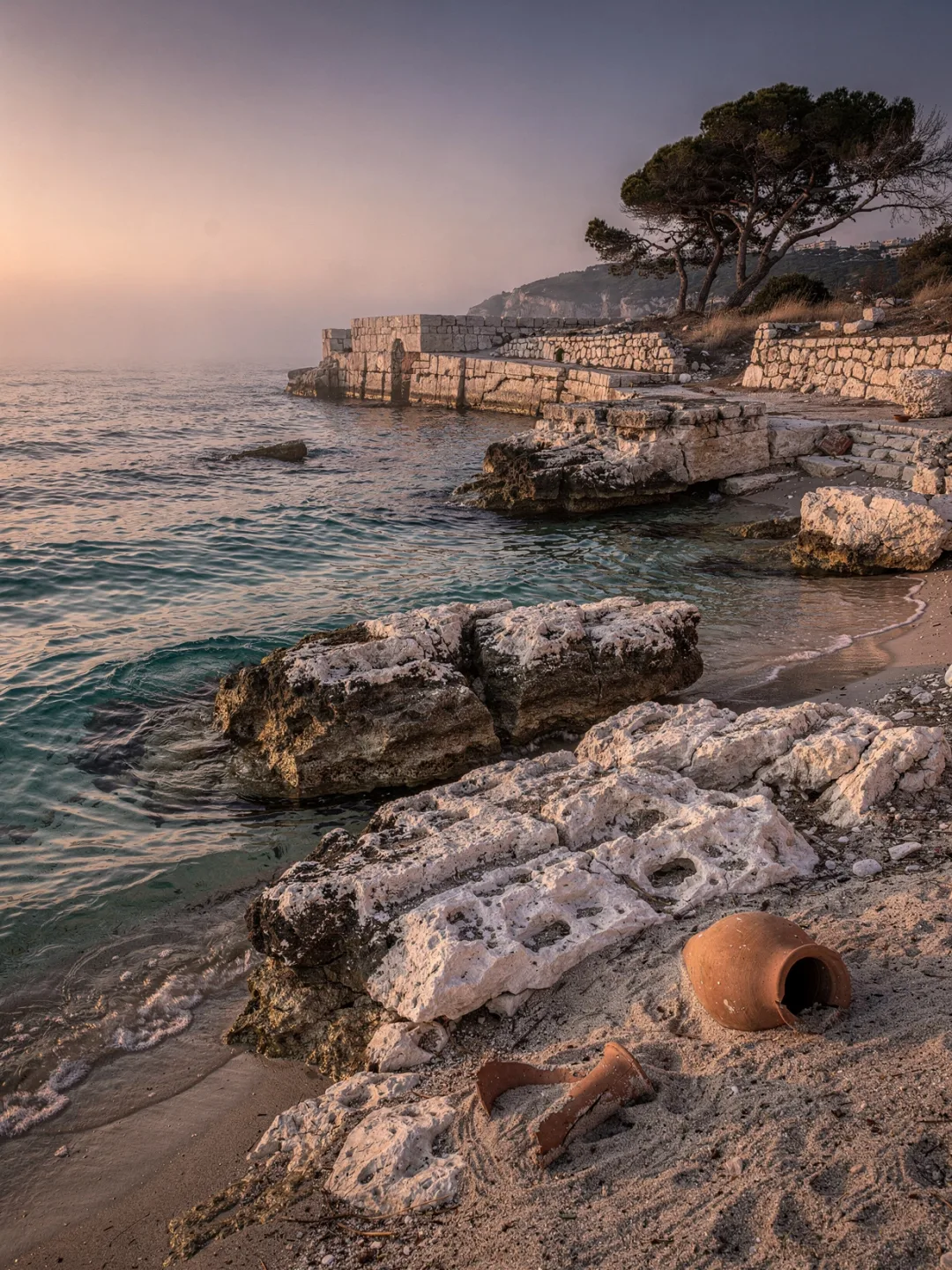
Around 600 BC, Greek seafarers from Phocaea landed in a bay in what is now Marseille. They founded Massalia and brought vines with them. The bay was no accident. The wine they pressed stayed pale, because the skins had barely any time in the juice. It was a forerunner of what now travels the world from Provence. Archaeologists found grape seeds from broken amphorae in Marseille's old town, remnants of France's earliest wine harvests.
The Romans took over winegrowing and carried it inland. Near Aix-en-Provence, at the foot of Mont Sainte-Victoire, tradition holds that returning soldiers of the general Marius planted the first vines of Palette. No one knows for certain. This was in 102 BC, shortly after their victory over the Teutons, and Palette remains one of the smallest and oldest appellations in Provence to this day.
During the Middle Ages, trade over long distances largely stalled, and it was above all the monasteries that kept winegrowing alive, century after century.
Official order arrived only in the twentieth century, and even then in stages. Recognition came late. Cassis became Provence's first appellation in 1936, barely a year after France's very first AOCs of all. Bandol followed in 1941 with strict rules for its Mourvèdre. The Côtes de Provence, by contrast, today by far the region's largest appellation, remained a mere basic quality tier called VDQS until 1977. It took twenty-six years to earn AOC status.
In the 1960s, the Saint-Tropez jet set turned the pale wine from the neighborhood into the summer drink of the wealthy, and the reputation has stuck ever since. Nearly ninety percent of the wine produced in Provence today is rosé, and the region supplies around forty percent of France's AOC rosé.