Mourvèdre & Tibouren
Grape Varieties
No other French wine region relies on rosé quite like Provence. That requires grapes with one particular skill above all: staying pale. Five varieties account for most of the harvest: Cinsault, Grenache, Mourvèdre, Syrah, and Tibouren. At least half of every vineyard must consist of these, according to the Côtes de Provence specifications. At nearly twenty thousand hectares, it is by far the largest appellation in the region.
Cinsault contributes little color and little tannin, but plenty of elegance and a scent of red berries. Grenache brings warmth, alcohol, and body, but loses acidity quickly if left hanging too long in the sun. Together they complement each other perfectly. A rosé needs little more.
Tibouren is the true character grape of Provence. Few in France even know it. The variety likely arrived in Saint-Tropez by ship from Genoa in the eighteenth century and has barely spread beyond the coastal communes of the Var since. By nature it produces one of the palest rosés of all, with a scent leaning more toward herbs and grapefruit than sweet fruit.
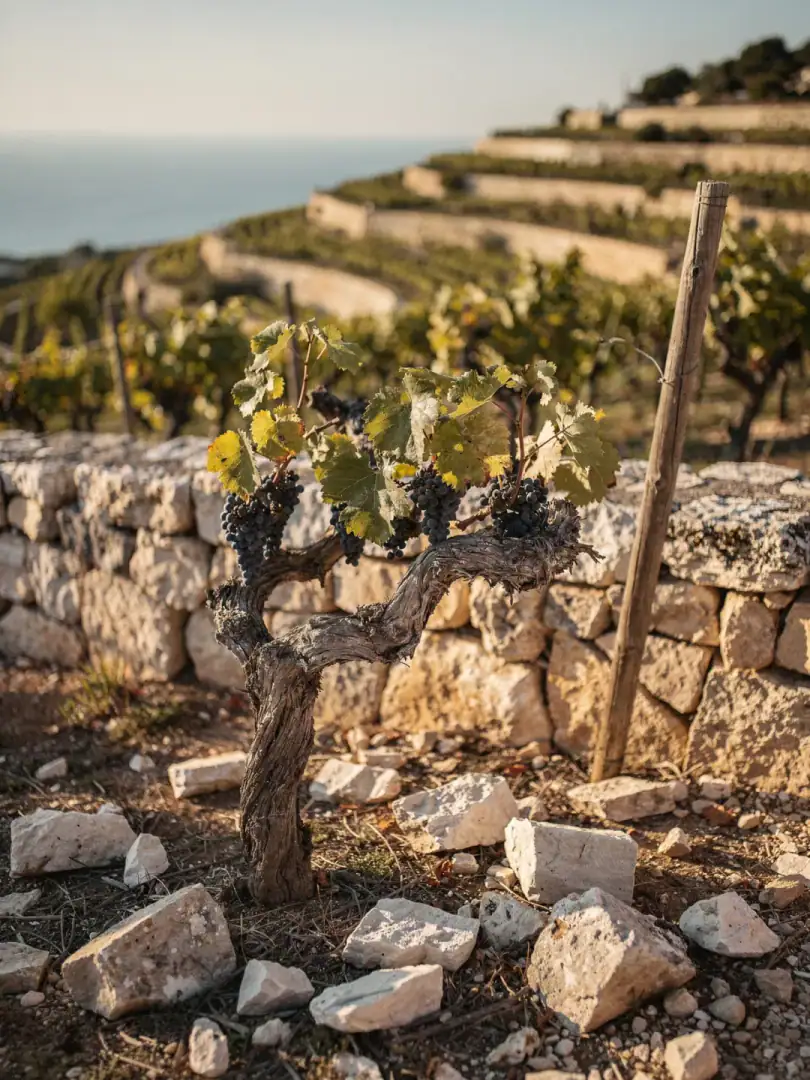
When it comes to red wine, almost everything revolves around Mourvèdre, especially in Bandol. It buds late, ripens late, and needs heat well into October. In return it delivers color, tannin, and an aging potential the lighter varieties can't match. At least half of a Bandol red must consist of Mourvèdre; at the finest estates it's usually over eighty percent.
White wine remains a niche pursuit in Provence, barely a twentieth of the planted area, but it reveals the other side of the climate. Rolle, known elsewhere as Vermentino, tolerates wind and dryness well and produces salty, citrus-driven wines that pair with the Mistral like no other grape.