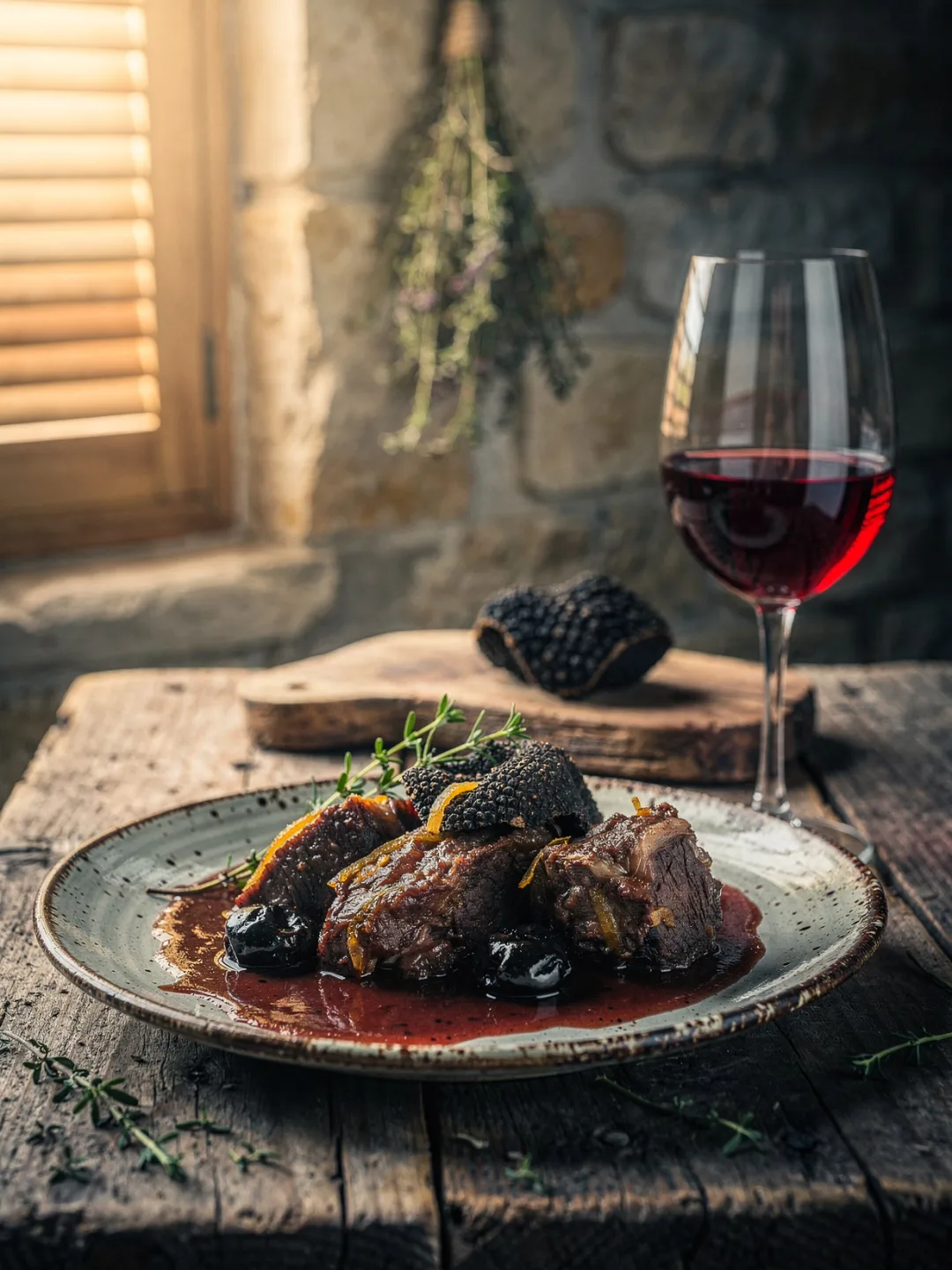
Daube and Picodon
Wine & Food
The cuisine along the Rhône cooks with the same ingredients that grow in the vineyard: thyme, rosemary, olive oil. Near Nyons, the Tanche ripens — a small black olive with its own protected designation of origin, the very first olive appellation in all of Europe.
The best-known dish is called daube avignonnaise. Lamb is marinated for days in red wine, garlic, and orange peel, then braised for hours over low heat until it nearly falls off the fork. Traditionally, a robust Grenache goes into the marinade. That very same wine belongs in the glass alongside it. What was in the pot almost always suits what's beside it.
Why this works has to do with tannin and fat. The long-braised meat is soft and rich. A too-delicate, thin wine would disappear next to it. A Châteauneuf-du-Pape or a robust Gigondas, with plenty of fruit and rounded tannin, holds its own without overwhelming the dish. The Garrigue notes in the wine echo the rosemary and thyme in the daube almost note for note.
Picodon, a small goat cheese from the hills on either side of the Rhône, calls instead for a young, lighter wine from the south. The cheese is sharp and salty, and too much tannin would turn bitter — which is also why, from December to March, black truffles arrive on the table from Richerenches, a village right in the heart of wine country, served with egg or on toast, alongside a mature, earthy Châteauneuf-du-Pape whose herbal notes tend to amplify the truffle rather than drown it out.
At the top of the valley, on the Côte-Rôtie, the cooking is simpler and heartier: beef, potatoes, winter vegetables. Here, no warmth of the south is needed — just the taut, peppery Syrah from next door.