Pepper and Garrigue
Tasting
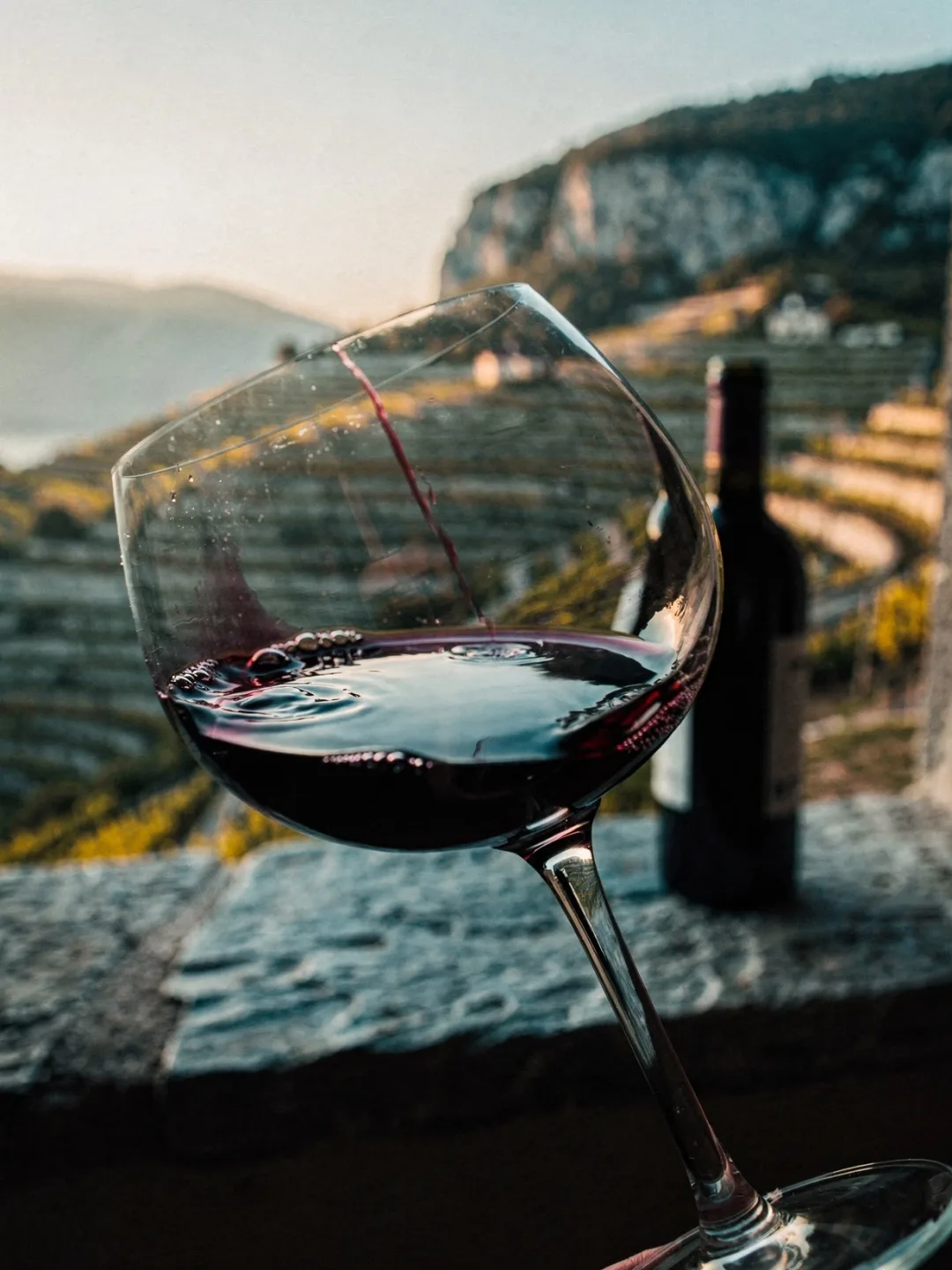
Start with a Syrah from the north. Hold the glass against a light background. Young, the color is nearly black, with a violet sheen at the rim, and hardly any other red variety in the Rhône Valley colors so darkly. After swirling, black pepper rises from the glass, along with violets, dark berries, and sometimes a hint of smoked bacon or olives — for many, the signature of the variety.
In the mouth, you notice the tannin right away: firm, sometimes almost chalky, especially in young vintages. It takes time to soften. That's exactly why the best Côte-Rôtie and Hermitage wines often age a decade in the cellar. Only then do they reveal their full range of aromas.
Now switch to a Châteauneuf-du-Pape from the south, and the difference is immediate. The color is lighter, more brick-red than violet. Even young, Grenache naturally colors more faintly than Syrah. The scent shifts from pepper to ripe cherry, licorice, and a dry, herbal note. Here it's called Garrigue: the scent of thyme, rosemary, and lavender growing wild among the vines.
On the palate, you first notice warmth rather than acidity — the alcohol often sits at fourteen percent or more. The tannin is rounder, softer than in the north, since Grenache naturally carries little of it. Finally, count how long the flavor lingers after you swallow. In a good Châteauneuf-du-Pape, it's easily twenty seconds of Garrigue and cherry echoing in the mouth, long after the glass itself is empty.