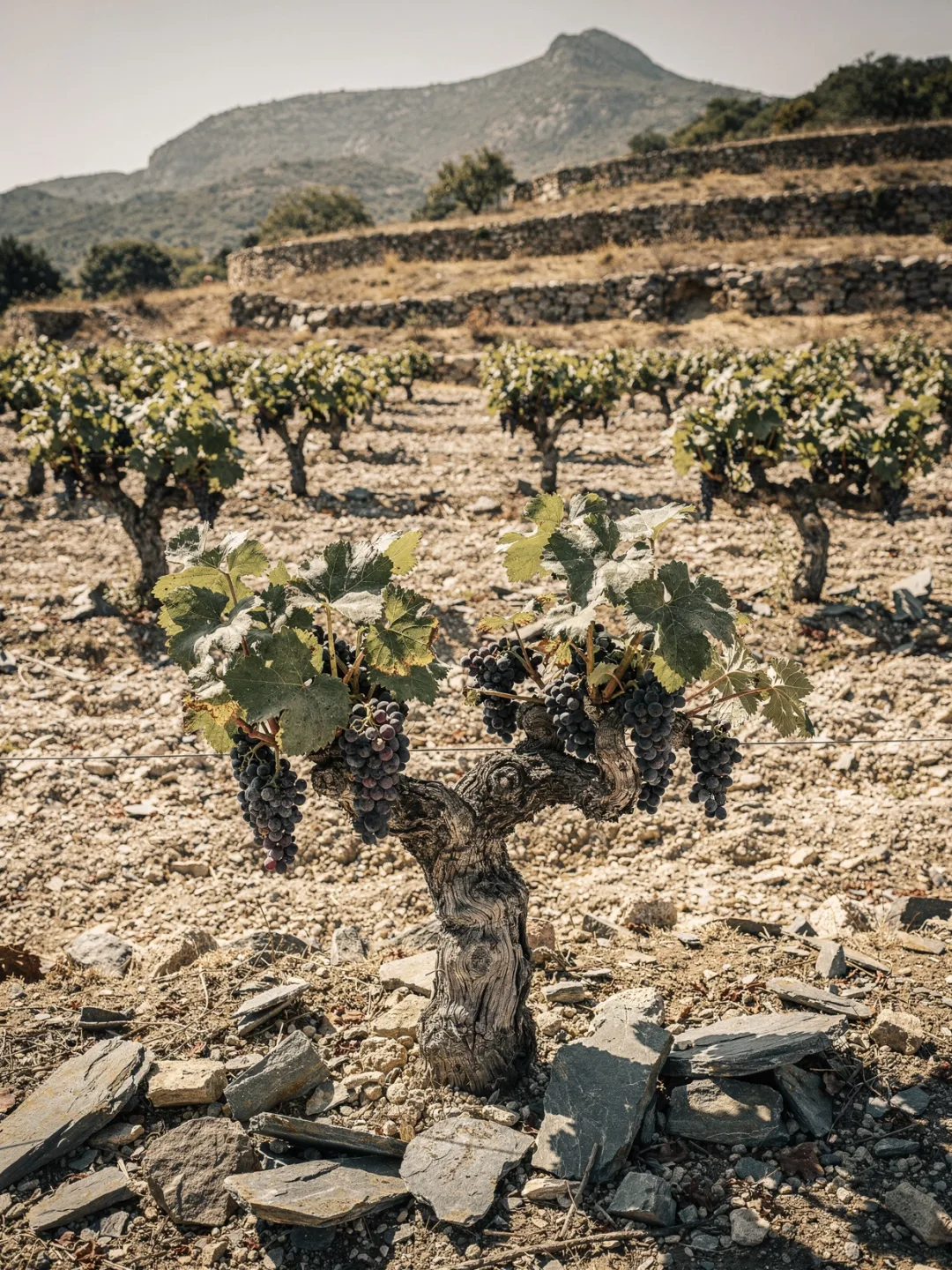
Grenache, Carignan, Muscat
Grape Varieties
One variety carries almost everything here: Grenache. Grenache Noir, Gris, and Blanc together account for more than half of the Roussillon's red vineyard area. The variety can do almost anything asked of it here—sweet and fortified for Banyuls, dry and powerful for the Côtes du Roussillon. It buds late, which protects against spring frost, and it tolerates drought better than almost any other red variety in France.
Its oldest partner is Carignan, often found here at a remarkable age. In the mountain villages of the Fenouillèdes, especially around Tautavel, Caramany, and Latour-de-France, Carignan vines stand at fifty, sometimes over a hundred years old. Rooted deep in the schist, they yield little but concentrate intensity in every berry. A municipal ordinance in Maury already prescribed a minimum of 75 percent Grenache back in 1908. Carignan was merely the supporting act then; today it's sought after in its own right.
For power and spice, two more varieties joined later. Mourvèdre brings wild herbs and firm tannins, Syrah dark fruit and pepper, and together they give structure to the red Côtes du Roussillon Villages, where at least two varieties must be blended. Pure Grenache often comes across as round and soft; with Mourvèdre or Syrah, the same wine gains an edge.
For white and sweet wines, a different order applies. Macabeu and Tourbat, also known as Malvoisie du Roussillon, carry the dry white wines. For sweet Muscat de Rivesaltes, however, two quite different Muscat varieties are permitted: the finer Muscat à Petits Grains and the coarser Muscat d'Alexandrie. Both ripen under the Roussillon sun into grape sugar that is later captured rather than fermented away—the subject of the next stops.