Apremont to Arbin
Tasting
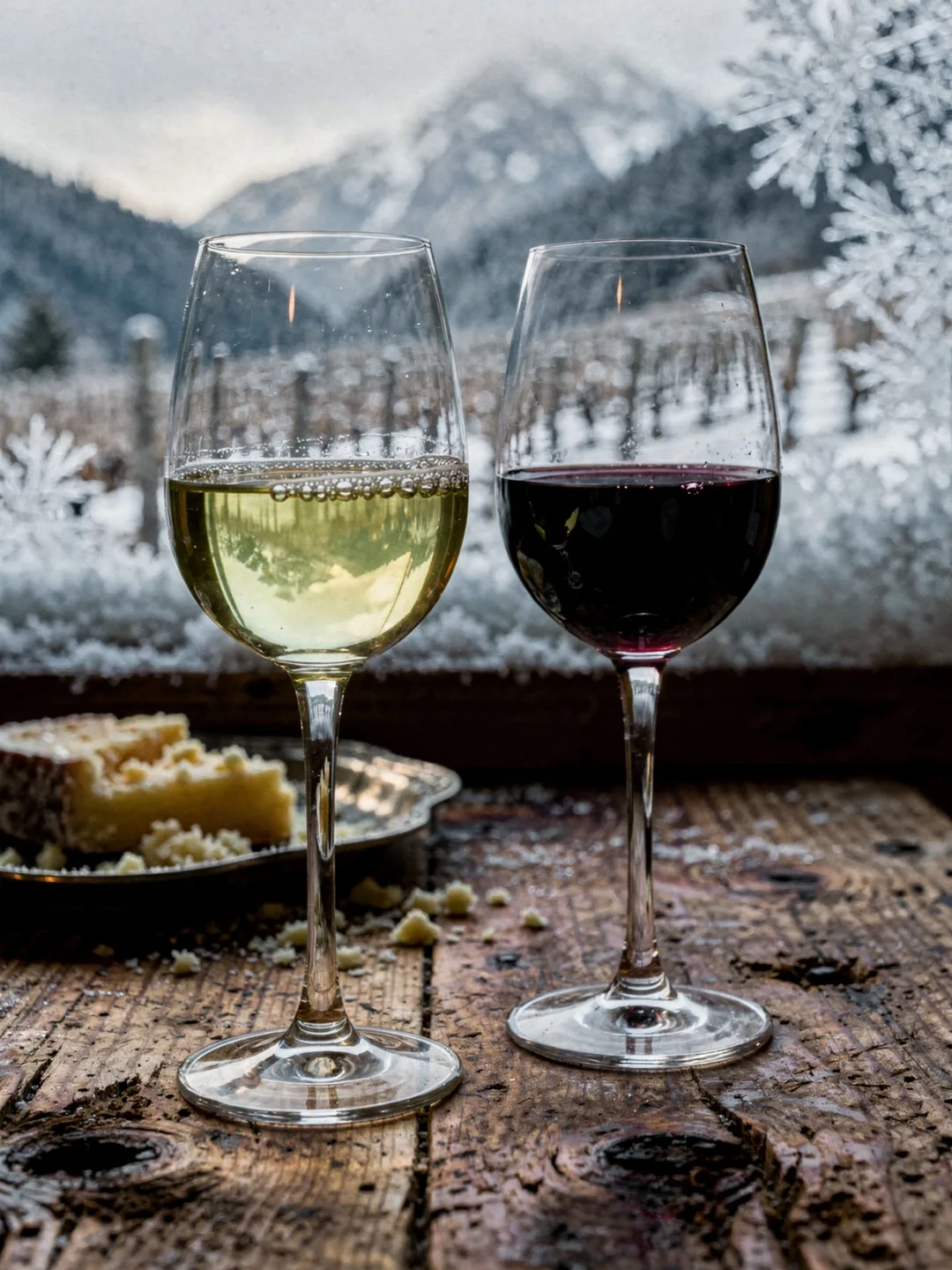
Hold a glass of Apremont or Abymes up against a white sheet of paper. The color is pale gold with a tinge of green, almost like diluted white wine, and that's exactly typical of Jacquère: little pigment in the thin skin, plenty of acidity in the juice.
Smell it twice, once at rest and once after swirling. At rest, citrus peel almost always comes first, followed by white blossoms. If you taste closely, you'll often find a trace of flint, called pierre à fusil in French. The moment the wine reaches the tongue comes the point that sets Savoie apart from almost any other white wine region: a fine prickle, barely visible in the glass itself.
Switch afterward to a Mondeuse from Arbin, and the contrast couldn't be greater. The color is deep violet to almost black, utterly unlike the pale whites before it, and on the nose sit black pepper alongside violets and dark cherry. In the mouth, the tannin grabs hold, angular in young vintages, velvety after five or more years in the bottle.
Pay attention to the same point in both: the acidity. It sits along the sides of the tongue, sets the saliva flowing, and is more defining here than in almost any other French white wine region. It's the reason a simple Apremont still tastes fresh years later, even though it was never meant for aging.
Finally, there's Altesse. Best from Marestel or Frangy. It sits midway between the citrus and herbal world of Jacquère and the dark spice of Mondeuse. It tastes nutty, of ripe pear and a touch of honey, with enough structure for two or three years in bottle. Anyone who tastes these three glasses in succession has the full range of Savoie in their mouth, without a single winemaker's name ever having been mentioned.