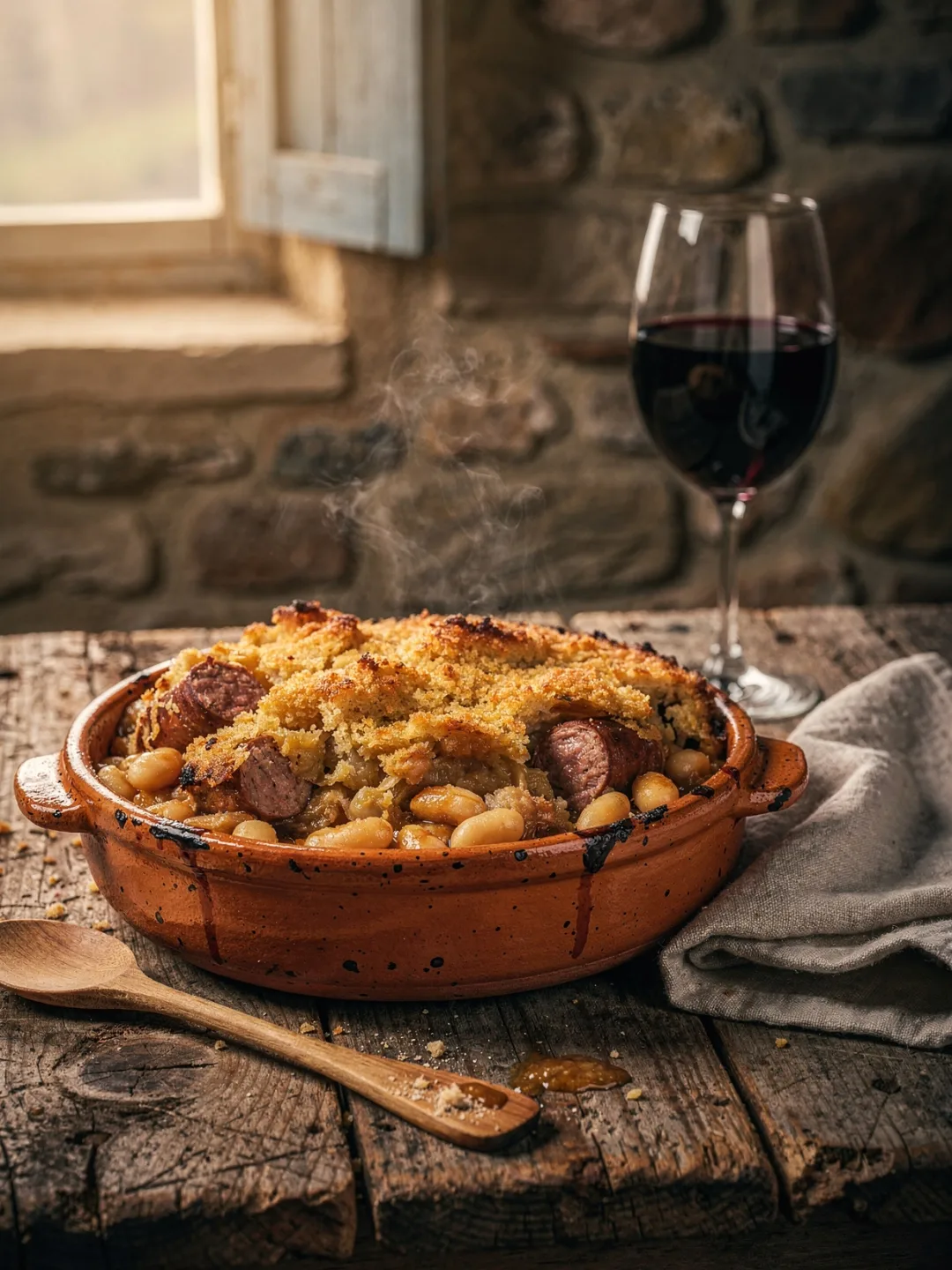
Cassoulet and Foie Gras
Wine & Food
The cuisine of the Sud-Ouest is hearty, fatty, and salty, and its wines are built exactly for that: plenty of acidity, plenty of tannin, both serving as counterweight. That's no accident. It's the result of centuries in which the same farming families fattened ducks while planting vines at the same time.
Few dishes spark as fierce a debate as cassoulet, a stew of white beans, duck confit, and Toulouse sausage. Castelnaudary, Carcassonne, and Toulouse each still claim to have invented the original. Legend has it that the people of Castelnaudary first cooked it during a siege in the Hundred Years' War, using whatever the pantry still had to offer. Necessity breeds invention. A young, powerful Cahors or Madiran suits this heavy dish far better than any light summer wine — the tannin cuts through the duck's fat without fading itself.
Foie gras from Gascony, on the other hand, calls for sweetness rather than tannin. A Jurançon moelleux, with its honeyed note and supporting acidity, balances the richness of the fattened liver without overwhelming it. It's a natural match. This pairing has been taken for granted in the region for generations.
Rocamadour, a small goat cheese from the Quercy limestone around the pilgrimage town of the same name, on the other hand pairs best with a dry white from Cahors or Gaillac. Its creamy, slightly nutty flavor would simply be lost next to a heavy red wine. White beats red here. Finally, for dessert, come the Pruneaux d'Agen, prunes steeped in Armagnac that monks were already producing in the twelfth century from cultivated Damascene plums — paired once again with an old, concentrated Jurançon.
If you want to remember just two rules, take these. Fat and salt can handle plenty of tannin, as with cassoulet and a young Madiran. That's really all you need to know. Sweetness in food, on the other hand, calls for sweetness in the glass — otherwise even a powerful red wine can suddenly seem thin and sour by comparison.