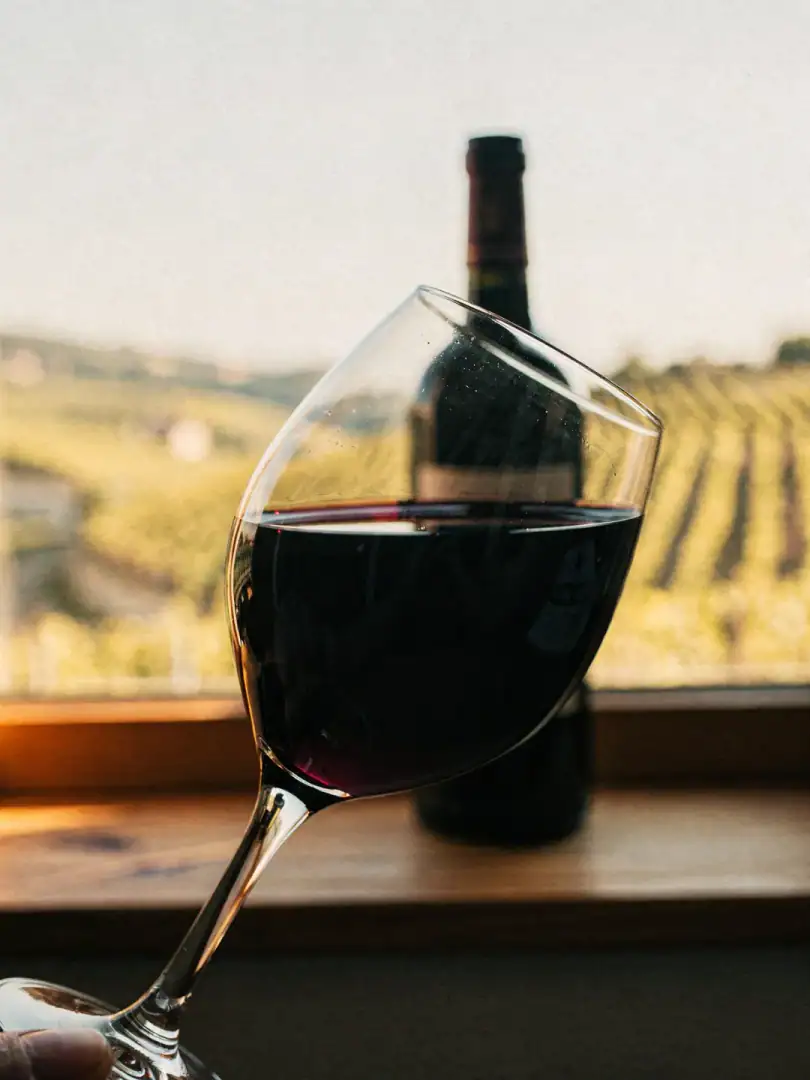
A Cahors in the Glass
Tasting
Hold a young Cahors at an angle against something white and look at the rim. There, where the wine thins out, it stays almost densely violet-black right up to the edge of the glass—hardly any other French red grape colors as intensely as Malbec. This is the vin noir. Only after ten or fifteen years does the color slowly shift toward brick red.
On the nose, dark fruit comes first: blackberry, plum, sometimes a hint of licorice. After swirling comes what is heavier and takes longer to emerge—violet, a touch of truffle, leather in older vintages. Smelling twice pays off. This second layer only reveals itself to those who truly smell twice: once calmly, and once after swirling the glass.
In the mouth, the emphasis clearly falls on the tannin, which lays itself like a velvety but firm coating over tongue and gums. In a Madiran made from a lot of Tannat, this coating is even more pronounced, almost grainy. You feel it immediately. The acidity recedes behind it but is always present, keeping the wine lively rather than heavy despite its density.
A Jurançon moelleux calls for a different order of the senses. Golden to amber in the glass, with honey, overripe quince, sometimes mango or passion fruit on the nose. In the mouth comes plenty of sweetness, but the high acidity of Petit Manseng cuts straight through it—without it, the wine would seem clumsy and sticky, but with it, it stays exciting until the very last sip.
At the end, count the seconds after swallowing—the so-called finish. For a simple Gaillac Perlé, it might be five. For an aged Cahors from a good site, twenty or more. This length can hardly be forced in the cellar, neither through oak nor through alcohol, which is why it remains the most honest criterion in any tasting.