Kingdom on the Rioni
Region & History
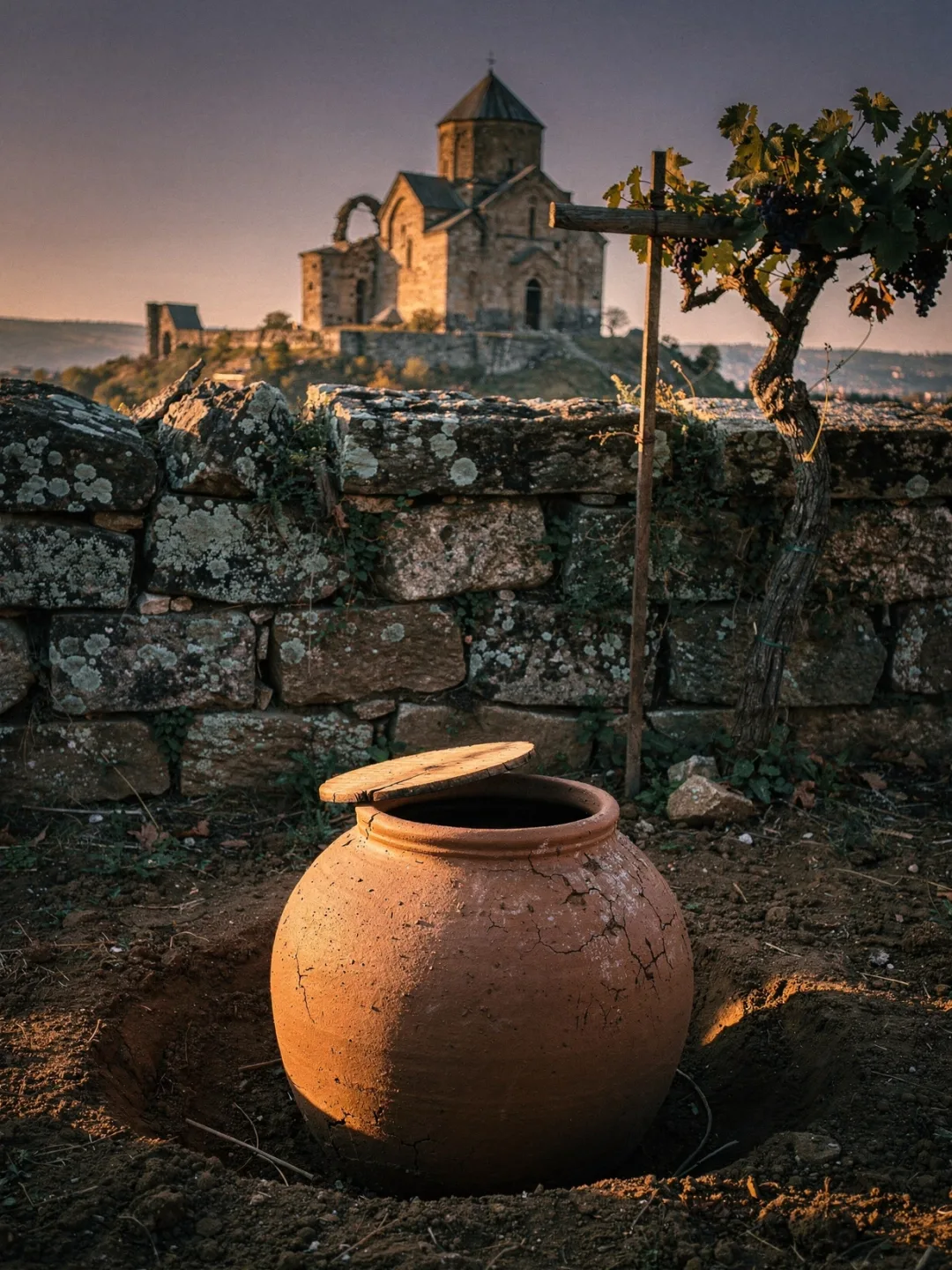
Jason and his Argonauts are said to have rowed the ship Argo all the way here, up the Rioni, in search of the Golden Fleece. Ancient authors called the city on this river Aia and placed the legendary Kingdom of Colchis there. Today the place is called Kutaisi. Whether Jason was really here, nobody knows. But anyone walking through the gardens of Kutaisi today comes across the same thing the Colchians presumably already had: buried clay vessels in which the wine ages. Here they're called Churi, not Qvevri as in the east of the country, and that's more than just a different word.
Over a thousand years later, King Bagrat III built the Bagrati Cathedral on the same river, in the year 1003. This was a sign that he had just united Georgia's various regional kingdoms into a single realm. The irony followed soon after. When this unified Georgia fell apart again in the fifteenth century, it was Kutaisi of all places that became the capital of its own, separate kingdom. The Kingdom of Imereti became independent of its eastern neighbors starting in 1466. It lasted for over three hundred years. Then in 1810, Russian troops marched in and forced the last king, Solomon II, into exile in Trebizond, where he died in 1815.
Under Russian administration, wine became a trade commodity. The villages of the region gained a reputation that holds to this day: Dimi, Obcha, Sviri and half a dozen others were considered the finest wine villages of western Georgia in the nineteenth century. Their wine already differed noticeably from that of eastern Kakheti, where the must ferments for months with skins and stems. In the damper west, by contrast, the grapes were given much less time on the skins — why, is explained in the section on production.
The Soviet era turned this careful approach on its head. Collective farms were meant to deliver quantity, not character, and old village vineyard sites disappeared into vast cooperative fields. Even after Georgian independence, Russia remained the most important buyer. That only changed in 2006: Moscow banned all imports from Georgia, officially citing quality concerns, but really for political reasons. Exports collapsed by half overnight. Georgian winemakers had to find new buyers in the West — and discovered interest there in precisely the old, amber-colored Churi wines that had almost been a source of embarrassment during Soviet times.
Sviri, meanwhile, had long been official: the appellation has existed since 1962 and remained the only one in all of Imereti for decades. Only in December 2024 did a second one arrive, Obcha, named after the villages around Baghdati and defined for two colors. One is amber, made from Tsolikouri, the other deep red, made from Otskhanuri Sapere. The Bagrati Cathedral, for its part, lost its UNESCO World Heritage status in 2017 because UNESCO felt the reconstruction had gone too far. Even the region's oldest landmarks, it seems, keep getting renegotiated here.