Tsitska & Tsolikouri
Grape Varieties
Nearly nine out of ten vines in western Georgia carry a single white variety: Tsolikouri, which grows where the land flattens out and the soil stays moist, in the Colchis lowlands as well as in the hills around Zestaponi. It ripens late, usually not until the end of October. On its own it tastes of green apple and herbs, with plenty of acidity and little aroma. Only in combination with its neighbors does it become a wine with real character.
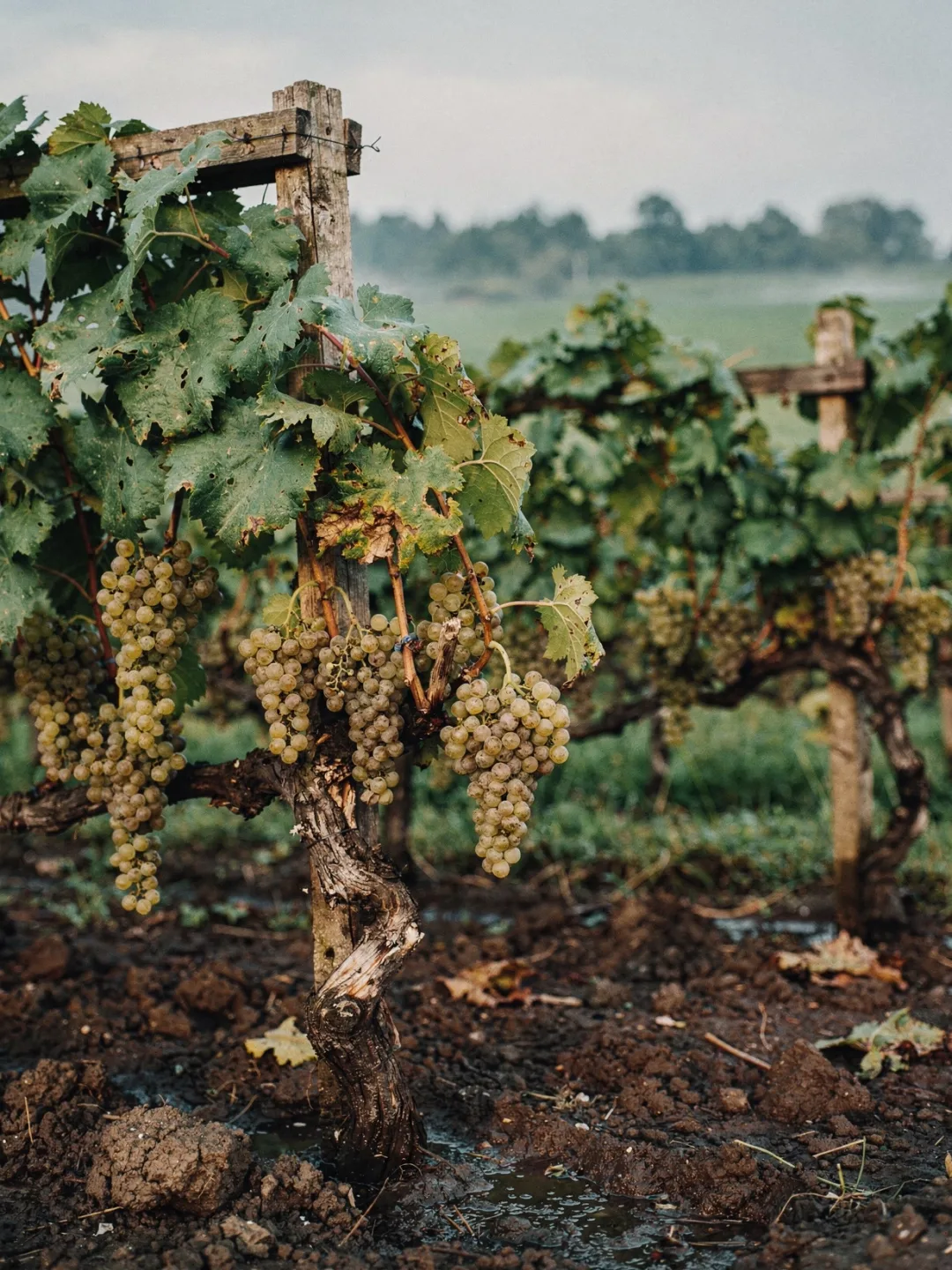
The most important of these neighbors is Tsitska, a second native variety that ripens even later and yields less than Tsolikouri. In good sites, yields are barely six tons per hectare. Together, the two make up the region's most widely drunk white blend, often simply called Tsitska-Tsolikouri. Tsitska brings citrus freshness and delicate, almost floral notes, while Tsolikouri supplies the body.
Around the village of Sviri, a third variety joins in: Krakhuna. It's fuller-bodied and its ripe berries carry more sugar than its two neighbors. In the past, winemakers even used a little Otskhanuri Sapere to tint their Krakhuna wine — pure cosmetics, since in flavor Krakhuna always remained a white wine.
Otskhanuri Sapere itself is temperamental. It needs plenty of sun to accumulate enough sugar in the first place, and Imereti's damp climate gives it precious little. Its wines therefore tend to stay lean and quite acidic, with unusually high tannin for a grape that ranks among Georgia's oldest. Tannin is the rough sensation you feel on your gums after a sip. Only after ten or fifteen years in the cellar does this harshness turn into depth.
More than five hundred native grape varieties are catalogued across Georgia. Barely forty of them ever make it to market. Three of them today account for most of the vineyards between Kutaisi and Zestaponi. They are Tsitska, Tsolikouri and Krakhuna — the very same three that already appeared in nineteenth-century village names.