On a Tsitska-Tsolikouri
Tasting
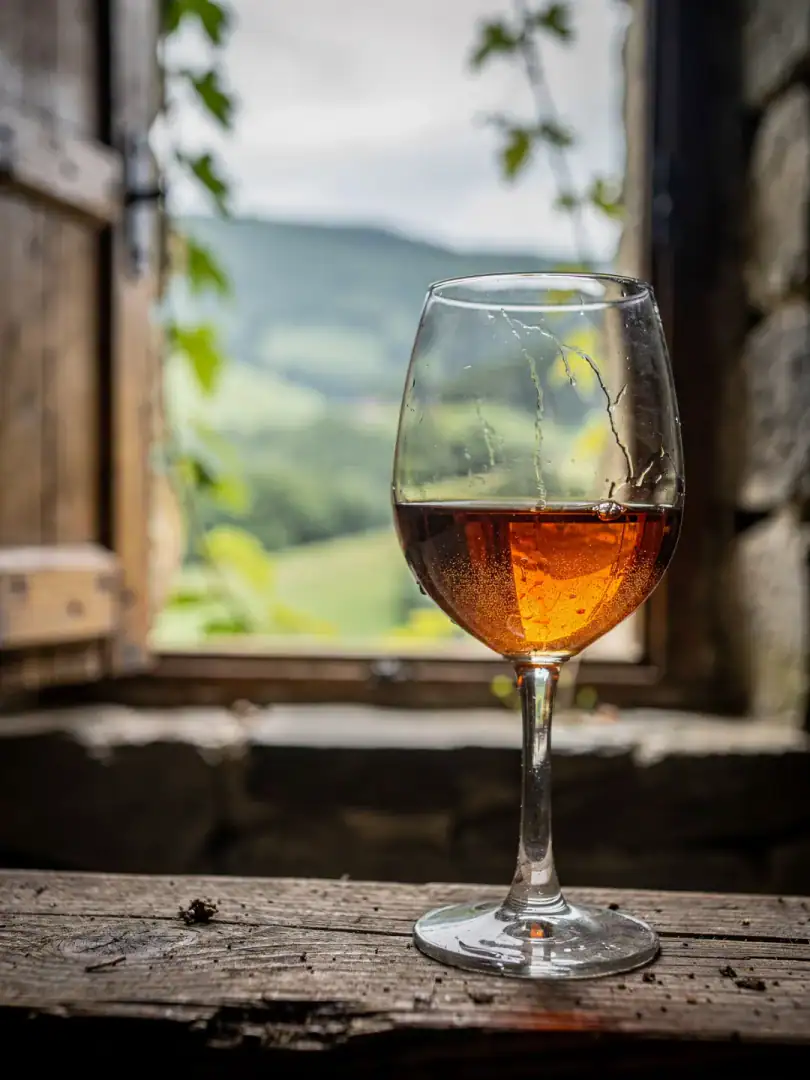
Hold a glass of Sviri up to the light. The color isn't the straw yellow of an ordinary white wine, but a darker, almost golden amber — a direct result of the weeks the must spent with the skins before pressing.
The first aroma is quince and apricot. Sometimes chamomile tea joins in too, especially on the second, more vigorous swirl, when what sets this wine apart from an ordinary white comes to the fore. A bitter, almost nutty note recalls walnut skin and comes directly from the tannins in the skins.
In the mouth, acidity is the first thing you notice. It's sharp and lively, as expected from Tsitska. But then comes something unusual for a white wine: a light, drying pull on the palate. That's tannin, the rough sensation otherwise known only from red wine, here only hinted at, but noticeable.
Taste a varietal Krakhuna instead, and the picture shifts. It has more substance, naturally more alcohol, plus a hint of ripe quince and beeswax that Tsitska lacks. Anyone who drinks both one after the other immediately understands why in Sviri they'd rather blend the two than choose between them.
In the end, texture matters more than fruit. This is a wine that you feel more than taste. Its dry finish still recalls tea, not juice, long after swallowing.